Demolition Disaster in Nairobi Claims Four Lives, Exposing Deep-Seated Construction Crisis

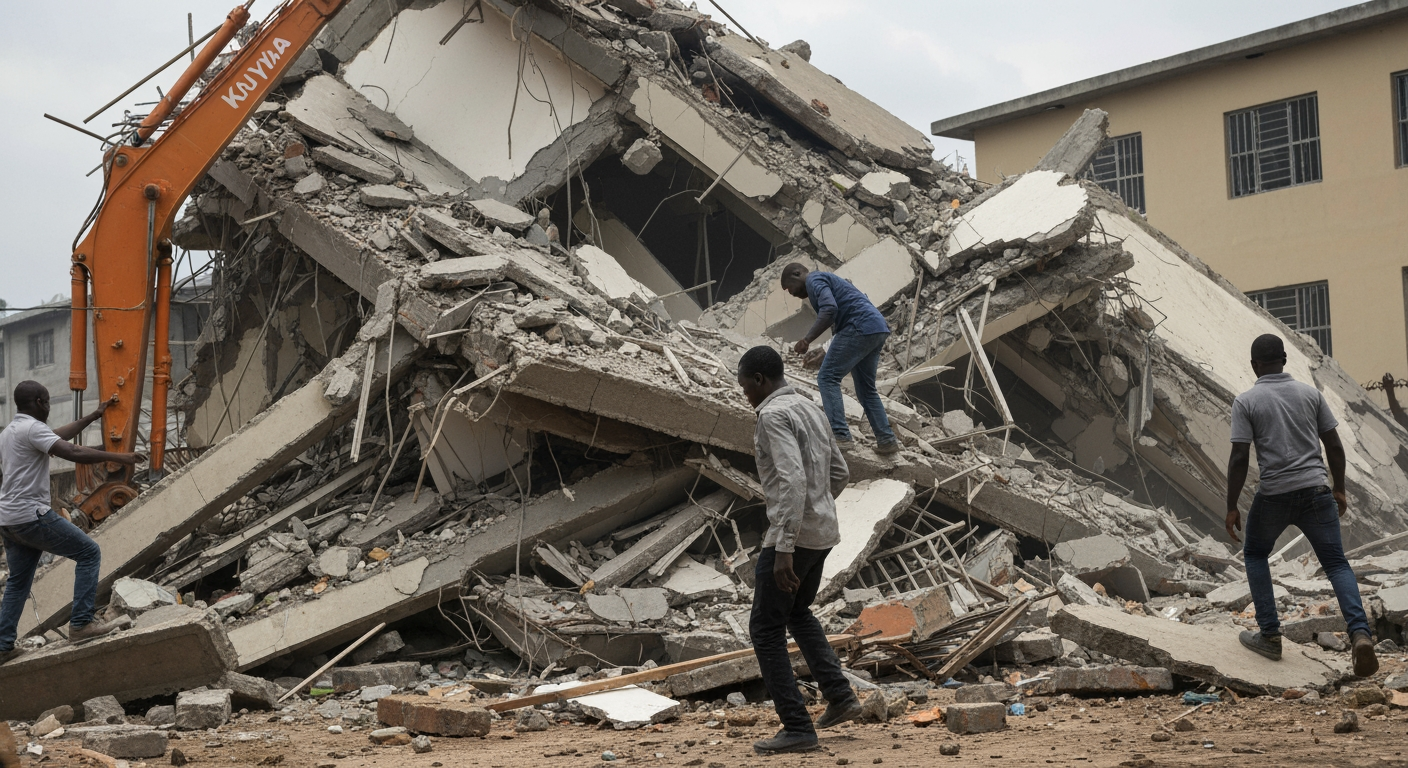
NAIROBI, Kenya – A planned building demolition in Nairobi tragically went awry on Monday, March 16, 2026, resulting in the deaths of at least four individuals and leaving four others injured. The devastating incident in the Blue Estate community of Shauri Moyo has cast a harsh spotlight on the persistent dangers within Kenya's construction sector and the urgent need for stringent regulatory enforcement.
The collapse occurred during an operation intended to dismantle a structure targeted under the ongoing Nairobi River Regeneration Project, a government initiative aimed at reclaiming riparian land and ensuring urban planning compliance. Rescue teams, comprising military personnel and other emergency services, swiftly mobilized to the scene, working tirelessly to extricate potential survivors from the rubble. While two individuals were successfully pulled from the debris, the grim recovery of bodies underscored the fatal consequences of the demolition gone wrong. The Interior Ministry confirmed the death toll, though details regarding the specific cause of the demolition's failure remain unclear.
A City Under Threat: Nairobi's Pervasive Building Safety Failures
This recent catastrophe is not an isolated event but rather a grim recurrence in Nairobi, a city grappling with rapid urbanization and a severe housing shortage. The high demand for housing often leads to unscrupulous developers sidestepping critical safety regulations and violating established building codes. This systemic disregard for safety standards has fostered an environment where building collapses have become alarmingly common.
A damning audit commissioned by the presidency in 2015, following a year where eight buildings collapsed and claimed 15 lives, revealed that a staggering 58% of structures in Nairobi were unfit for habitation. More recent assessments paint an even bleaker picture. As of January 2026, a survey indicated that over 85% of buildings in Nairobi are considered unsafe for occupation, with more than 10,000 out of 15,000 surveyed deemed uninhabitable. Construction sector professionals attribute these alarming figures to a confluence of factors, including rampant corruption, inadequate oversight, the use of substandard building materials, and political interference in development approvals. These issues collectively transform many residential and commercial structures into potential death traps, susceptible even to minor tremors.
The Human Cost and Echoes of Past Tragedies
The human element of these structural failures is consistently devastating. Beyond the immediate fatalities and injuries, each collapse leaves a trail of grief, displacement, and economic hardship for affected families and communities. The March 16 incident follows closely on the heels of other fatal building collapses in Nairobi earlier this year. In January 2026, a 16-story building in the South C estate collapsed, killing two people and highlighting deep-seated failures within the construction sector. Around the same time, another building collapse in Nairobi's Karen area claimed the lives of two construction workers, Harrison Ngala and Tuju Mwandakwa, and injured several others. These incidents collectively underscore a pattern of negligence and a dire need for accountability.
The repeated tragedies also place immense strain on emergency response services and healthcare facilities, which are frequently called upon to manage mass casualty events. The psychological impact on residents living in fear of their homes or workplaces collapsing is profound, eroding public trust in urban development processes and regulatory bodies.
Calls for Accountability and the Path to Reform
In the wake of the latest collapse, calls for stricter enforcement of building codes and greater accountability for all stakeholders in the construction industry have intensified. Professionals within the sector, including various engineering and architectural bodies, have consistently advocated for robust implementation of the National Building Code 2024. This code mandates accountability across the entire development team, from planning and design to construction, maintenance, and even demolition.
The irony of the recent disaster, occurring during a government-led regeneration project, highlights the complexities and inherent risks even in planned demolition activities. While such projects are crucial for urban renewal and public safety, they must be executed with the utmost precision and adherence to safety protocols. Experts emphasize that the integrity of a construction project relies on every link in the chain being strong, from developers to county governments and regulatory agencies like the National Construction Authority (NCA) and the National Environment Management Authority (NEMA). The NCA's 2018 audit, which classified a significant number of buildings as dangerous or unsafe, serves as a stark reminder of the long-standing challenges that require concerted and unwavering attention.
Towards a Safer Future: The Imperative for Systemic Change
The tragic events of March 16, 2026, serve as another painful reminder of the persistent crisis plaguing Kenya's construction industry. While individual incidents are devastating, they are symptomatic of deeper, systemic issues that demand comprehensive and sustained reforms. Addressing these challenges will require more than just reactive measures; it necessitates a proactive, multi-pronged approach encompassing rigorous enforcement of building codes, eradication of corruption, professional accountability, and continuous public education on safe construction practices. Without such concerted efforts, Nairobi and other rapidly developing urban centers in Kenya risk experiencing further preventable tragedies, undermining not only public safety but also the nation's developmental aspirations. The lives lost in Shauri Moyo must catalyze a definitive shift towards prioritizing human life and structural integrity over expediency and illicit gains in the pursuit of urban development.
Related Articles


Ratko Mladić, "Butcher of Bosnia" and Convicted War Criminal, Dies at 84
THE HAGUE, Netherlands – Ratko Mladić, the former Bosnian Serb military commander known as the "Butcher of Bosnia" and convicted of genocide, war crimes, and crimes against humanity, has died at the age of 84. Serbian...


Long-Awaited 9/11 Mastermind Trial Set for 2028, Decades After Attacks
GUANTANAMO BAY, Cuba – Nearly a quarter-century after the devastating terror attacks of September 11, 2001, a military judge has finally set a trial date for Khalid Sheikh Mohammed, the alleged mastermind behind the...