Desperate Struggle Underway as Humpback Whale Strands on German Baltic Coast
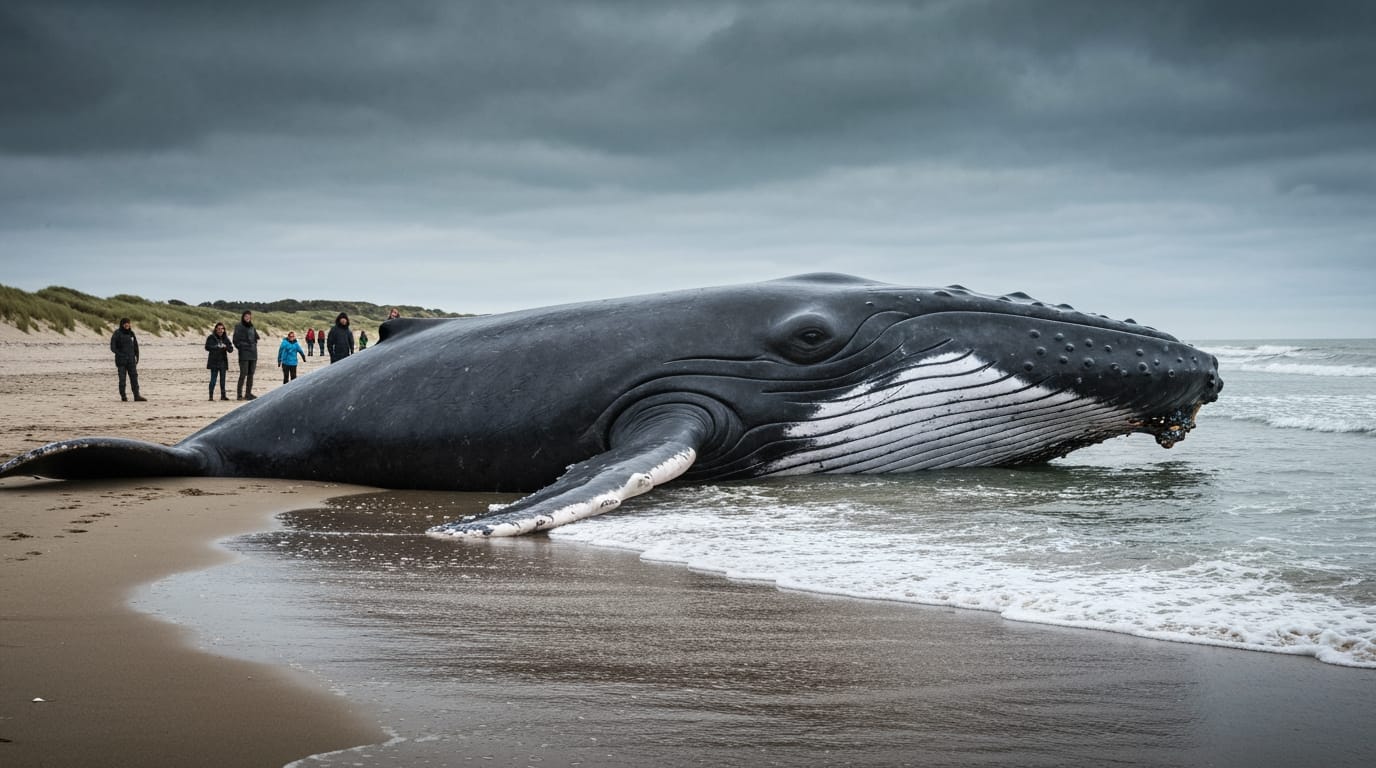
Timmendorfer Strand, Germany – A challenging and urgent rescue operation is unfolding on Germany's Baltic Sea coast as a 10-meter-long humpback whale remains stranded in shallow waters off Timmendorfer Strand. The majestic marine mammal, believed to be a young male, was discovered early Monday, March 23, sparking a multi-agency effort to guide it back to deeper waters. Despite continuous attempts by dedicated rescue teams, the whale's condition is reportedly deteriorating, underscoring the critical race against time to save its life in an environment rarely visited by its species.
Whale's Perilous Predicament Triggers Extensive Rescue Efforts
The drama began unfolding when the humpback whale was spotted stuck in a sandbank near Niendorf in Lübeck Bay on Monday morning. Its presence in the Baltic Sea, a relatively unusual habitat for humpbacks, immediately raised concerns among marine conservationists and local authorities. Initial efforts on Monday afternoon, involving police boats, inflatable vessels, and drones, proved unsuccessful in dislodging the animal. Even the high tide around midnight on Monday failed to provide the necessary lift for the whale to swim free, leaving it vulnerable as Tuesday dawned. Rescue teams and experts from the Institute for Terrestrial and Aquatic Wildlife Research (ITAW) convened on Tuesday morning at Timmendorfer Strand beach to strategize new approaches for the massive creature's refloating.
The complexity of the rescue is compounded by the whale's sheer size, weighing several tons, making direct towing an impossibility due to the high risk of severe injury. Rescuers did manage a momentary success when they briefly turned the whale to face deeper water, offering a glimmer of hope that it might instinctively swim away. However, the animal soon reverted to its original position. Boats from the coast guard and fire department also attempted to create large waves in an effort to aid its movement, but these measures also yielded no sustained success.
Deteriorating Health and Previous Entanglements
Concerns for the whale's welfare are mounting as marine conservationists observe its declining health. Reports indicate the whale, while still breathing and emitting sounds, has developed a skin condition, possibly barnacles, attributed to the Baltic Sea's low salinity. Experts have voiced stark warnings, indicating that the animal's condition is worsening hourly and that continued stranding represents a "death sentence" for the mammal.
Further investigation into the whale's history has revealed a series of unfortunate events. It is believed to be the same individual that has been sighted repeatedly in Germany's Baltic Sea in recent weeks, notably in the port of Wismar and off Travemünde. During these prior sightings, rescuers successfully removed parts of a fishing net that had entangled the whale's body. On Monday, more remnants of a fishing net were found wrapped around the stranded whale, which rescue workers were able to cut off. The presence of fishing gear suggests potential human interaction playing a role in its current predicament. To ensure the animal's calm and to allow rescuers to work unimpeded, police have cordoned off the immediate beach area, emphasizing the importance of minimizing stress on the distressed creature.
Unusual Presence in Baltic Waters and Broader Implications
Humpback whales are not native to the Baltic Sea, which is a rare and unusual habitat for these open-ocean dwellers. Historically, sightings of live humpbacks in German waters have been exceptionally infrequent, with only a handful documented over the last 150 years. Experts speculate that the young male whale may have become disoriented, possibly following fish shoals, and inadvertently ventured into the shallower, less saline Baltic.
However, recent months have seen an uptick in unusual whale sightings and strandings across the North and Baltic Seas. This phenomenon has prompted concern among conservationists, who point to factors such as underwater noise pollution from shipping traffic and industrial activities, including seismic surveys, as potential contributors to the whales' disorientation. Such noise can impair their ability to navigate and alter migratory paths, leading young and inexperienced whales to stray off course while foraging. While the immediate focus remains on the individual whale at Timmendorfer Strand, its plight highlights broader ecological shifts and the increasing pressures marine life faces in human-dominated coastal environments.
Uncertainty as Rescue Operations Continue
As Tuesday progressed, the outlook for the stranded humpback whale remained uncertain. Conservationists from Sea Shepherd have expressed readiness to assist if experts identify viable new strategies. However, the delicate balance between active intervention and allowing nature to take its course is a central point of discussion among marine biologists. Some experts argue that human intervention is not always beneficial, especially when an animal is severely weakened. The situation remains dynamic, with ongoing discussions among specialists regarding the most humane and effective course of action.
The arduous struggle to save the Timmendorfer Strand humpback whale has captured public attention, serving as a poignant reminder of the fragility of marine ecosystems and the challenges faced by magnificent creatures that stray into unfamiliar or compromised territories. The outcome for this individual whale remains balanced on a knife-edge, with dedicated teams continuing their tireless efforts against the forces of nature and time.


