Devastating Blaze Claims 14 Lives at South Korean Auto Parts Factory, Ignites Renewed Safety Concerns
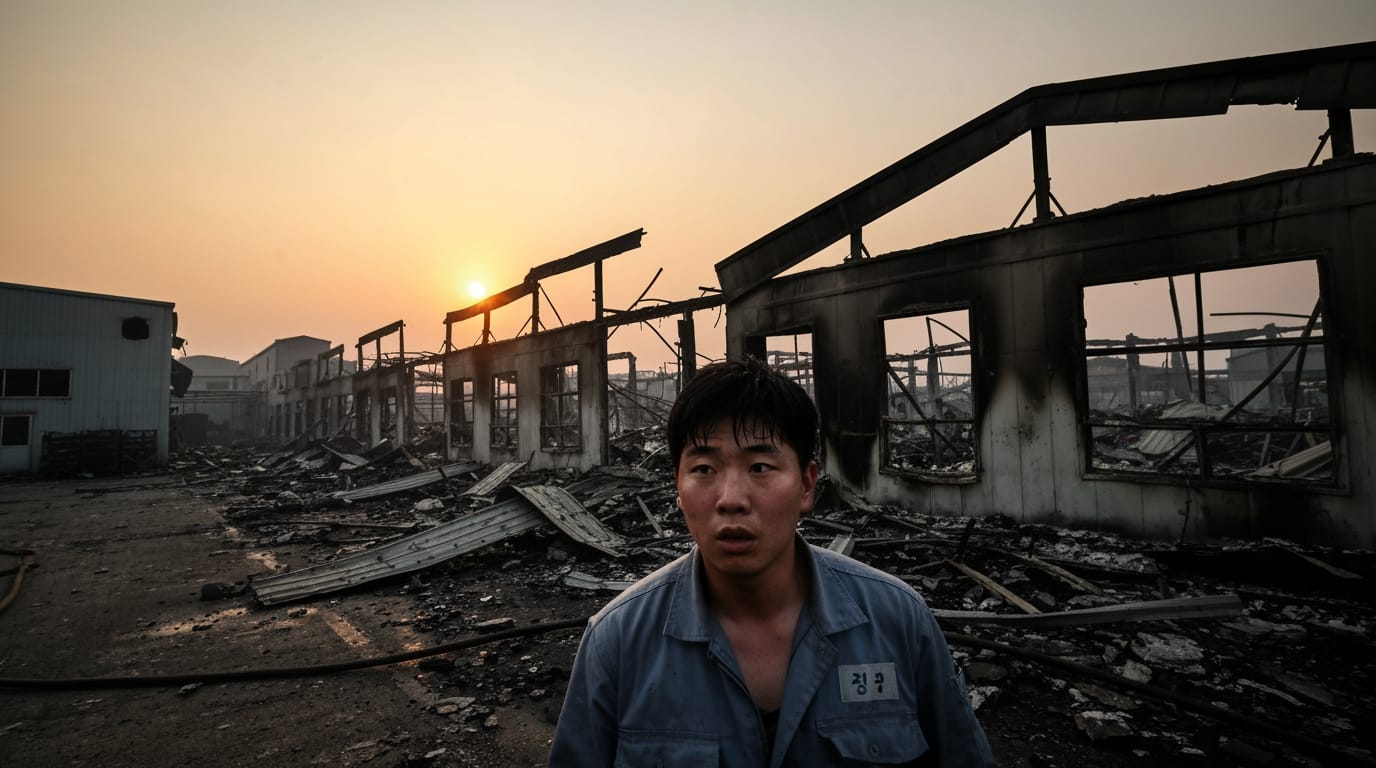
DAEJEON, South Korea – A catastrophic fire tore through an auto parts factory in Daejeon, central South Korea, on Friday, March 20, 2026, killing at least 14 workers and injuring 59 others in a stark reminder of the nation's persistent struggle with industrial safety. The inferno, believed to have been triggered by an explosion, rapidly engulfed the Anjun Industrial plant, prompting a massive emergency response and drawing national attention to the precarious balance between economic output and worker protection.
The tragedy unfolded around 1:00 PM local time, catching approximately 170 workers inside the facility during what was described as a routine afternoon shift. Witnesses reported hearing an explosion shortly before the blaze erupted, sending thick gray smoke billowing into the sky and creating an immediate scene of chaos. Initial reports indicated 11 fatalities, with three workers missing, but as rescue operations continued into Saturday, the death toll tragically rose to 14, with officials confirming all previously unaccounted individuals had been found among the charred remains. The injured included 25 individuals with serious conditions and 34 with minor injuries, among them two firefighters who bravely battled the raging flames.
The Inferno and Heroic Response
The fire at Anjun Industrial, a company specializing in engine valves for major automakers like Hyundai Motor and Kia Corp., presented immense challenges for emergency services. Upon arrival, firefighters were initially unable to enter the factory building due to severe structural integrity concerns and the risk of immediate collapse. Compounding the danger was the presence of approximately 200 kilograms of highly reactive chemicals, including sodium, which posed a significant explosion hazard if improperly handled during firefighting efforts.
More than 500 firefighters, police, and emergency personnel were mobilized, deploying an extensive array of equipment including 120 vehicles, aircraft, an unmanned water cannon vehicle, and two firefighting robots to access hard-to-reach areas and cool the structure. The fire was eventually contained by 11:48 PM on Friday and fully extinguished by Saturday afternoon, but not before claiming a devastating human toll. Desperate workers were seen leaping from upper floors to escape the rapidly advancing flames and suffocating smoke, with some suffering injuries from their desperate attempts to flee. The bodies of nine victims were tragically discovered together in what was believed to be a gym on the third floor, with others found in various parts of the devastated facility, including a men's bathroom and near a staircase.
Unraveling the Cause and Systemic Flaws
While the exact cause of the blaze remains under thorough investigation by police and fire authorities, preliminary suspicions point to a potential explosion exacerbated by accumulated dust and oil residue within the factory. Fire officials reportedly believe the fire ignited on the first floor and spread rapidly, with residual cutting oil and grease coating machinery acting as accelerants. Disturbingly, reports suggest that the rest area where nine victims were found was not part of the original architectural plan, having been informally constructed within the factory's interior. This layout reportedly narrowed evacuation routes and, coupled with poor ventilation and limited windows, severely hindered escape, trapping workers as smoke quickly filled the space.
President Lee Jae Myung swiftly ordered the full mobilization of resources for rescue operations and pledged a comprehensive investigation into the incident, vowing to implement fundamental measures to prevent future tragedies. The government has activated a centralized disaster management system to coordinate the response and support for victims and their families.
South Korea's Persistent Safety Challenge
This latest industrial tragedy casts a harsh light on South Korea's long-standing and often criticized record on workplace safety. Despite its advanced economy and technological prowess, the nation consistently ranks poorly in industrial safety among developed countries, holding the unenviable position of having the third-worst industrial safety record within the Organisation for Economic Co-operation and Development (OECD). Official statistics reveal a grim reality, with over 10,000 worksite deaths occurring between 2000 and 2024.
In response to a series of high-profile industrial accidents, the South Korean government introduced the Serious Disasters Punishments Act (SAPA) in 2022. This landmark legislation aims to hold executives criminally responsible for workplace accidents resulting in death due to lax safety measures, with potential penalties including jail sentences of at least a year and significant fines. However, critics argue that the law has been more punitive than preventative, with many accused employers receiving probation and a lack of fundamental change in safety culture.
The Daejeon fire is not an isolated incident. In April 2020, 38 workers died in a construction site fire in Icheon, and more recently, in 2024, 22 people, mostly Chinese nationals, perished in a lithium battery factory fire in Hwaseong. The CEO of the battery maker, Aricell, was subsequently sentenced to 15 years in prison, with the court citing a prioritization of profit over worker safety. Data from 2024 showed a 2.9% increase in fatalities within the manufacturing sector, partly influenced by the Aricell incident, even as overall industrial accident deaths saw a slight decline. The Ministry of Employment and Labor continues to identify workplaces violating safety obligations, with 376 named in 2025 alone.
A Ripple Effect on Industry and a Call for Change
The loss of life at the Anjun Industrial plant represents an profound human tragedy, affecting numerous families and communities. Beyond the immediate sorrow, the incident also has potential implications for the global automotive supply chain. South Korea plays a critical role in providing essential components to major manufacturers worldwide, and disruptions to key suppliers like Anjun Industrial can trigger ripple effects across the international industry.
The Daejeon fire serves as a poignant and costly reminder that despite legislative efforts and increased budgets for safety, the nation's industrial landscape continues to grapple with fundamental safety issues. As investigations proceed, the focus will intensify on identifying not just the immediate cause of the fire, but also any systemic failures in safety protocols, oversight, and enforcement that contributed to this devastating loss of life. The challenge for South Korea remains to move beyond reactive measures and foster a proactive culture of safety that genuinely prioritizes human lives over production targets, ensuring such preventable tragedies become a relic of the past.


