Devastating Flash Floods Ravage Afghanistan's Nuristan Province, Leaving Dozens Dead and Over 100 Missing
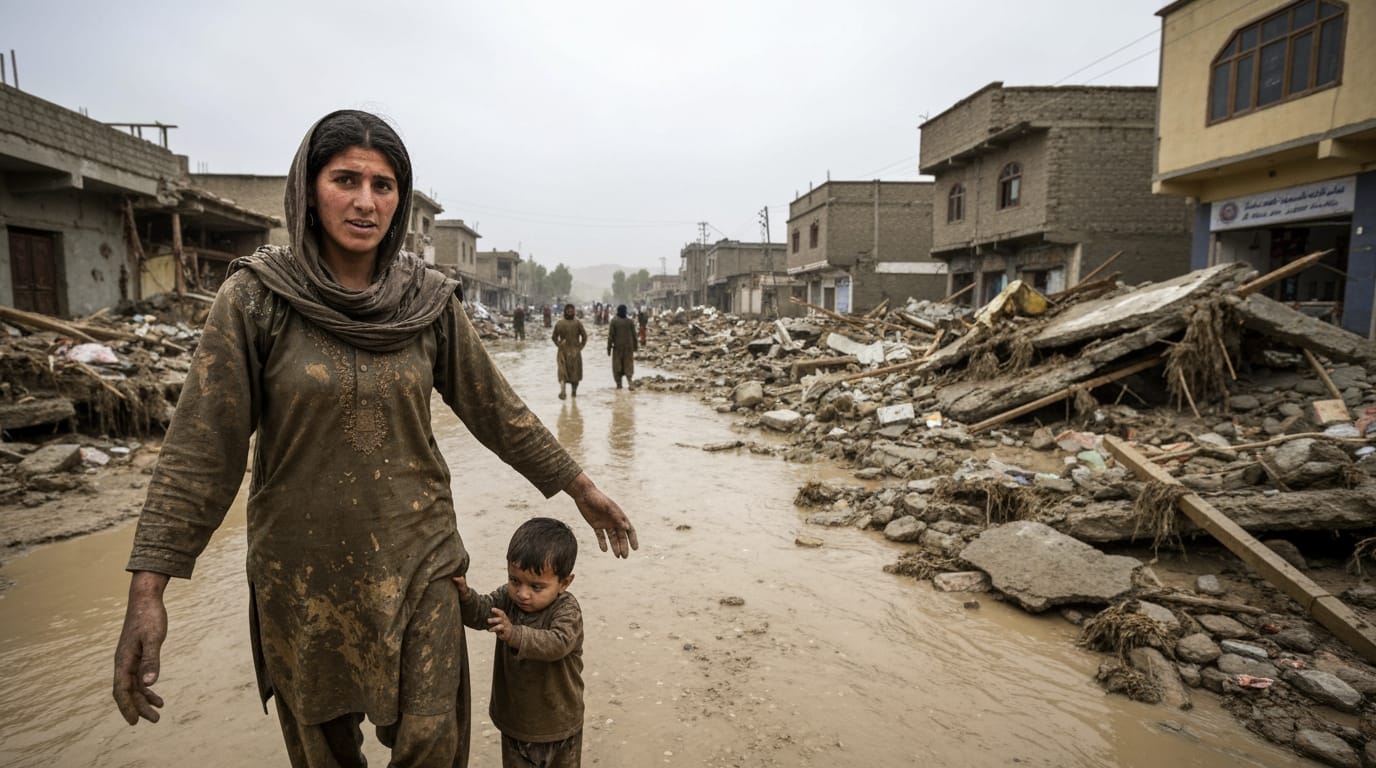
KABUL, Afghanistan – A torrent of monsoon-driven flash floods has swept through Afghanistan's eastern Nuristan province, claiming the lives of at least 20 people, injuring more than 80, and leaving over 100 individuals, including the provincial capital's mayor, missing. The catastrophic event, which struck on Monday, July 20, 2026, has inflicted "severe financial and human losses" in the remote mountainous region, particularly devastating Parun, the provincial capital.
The deluge, fueled by extreme rainfall exacerbated by a changing climate, has obliterated homes, businesses, and critical infrastructure, transforming riverbanks into treacherous landscapes strewn with massive boulders. As desperate residents comb through the wreckage for loved ones, Afghanistan's national disaster management agency and government officials acknowledge the immense scale of the disaster, with rescue efforts severely hampered by the province's rugged terrain and damaged roadways.
The Immediate Aftermath: A Town Underwater
The heart of the devastation lies in Parun, where the floodwaters surged through the riverside, engulfing what were once vibrant markets, shops, and municipal buildings. Eyewitness accounts and official reports paint a grim picture of destruction, with an NGO head, Ashiqullah Safi, stating that the flood had "completely destroyed the municipality," along with hotels and dozens of commercial establishments. The suddenness and intensity of the flash flood left little time for residents to react, leading to the high number of casualties and missing persons. Among those unaccounted for is the mayor of Parun, underscoring the widespread impact on the community's leadership and fabric.
Emergency response teams have mobilized, but the geographical isolation of Nuristan province presents formidable obstacles. The provincial capital, nestled in a remote northeastern area bordering Pakistan, is notoriously difficult to access, a challenge compounded by roads damaged or rendered impassable by the floodwaters. Residents, many without proper equipment, have been seen desperately sifting through mud and debris, a testament to the community's resilience in the face of overwhelming adversity. The national disaster management agency has confirmed that efforts are underway to rescue the injured and recover bodies, but the full extent of the tragedy remains uncertain as search operations continue.
Nuristan's Vulnerability: A Landscape Shaped by Extremes
Nuristan, a province characterized by towering mountains and deep river gorges, is inherently susceptible to natural disasters. Its rugged topography, while breathtaking, makes communities vulnerable to flash floods and landslides, especially during the monsoon season. The remote nature of the region means that infrastructure, including early warning systems and robust flood defenses, is often rudimentary or non-existent, leaving residents with little protection against sudden deluges.
Adding to this vulnerability is the issue of deforestation. Reports suggest that the clearing of forests in Nuristan and other Afghan provinces has significantly reduced the land's capacity to absorb heavy rainfall, thereby increasing the risk and severity of deadly flooding. This environmental degradation, combined with a largely agrarian society dependent on natural resources, means that when disaster strikes, livelihoods are not just damaged but often entirely wiped out, pushing already struggling communities deeper into poverty. The loss of agricultural land, livestock, and vital infrastructure like bridges and water systems can have long-lasting consequences, extending far beyond the immediate humanitarian crisis.
A Nation Under Threat: Climate Change and Humanitarian Crisis
The floods in Nuristan are not an isolated incident but rather a stark illustration of Afghanistan's increasing vulnerability to extreme weather events. The head of Afghanistan's environmental protection agency, Matiul Haq Khalis, has warned that flooding in the country has become more frequent, contributing significantly to an already dire humanitarian crisis. Afghanistan is ranked among the most vulnerable countries globally to the impacts of climate change, experiencing a wide array of environmental hazards including droughts, heatwaves, and frequent floods, averaging 10 incidents per year.
The scientific consensus links the increase in extreme rainfall events to human-caused climate change. Warmer air holds more water vapor, leading to more intense downpours and, consequently, more severe flash floods. This year's monsoon season has already brought chaos across South Asia, triggering floods and landslides in neighboring countries like India and Nepal. Afghanistan has witnessed a disturbing pattern of escalating flood disasters in recent years, including:
- July 2021: Kamdesh district in Nuristan experienced floods that killed 113 people and destroyed 173 houses, alongside agricultural land and infrastructure.
- August 2022: Further floods in Nuristan killed 25, injured many, and resulted in the loss of hundreds of livestock, severing vital road links.
- April 2024: Widespread floods across Afghanistan claimed at least 157 lives and injured over 220.
- May 2024: More than 214 fatalities and 328 injuries were reported across 25 provinces due to heavy rainfall and mudslides.
These recurring disasters exacerbate an already severe humanitarian crisis in Afghanistan, where nearly 22 million people require assistance and over 17 million face acute food insecurity. Decades of conflict, coupled with poor infrastructure and a struggling economy, have eroded the country's capacity to cope with such environmental shocks, making its population profoundly susceptible to the cascading effects of climate change.
A Cycle of Loss and the Long Road to Recovery
The recent floods in Nuristan underscore the immense challenges facing Afghanistan. The immediate priority remains search and rescue operations, providing medical aid to the injured, and delivering humanitarian assistance to those displaced and affected. However, the long-term recovery will be arduous. The destruction of homes, businesses, and agricultural land represents not just immediate loss but a severe setback for economic stability and food security in an already impoverished region.
The confluence of geographic vulnerability, environmental degradation, and the intensifying impacts of climate change creates a perilous cycle for Afghan communities. While government agencies and aid organizations strive to respond, the sheer scale and frequency of these disasters demand sustained international attention and support. As Nuristan grapples with its latest tragedy, the broader question remains: how can Afghanistan build resilience against an accelerating climate crisis that threatens to unravel the very fabric of its existence? The urgent need for improved infrastructure, reforestation efforts, and robust disaster preparedness systems is more apparent than ever, if the nation is to break free from this devastating cycle of loss and rebuild a more secure future for its people.


