Diplomatic Freeze: Taiwan Blames Chinese Pressure for Aborted African Presidential Trip
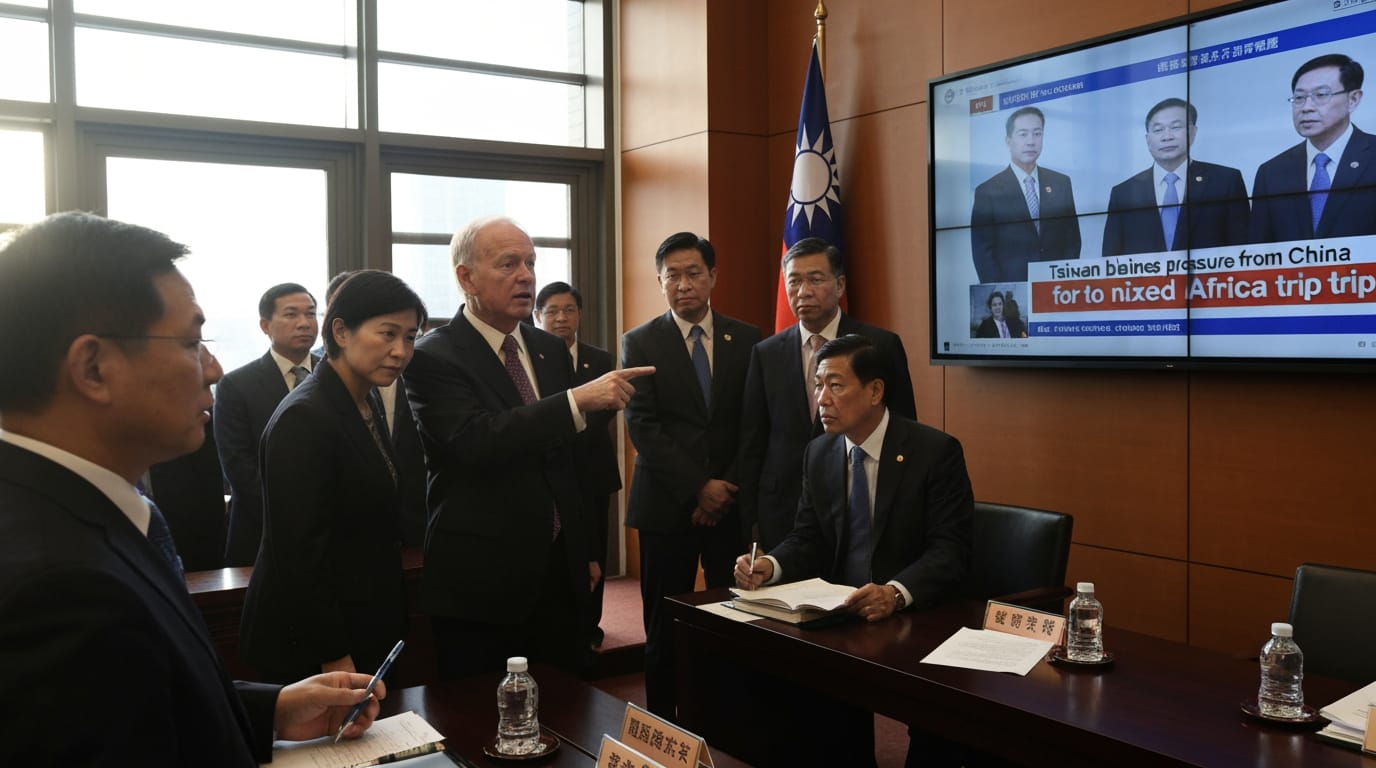
Taipei, Taiwan – A significant diplomatic incident unfolded this week as Taiwan's President Lai Ching-te was forced to cancel a planned trip to Eswatini, the island nation's last remaining diplomatic ally in Africa. Taiwan’s government has squarely laid the blame on Beijing, accusing Chinese authorities of exerting "intense pressure, including economic coercion," on three African nations to revoke crucial overflight permits, thereby thwarting the presidential visit. This unprecedented development underscores the escalating struggle between Beijing and Taipei for international recognition and highlights the formidable challenges Taiwan faces in maintaining its global diplomatic presence.
The cancellation, announced on Tuesday, April 21, came just a day before President Lai was scheduled to depart for Eswatini. The trip was intended to mark the 40th anniversary of King Mswati III's accession to the throne and his 58th birthday, serving as a vital reaffirmation of the enduring ties between Taipei and Mbabane. However, the unexpected withdrawal of airspace access by Seychelles, Mauritius, and Madagascar rendered the journey unfeasible, prompting a strong rebuke from Taiwan. Presidential Office Secretary-General Pan Meng-an condemned the actions, asserting that such coercion was "unprecedented" and a blatant interference in the internal affairs of sovereign nations.
The Incident: Airspace Denied, Diplomatic Bridges Burned
The meticulously planned itinerary for President Lai Ching-te's visit to Eswatini, a symbol of Taiwan's persistent, albeit shrinking, diplomatic footprint in Africa, ground to a halt following the sudden revocation of overflight permits. According to Taiwan's Presidential Office, the permissions were withdrawn by Seychelles, Mauritius, and Madagascar "without prior warning." This coordinated action effectively created an insurmountable barrier for the presidential aircraft, compelling Taipei to abort the trip over security concerns and logistical impossibilities. The move represents a significant escalation in Beijing's campaign to isolate Taiwan, moving beyond direct pressure on diplomatic allies to influencing transit routes.
Taiwanese officials were quick to point fingers at Beijing, stating that the "actual reason was intense pressure exerted by Chinese authorities, including economic coercion." While China's foreign ministry has not yet issued an official response to these specific allegations, a Malagasy foreign ministry official confirmed the denial of the overflight request, explicitly stating that "Malagasy diplomacy recognizes only one China." This statement echoes Beijing's longstanding "One China" principle, which asserts that Taiwan is an inseparable part of China and prohibits countries from maintaining formal diplomatic relations with both Beijing and Taipei.
Beijing's "One China" Policy and the Diplomatic Squeeze
At the heart of this diplomatic standoff is China's unwavering "One China" principle, a core tenet of its foreign policy. This principle dictates that there is only one sovereign state under the name China, with the People's Republic of China (PRC) as its sole legitimate government, and Taiwan (officially the Republic of China, ROC) as an integral, inalienable part of its territory. Beijing vehemently opposes any actions that suggest Taiwan is a sovereign state, including official visits by Taiwanese leaders to countries with which China maintains diplomatic ties or through which Taiwanese leaders seek to transit.
China has historically leveraged its considerable economic and political influence to compel countries to sever ties with Taiwan and adhere to the "One China" principle. This strategy has proven highly effective over the decades, leading to a dramatic reduction in the number of nations that formally recognize Taiwan. From a high of several dozen, Taiwan now maintains official diplomatic relations with only 12 countries worldwide, primarily smaller nations in Latin America, the Caribbean, and the Pacific, with Eswatini being the sole African partner. The recent incident signals an intensified effort by Beijing to further constrict Taiwan's international space, even extending to control over aerial transit.
Taiwan's Enduring Struggle for International Space
For Taiwan, the cancellation of President Lai's trip is a stark reminder of its precarious position on the global stage. President Lai Ching-te, whom Beijing has labeled a "separatist" due to his party's pro-sovereignty stance, has consistently affirmed that only the people of Taiwan can decide their future. He argues that the island has a right to engage with the world without interference from Beijing. In a public statement, President Lai asserted that China's "suppressive actions" demonstrate the threat authoritarian states pose to international order, peace, and stability, yet stressed that "no threat or suppression can change Taiwan's determination to engage with the world."
Despite the continuous diplomatic isolation campaign by Beijing, Taiwan has pursued a strategy of "soft power" engagement, particularly in Africa. This approach focuses on building influence through educational initiatives, healthcare cooperation, and development partnerships, often in contrast to China's large-scale infrastructure projects. Taiwan has invested in smart farming projects, medical missions, and educational programs in several African countries, aiming to foster long-term trust and provide local solutions. These efforts, however, are constantly challenged by the overarching geopolitical dynamics and Beijing's readiness to exert pressure on African nations to conform to its "One China" narrative.
Broader Implications for African Sovereignty and Global Diplomacy
The incident raises critical questions about the sovereignty of African nations and their ability to conduct independent foreign policy. The accusation of "economic coercion" by China suggests that these countries may have been presented with a stark choice: maintain diplomatic flexibility or risk economic repercussions from Beijing. While Madagascar cited its "One China" recognition as the basis for denying overflight, the allegations of external pressure underscore the complex web of relationships and dependencies that characterize contemporary international relations.
This event also sets a concerning precedent. If presidential transit through international airspace can be disrupted through diplomatic pressure, it could further constrict the international travel and engagement opportunities for leaders of nations not recognized by major powers. For Taiwan, it complicates the logistics of maintaining ties with its few remaining allies and highlights the pervasive nature of Beijing's influence. The international community will be watching closely to see if this incident portends a new phase in China's efforts to diminish Taiwan's global presence and what implications it might have for the freedom of navigation and overflight.
The cancellation of President Lai's trip to Eswatini is more than just a logistical setback; it is a potent symbol of the ongoing geopolitical struggle over Taiwan's international status. As Beijing intensifies its campaign to isolate Taipei, Taiwan continues to navigate a challenging diplomatic landscape, striving to maintain its connections with the world against significant odds. The incident serves as a clear illustration of the power dynamics at play and the complex choices faced by nations caught between two competing visions of sovereignty and international order.


