Curiosity Rover Unearths Diverse Organic Molecules in Gale Crater, Advancing Search for Martian Life
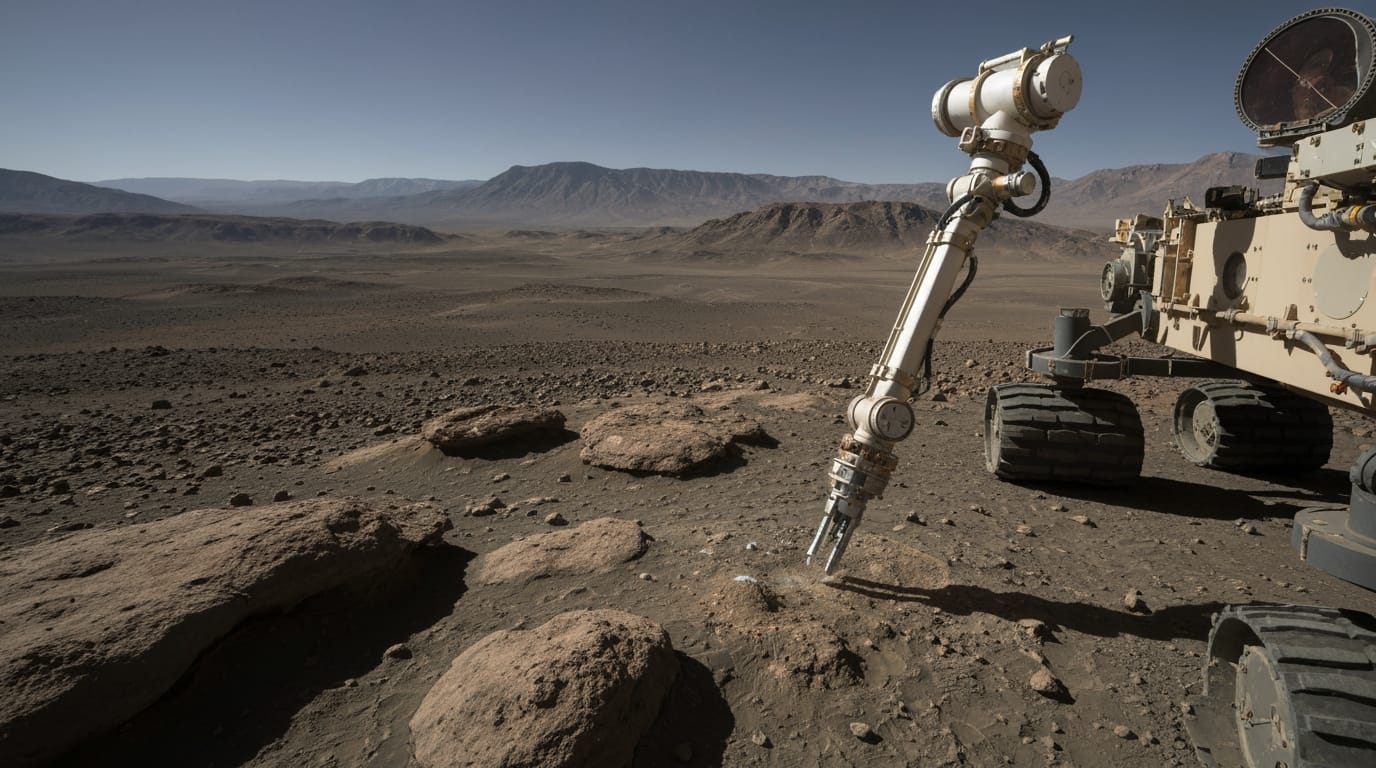
Gale Crater, Mars – NASA’s Curiosity rover has significantly expanded the understanding of Mars’ chemical history, revealing a diverse array of organic molecules within the ancient sedimentary rocks of Gale Crater. This groundbreaking discovery, detailed in a recent study, further strengthens the case for Mars having once possessed conditions favorable for microbial life and underscores the planet's capacity to preserve complex organic material over billions of years. The findings represent a crucial step in the ongoing quest to determine if life ever emerged beyond Earth.
Unveiling Martian Organic Complexity
The latest revelations from the Curiosity rover detail the detection of more than 20 different organic molecules from clay-bearing sandstones in the Glen Torridon region of Gale Crater. Among these compounds are nitrogen and sulfur-bearing molecules, including one with a structure akin to an indole, a precursor molecule for DNA on Earth. Additionally, the presence of benzothiophene, a large, double-ringed, sulfurous chemical often associated with interstellar material, was confirmed for the first time on Mars. Earlier reports in 2025 also highlighted the identification of decane, undecane, and dodecane – the largest organic molecules found on Mars to date, believed to be fragments of fatty acids.
This advanced detection was made possible by a novel chemical experiment conducted by Curiosity's Sample Analysis at Mars (SAM) instrument suite. For the first time on another planet, scientists employed tetramethylammonium hydroxide (TMAH), a highly alkaline reagent, to break apart larger, more complex organic molecules embedded within the rock samples. This innovative technique allowed the SAM instrument to analyze molecular components that might otherwise have remained hidden, providing an unprecedented glimpse into the Red Planet's ancient organic chemistry. The targeted samples, collected in 2020, originated from approximately 3.5-billion-year-old clay-rich sandstones in the Knockfarrill Hill section of Glen Torridon, a location carefully chosen for its potential to preserve organic materials.
The Building Blocks of Life on the Red Planet
The discovery of such a diverse array of organic molecules, some resembling the fundamental building blocks of terrestrial biology, holds profound implications for astrobiology. Organic molecules, characterized by their carbon-based structures, are essential components for life as it is known on Earth. Their presence in ancient Martian sediments suggests that the necessary chemical ingredients for life could have been abundant on early Mars.
However, scientists emphasize that these findings do not equate to proof of past or present life on Mars. Organic compounds can form through non-biological geological processes, be delivered by meteorites, or be synthesized through atmospheric photochemistry. While some research indicates that non-biological sources alone might not fully explain the observed abundance of these organics, definitively linking them to ancient Martian life requires further investigation. The remarkable preservation of these complex organics within the 3.5-billion-year-old rocks of Gale Crater highlights the crucial role that clay minerals play in safeguarding such delicate chemical clues from the harsh Martian surface environment, including billions of years of radiation exposure and diagenesis.
Curiosity's Enduring Quest for Habitability
Since its landing in Gale Crater in August 2012, the Curiosity rover has been meticulously exploring the Martian landscape, with its primary objective centered on assessing whether Mars ever offered environmental conditions conducive to microbial life. Early in its mission, Curiosity confirmed that Gale Crater was once a vast lakebed, rich in water and essential chemical elements, suggesting a potentially habitable environment approximately 3.5 billion years ago – a period when life was also evolving on Earth.
The rover's long-term operations have consistently provided evidence of ancient liquid water and detected simpler organic molecules in previous analyses. These earlier discoveries laid the foundation for the current, more complex findings, demonstrating a progression in understanding Mars' organic chemistry. The ongoing exploration of Gale Crater and the ascent of Mount Sharp allow Curiosity to investigate different geological layers, each offering insights into distinct periods of Martian history and diverse environmental conditions.
Paving the Way for Future Exploration
The successful implementation of the TMAH experiment on Mars has significant implications for future planetary science missions. The technique's proven ability to unlock larger, more complex organic molecules from ancient rocks could be adopted by upcoming missions, such as the European Space Agency's Rosalind Franklin rover and NASA's Dragonfly mission to Saturn's moon Titan, which are also designed to search for organic compounds in extraterrestrial environments.
Ultimately, definitive answers regarding the biological origin of these Martian organic molecules may require returning samples to Earth for analysis with more sophisticated laboratory instruments. The findings from Curiosity's latest discovery provide invaluable context and inform the strategies for ongoing and planned Mars Sample Return missions, which aim to bring Martian rock and regolith samples back for detailed study. Such future endeavors will build upon Curiosity's legacy, furthering humanity's understanding of the Red Planet's potential for hosting life.
The continuous stream of data from the Curiosity rover continues to reshape the scientific community's perception of Mars, transitioning it from a seemingly desolate world to one with a complex geological and chemical past, where the potential for life remains a compelling and active area of scientific inquiry.


