Diplomatic Tensions Mount as Dhaka Urges Delhi to Restrict Ex-PM Hasina's Political Activity
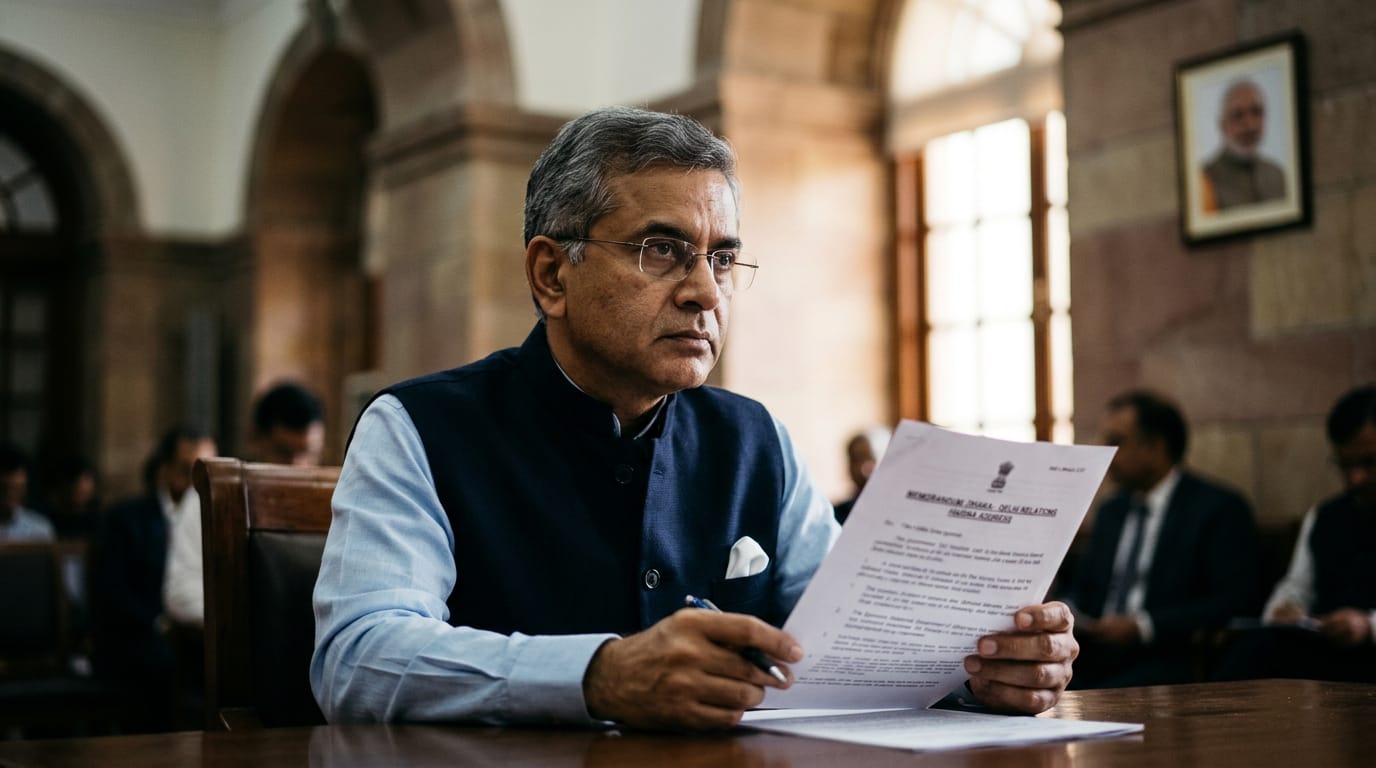
New Delhi/Dhaka – A burgeoning diplomatic challenge is unfolding between India and Bangladesh, centering on an urgent request from Dhaka for New Delhi to prevent former Bangladeshi Prime Minister Sheikh Hasina from engaging in political activities on Indian soil. The plea comes ahead of a scheduled virtual address by Hasina from India, an event that Bangladesh warns could jeopardize the improving bilateral relations between the two South Asian neighbors. The sensitive situation underscores the intricate dynamics of their partnership, particularly in the wake of recent political shifts in Bangladesh and the ongoing complexities of regional stability.
Bangladesh’s Prime Minister's Foreign Affairs Adviser, Humaiun Kobir, recently conveyed Dhaka's concerns to the newly appointed Indian High Commissioner to Bangladesh, Dinesh Trivedi. Kobir explicitly asked India to ensure that Hasina, whom Bangladesh considers a "fugitive," or any individual associated with banned organizations, does not use Indian territory to deliver political statements or undertake actions aimed at creating instability within Bangladesh. This diplomatic demarche follows reports that Sheikh Hasina is slated to make a virtual address on August 5, 2026, hosted by the Foreign Correspondents' Club of South Asia (FCC South Asia) in New Delhi. The timing is particularly significant as it coincides with the second anniversary of her government's ouster. Bangladeshi State Minister for Foreign Affairs, Shama Obaed Islam, echoed these sentiments, stressing that political activities by such individuals from India could negatively impact bilateral ties.
Hasina's Exile and Bangladesh's Shifting Political Landscape
The roots of this diplomatic friction lie in the dramatic political upheaval that swept Bangladesh in August 2024. Sheikh Hasina, who had led Bangladesh as Prime Minister for an extended period, was ousted from power following widespread student-led protests. She subsequently sought refuge in India, where she has resided since. Hasina's nearly 16-year rule ended amidst an increasingly authoritarian perception and a surge of public dissatisfaction.
Following her departure, an interim government, led by Nobel laureate Muhammad Yunus, assumed control, tasked with restoring fair elections. In February 2026, the Bangladesh Nationalist Party (BNP), under Prime Minister Tarique Rahman, secured a decisive victory in the general elections, marking a significant political transition. Since then, Bangladesh has pursued legal proceedings against Hasina, culminating in a death sentence in 2025 for crimes against humanity related to a 2024 crackdown. Hasina has consistently rejected these charges, labeling them as politically motivated.
The current BNP government has actively sought Hasina's extradition from India. While New Delhi has acknowledged the request and indicated it is "under examination" due to legal and judicial processes, the imminent virtual address from Indian territory by a figure considered a convicted fugitive by Dhaka presents a direct challenge to the burgeoning diplomatic reset between the two nations. Bangladeshi officials emphasize that while the event is not government-organized, they expect India to uphold its stated position that fugitives should not engage in political activities from its soil.
The Broader Canvas of India-Bangladesh Relations
The relationship between India and Bangladesh is multifaceted, steeped in a shared history and critical strategic interests. India played a pivotal role in Bangladesh's 1971 War of Independence, a bond that has historically underpinned their cooperation. Over the years, their ties have expanded across various sectors, including trade, connectivity, defense, and cultural exchanges. Under previous administrations, including Hasina's, the relationship saw significant advancements.
However, the bilateral relationship is not without its complexities, with persistent issues often casting shadows over diplomatic endeavors. One of the most enduring and politically sensitive disputes revolves around the sharing of the Teesta River waters. The Teesta, originating in India's Sikkim and flowing through West Bengal before entering Bangladesh, is vital for irrigation and livelihoods in both regions, particularly during the dry season. Bangladesh has long argued that reduced upstream flow significantly impacts its agricultural sector and overall water security. Efforts to formalize a water-sharing treaty have repeatedly stalled, notably due to objections from the Indian state of West Bengal. Recent developments include renewed interest from Bangladesh's interim leadership in 2024 to revive talks, and even reports of Chinese diplomatic interest in a Teesta-related project in Bangladesh in early 2026, adding a geopolitical layer to the long-standing water dispute.
While the Teesta dispute remains a crucial underlying factor in their relationship, the immediate diplomatic pressure from Dhaka focuses squarely on India's stance regarding Hasina's political activities. This highlights the current government's "Bangladesh first" framework under Prime Minister Tarique Rahman and its desire to recalibrate relations with India, moving past the "Hasina era."
Geopolitical Implications and India's Balancing Act
India's approach to the current diplomatic request carries significant geopolitical implications, especially within its "Neighbourhood First" policy. Maintaining stable and cooperative relations with Bangladesh is paramount for India's regional security, economic interests, and its broader strategic posture in South Asia. Any perceived interference in Bangladesh's domestic politics or a lack of sensitivity towards Dhaka's concerns could strain the carefully cultivated relationship.
The Indian High Commissioner's assurance that the matter would be "duly considered" and inquiries made signals New Delhi's recognition of the sensitivity of the situation. India has historically maintained a policy of supporting free and fair elections in Bangladesh, and its close monitoring of political developments in its eastern neighbor is well-documented. However, the current situation demands a delicate balancing act. On one hand, India must uphold its diplomatic commitments and avoid actions that could be interpreted as undermining the sovereignty of the current Bangladeshi government. On the other hand, it must navigate the complexities of individual rights and the presence of political exiles within its borders.
Furthermore, regional dynamics, particularly the growing influence of China in South Asia, add another layer of complexity. As Bangladesh seeks to maintain balanced relationships with major global powers, any perceived misstep by India could inadvertently create an opening for increased engagement from other actors. The BNP government's earlier strengthening of ties with China during its previous tenure, for instance, has been a point of past concern for Delhi.
Conclusion
The diplomatic dialogue between Dhaka and New Delhi concerning Sheikh Hasina's planned virtual address represents a critical juncture in India-Bangladesh relations. Bangladesh's forceful appeal underscores its commitment to asserting its new political trajectory and ensuring its domestic stability, free from external political interference. India, in turn, faces the challenge of responding to its neighbor's concerns while upholding its own legal principles and maintaining regional harmony. The decision New Delhi ultimately makes regarding Hasina's political activities from its territory will be closely watched, not only by Dhaka but by other regional and international stakeholders. It will undoubtedly shape the future course of this vital bilateral relationship and serve as a testament to India's commitment to its "Neighbourhood First" policy in a rapidly evolving geopolitical landscape.


