Displaced Ukrainians Face Systematic Home Seizure Under Russian Laws
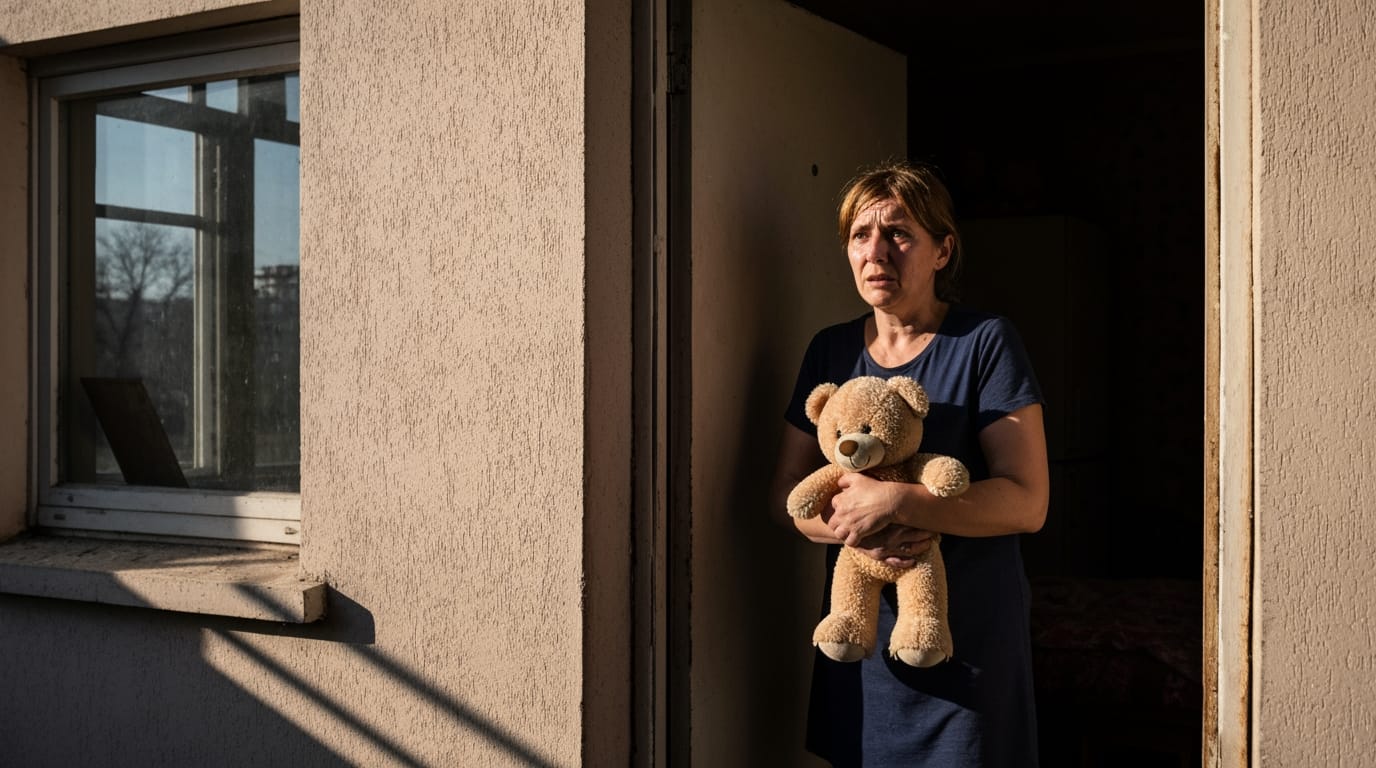
KYIV, Ukraine – Hundreds of thousands of Ukrainians displaced by the ongoing conflict are confronting a new and insidious threat: the systematic seizure of their homes and properties in occupied territories under a series of Russian laws and decrees. These legislative actions, which declare properties "ownerless" if not re-registered under Russian authority, are forcing many Ukrainians into an impossible choice between risking their safety in occupied zones or forfeiting their lifelong assets. The international community has widely condemned these measures as flagrant violations of international humanitarian law, further complicating any future peace and reconstruction efforts.
The Legal Framework of Dispossession
Since the full-scale invasion in 2022, and building on precedents established after the 2014 annexation of Crimea, Russian occupation authorities have progressively implemented laws designed to facilitate the appropriation of Ukrainian private property. In occupied regions such as Donetsk, Luhansk, Kherson, and Zaporizhzhia, legislation enacted primarily in 2023 and 2024 requires property owners to register their assets in the Russian Unified State Register of Real Estate. A critical aspect of this process often mandates in-person registration and, increasingly, the possession of a Russian passport, creating an insurmountable barrier for many displaced Ukrainians.
In Crimea, the mechanism for seizure has been in place longer. A 2020 decree signed by Russian President Vladimir Putin designated nearly all of Crimea as a "border territory," prohibiting "foreign citizens," including Ukrainians who did not accept Russian citizenship, from owning land there. This led to mass forced sales and court-ordered seizures of properties belonging to those who refused Russian passports. Over 4,000 businesses and private homes have reportedly been "nationalized" in Crimea, with approximately 1,000 more facing a similar fate.
Across all occupied territories, properties are deemed "ownerless" if they show signs of non-use, such as unpaid utility bills for a year, or if ownership information cannot be verified or documents are missing. Once designated as "ownerless," these properties can be transferred to municipal ownership and subsequently allocated to Russian citizens, military personnel, officials, or public-sector workers. The absence of ownership information, or the inability to verify documents, does not prevent seizure. The process can begin with a report from an inspector or even a local resident, followed by a limited window for the owner to appear in person with a Russian passport to challenge the claim. Without this, properties are placed on a register of "ownerless property," leading to court decisions to transfer ownership, often within months.
The Human Cost and Impossible Choices
For millions of Ukrainians who fled their homes for safety, these laws represent a profound betrayal and an agonizing dilemma. To retain their property, individuals are compelled to return to Russian-occupied territories, a journey fraught with peril. These risks include arbitrary detention, rigorous "filtration" processes involving extensive security checks and interrogations, and the implicit coercion to accept Russian citizenship. Human rights defenders have urged Ukrainian citizens to refrain from traveling to occupied territories or accepting Russian passports for property re-registration, highlighting the severe threats to their life and health.
The human stories behind these statistics underscore the depth of the crisis. Families who invested years of savings into their homes find them occupied by strangers, often Russian military personnel or new residents relocated to the territories. In Mariupol, a city devastated by conflict, at least 5,700 homes have been earmarked for seizure, with 2,200 officially declared "ownerless" and 3,550 under review. Displaced residents describe the process as "nearly impossible" to navigate from outside, with many unable to travel or fearful of the consequences. This forced displacement and subsequent property seizure lead to immense psychological distress, economic devastation, and the potential for permanent dispossession.
Blatant Breach of International Law
The international community, including the United Nations High Commissioner for Human Rights (OHCHR) and numerous human rights organizations, has unequivocally condemned Russia's property seizure policies as grave violations of international law. International humanitarian law (IHL), particularly the 1907 Hague Convention IV and the 1949 Fourth Geneva Convention, strictly prohibits an occupying power from confiscating private property. These conventions stipulate that an occupying power acts merely as an administrator and cannot make permanent changes to the legal order of occupied territory or exploit its resources for its own benefit.
The OHCHR has explicitly reminded the Russian Federation that IHL forbids occupying powers from confiscating private property and from compelling residents to "swear allegiance to the hostile Power," an obligation implicit in requiring Russian citizenship to protect property rights. Such actions are considered a "far-reaching change to the existing legal and institutional order," which is a violation of IHL. Human rights defenders further assert that the seizure of immovable property by declaring it ownerless and transferring it to occupation structures constitutes a war crime under the Rome Statute of the International Criminal Court. Ukraine consistently maintains that any documents or actions by occupation authorities regarding property have no legal force and will not be recognized.
A Strategy of Russification and Demographic Shift
Beyond the immediate financial and personal impact on displaced Ukrainians, these property seizures appear to be part of a broader, deliberate strategy by Russia to cement its control over occupied territories and alter their demographic composition. By allocating seized homes to Russian military personnel, officials, and new settlers, Moscow aims to integrate these regions more deeply into the Russian Federation. This policy fosters a new layer of dependency and loyalty to the occupying power, while simultaneously punishing those who remain loyal to Ukraine.
Reports indicate that these expropriations are part of a model that includes repurposing and rebranding seized assets, and constructing new housing, all presented as symbols of a "better future" under Russian rule. This systematic appropriation not only facilitates a demographic shift but also serves to reward those serving Russia's war effort, providing them with housing and stability at the expense of displaced Ukrainian owners. The policy essentially aims to create an irreversible physical, legal, and demographic infrastructure for occupation, complicating any future reintegration of these territories into Ukraine.
The Russian laws, set to remain in effect until at least 2030, underscore the long-term nature of this annexation strategy. This organized dispossession represents a profound challenge to international legal norms and poses a significant obstacle to achieving a just and lasting resolution to the conflict, leaving millions of Ukrainians in a state of limbo regarding their homes and their future.


