Displaced Women Face Heightened Safety Risks in Nepal Flood Shelters
Crowded conditions and inadequate shelter in flood-hit northern Nepal have left displaced women and children exposed to trafficking and gender-based violence.
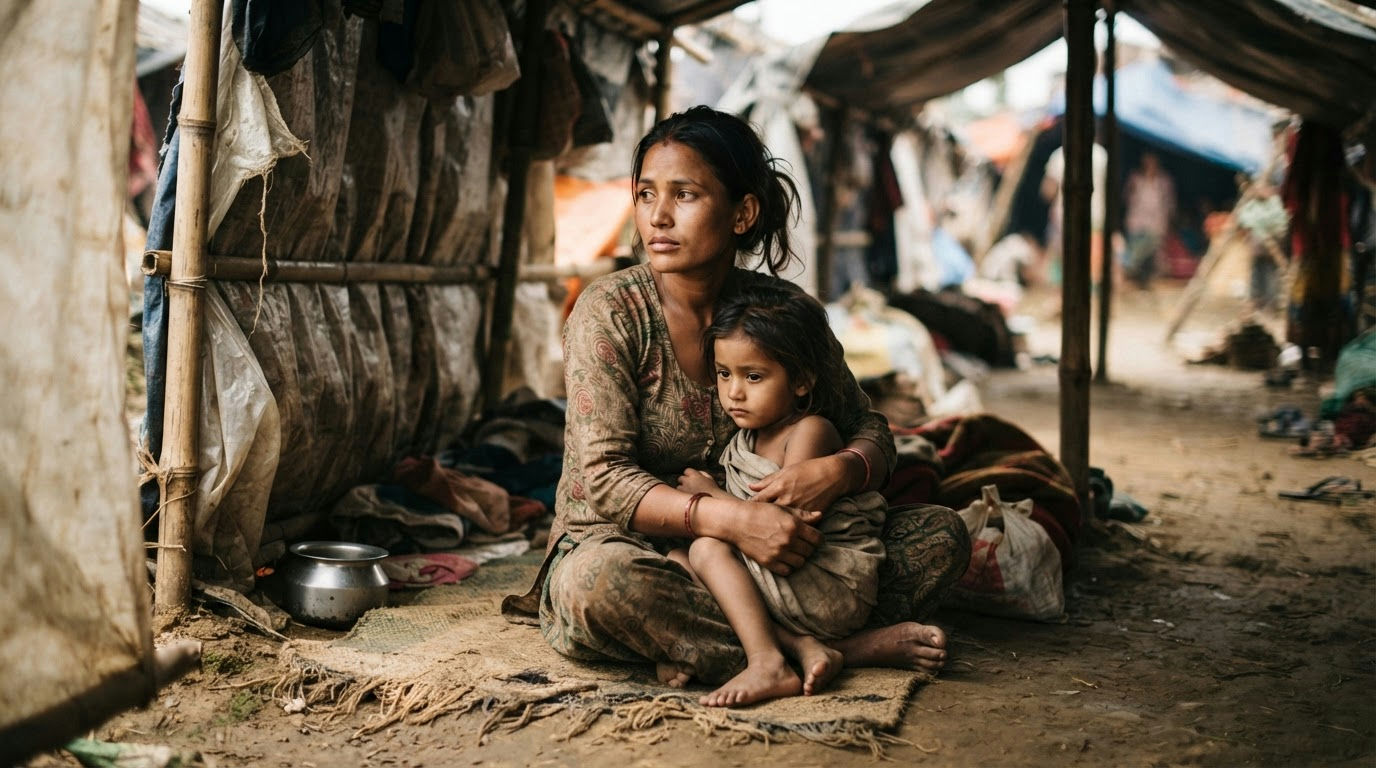
Women and children displaced by catastrophic flash floods in northern Nepal are struggling with unsafe living conditions, severe overcrowding and a lack of privacy in temporary shelters. Aid organizations warned that the absence of secure housing has increased the danger of gender-based violence, exploitation and human trafficking across affected districts.
The disaster began on August 26, 2026, when glacial collapses and torrential rains triggered flash floods along the Trishuli river corridor. The disaster destroyed roughly 10,000 homes, killed more than 1,400 people and left an estimated 5,700 people unaccounted for. Weeks after the floodwaters receded, thousands of displaced families remain confined to temporary relief sites, including repurposed schools and tent encampments.
Survivors sheltering in facilities across Nuwakot district reported persistent shortages of clean water, functioning sanitation facilities and personal hygiene supplies. Multiple families frequently share single rooms without partitions, forcing women and girls to manage routine hygiene in open spaces. Many communal centers and makeshift camps on town outskirts also lack indoor lighting, leaving women fearful when using latrines or moving around at night.
Humanitarian groups cautioned that displacement has exacerbated existing protection risks. Historical data shows natural disasters in Nepal routinely correlate with spikes in cross-border human trafficking and child marriage. UN Women reported that roughly 157,050 women and girls suffered direct or indirect impacts in Rasuwa and Nuwakot districts alone. Illiteracy among one-third of the women in these regions has further limited their ability to register for state assistance.
In response, international agencies and local partners have deployed monitors to displacement sites and positioned staff alongside police at road checkpoints. Teams are screening travelers to identify potential victims of exploitation and trafficking. Save the Children called on authorities to establish structured housing plans, noting that displaced families face eviction as local schools prepare to resume academic classes.