Double Displacement: War in Lebanon Pushes Thousands into Syria's Lingering Crisis

DAMASCUS/BEIRUT – A new wave of desperate humanity is flowing across the Lebanese border into war-ravaged Syria, as escalating hostilities in Lebanon force hundreds of thousands to abandon their homes, many for the second or even third time in a decade. This reverse exodus, largely driven by intense Israeli bombardments and retaliatory actions, is exacerbating an already catastrophic humanitarian crisis in Syria and placing immense strain on an overburdened region. Aid agencies warn of a rapidly deteriorating situation, as a conflict broadly linked to the ongoing "Iran war" reshapes migration patterns and deepens human suffering.
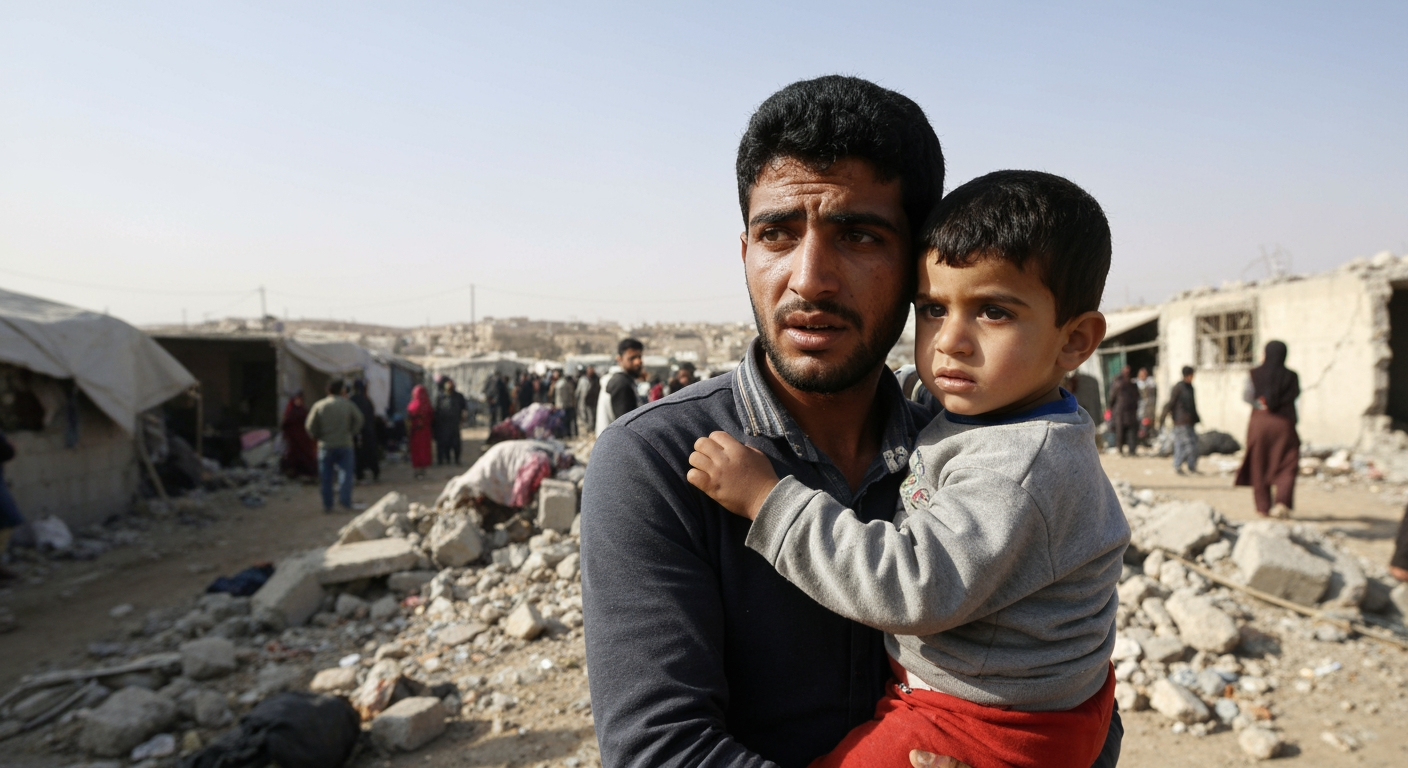
Since early March 2026, more than 1 million people have been displaced within Lebanon, fleeing relentless violence that has particularly devastated southern Lebanon and the southern suburbs of Beirut. Of these, over 200,000 have sought refuge in neighboring Syria between March 2 and March 27, according to UN figures. The vast majority—nearly 180,000—are Syrian nationals who had previously escaped conflict in their homeland to find safety in Lebanon, only to be uprooted once more. Approximately 28,000 Lebanese nationals have also crossed the border, seeking sanctuary with relatives or in temporary shelters in Syria. This urgent movement highlights the cascading effects of regional instability and poses formidable challenges for an international humanitarian system already stretched to its limits.
A Region Ablaze: The Catalyst for Exodus
The current displacement crisis stems from a sharp escalation of hostilities in Lebanon. Following Hezbollah's rocket and drone launches into northern Israel, the Israeli military initiated a renewed air and ground offensive across Lebanon. These actions, occurring within the broader context of a "Middle East conflict" that began on February 28, 2026, and involved US and Israeli attacks, have created an untenable environment for civilians. The United Nations Refugee Agency (UNHCR) notes that Israeli attacks and evacuation orders have directly contributed to the displacement of over a million people across Lebanon, pushing many to seek safety across the border.
The scale of internal displacement within Lebanon is staggering. Over 1 million people have been forced from their homes, with more than 134,000 registering in collective shelters, including public schools and universities. Countless others are living with host families, renting accommodations, or even sleeping outdoors, placing immense pressure on already fragile infrastructure and services. For many, this marks a "second displacement" within a year and a half, underscoring the relentless cycle of conflict impacting the Lebanese population. The violence has shattered livelihoods and tested the very sense of future for a nation already grappling with years of economic collapse and political instability.
Syria's Unwilling Sanctuary
The influx of people from Lebanon is overwhelmingly directed towards Syria, a country that has endured 14 years of its own devastating conflict. This extended crisis has left Syria with dire socioeconomic conditions, unpredictable security, and vast areas scarred by war. The arrival of new populations, many of whom are returning Syrian refugees, places an additional, severe burden on a state and communities already struggling to provide for their own.
A particularly grim reality for those entering Syria is the pervasive danger of landmines and unexploded ordnance. Syria ranks among the world's most heavily mine-contaminated countries, a legacy of its prolonged civil war. Major crossing points, such as Jdeidet Yabous in rural Damascus, lead directly into some of the worst-affected regions. Since December 2024, more than 700 deaths from explosive ordnance have been recorded, including over 200 children, with 1,900 injuries. Many returning Syrians, having lived in Lebanon for years, are now venturing into unfamiliar territory, often unaware of the deadly risks lurking beneath the surface.
The irony of Syrian refugees fleeing back to their war-torn homeland underscores the dire lack of viable alternatives in the region. This "double displacement" dynamic means that people already displaced by previous conflicts are being forced to move again, their options narrowing rather than expanding. Local communities in Syria, often with limited resources themselves, are extending support to the new arrivals, housing them with relatives, in hosting centers, or in rented accommodations. However, their capacity is finite, and the strain is palpable.
The Human Toll and Urgent Needs
The demographics of the newly displaced paint a stark picture of vulnerability. Approximately 60% of those arriving in Syria from Lebanon are under the age of 18, with others presenting special needs, including disabilities and chronic illnesses. These individuals require immediate and sustained assistance. The International Organization for Migration (IOM) reports that many need cash assistance, food, and housing. UNHCR teams are present at key border crossings — including Jdaidet Yabous, Joussieh, Daboussieh, Jesr Al Qmar, and Al Arida — providing vital relief items such as hygiene kits, blankets, food, and water. Essential services like legal assistance, medical support, and nutrition screening are also being offered.
Beyond immediate survival, the psychological toll of repeated displacement is profound. Families are ripped apart, children are denied education, and the hope for a stable future dwindles with each new forced migration. The constant threat of violence and the pervasive danger of unexploded ordnance create an environment of perpetual anxiety. Humanitarian organizations are working to provide risk education to alert people to the dangers of mines, especially as they move into unfamiliar areas.
Stretched Resources and a Global Call to Action
The rapid escalation of conflict and subsequent displacement have placed immense pressure on humanitarian capabilities across the region. Organizations like IOM and UNHCR are scaling up operations, but face significant challenges. The conflict has sharply increased the cost of humanitarian response while simultaneously disrupting supply chains and logistics networks critical for aid delivery.
UNHCR's financial requirements for the emergency response to the influx from Lebanon to Syria stand at USD 124.9 million for the period from October 2024 to March 2025, part of a larger USD 324 million inter-agency appeal. However, the vulnerability of millions is exacerbated by a lack of financial resources, with global humanitarian funding contracting in recent years.
International organizations, including IOM, are urgently appealing for restraint and de-escalation from all parties, emphasizing the imperative to protect civilians and uphold humanitarian law. They underscore that sustained international support is not merely desirable but "essential" to address the mounting humanitarian needs and prevent further regional destabilization.
The current situation is a stark reminder of how quickly instability can reshape mobility patterns across entire regions, placing additional pressure on already vulnerable communities. The displacement from Lebanon into Syria is not just a migration statistic; it represents a deepening humanitarian catastrophe, pushing millions to the brink in a region already defined by protracted crises. Without an immediate cessation of hostilities and a concerted international effort, the human cost will continue to mount, further eroding any prospect of stability and recovery.
Related Articles


Mounting Frustration Grips Russia as Economic Hardship and War's Toll Deepen
Moscow, Russia – A palpable shift in public sentiment is emerging across Russia, with growing frustration among citizens fueled by a confluence of economic pressures, increasing internet restrictions, and the undeniable...


Germany's Strategic Calculus: Ukraine Aid is an Investment in European Security, Not Charity
Berlin – The ongoing provision of substantial aid to Ukraine by Germany and its allies is increasingly being framed not as an act of altruism, but as a crucial investment in European security and stability. This...