Dozens Feared Dead After Guyana Ferry Disaster Triggers Massive Search Operation
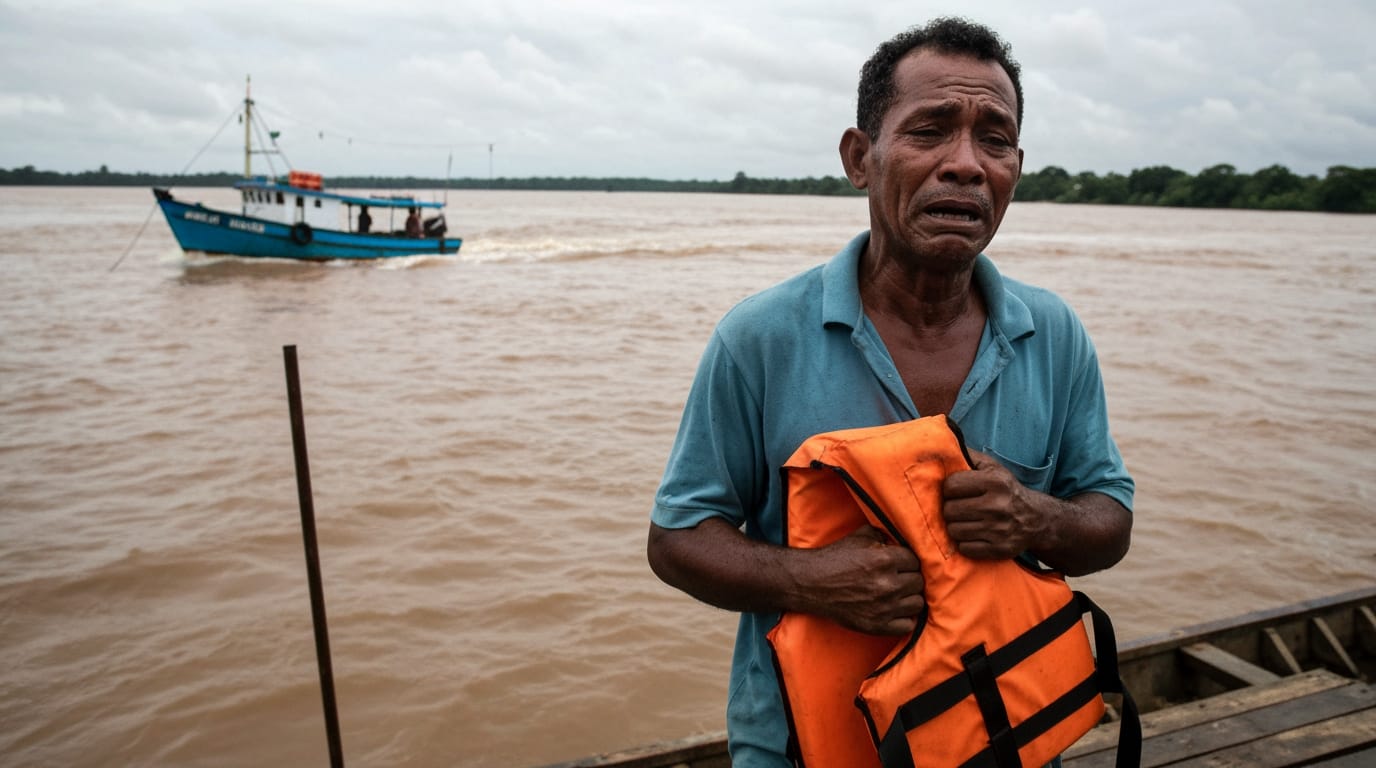
GEORGETOWN, Guyana – A passenger ferry carrying 133 individuals capsized off the North Atlantic coast of Guyana late Saturday, leaving dozens feared dead and sparking a massive, ongoing search and rescue effort that has gripped the nation. The MV Barima, a government-operated vessel, encountered distress approximately seven miles from shore while en route from the capital, Georgetown, to the remote village of Port Kaituma. Authorities have confirmed the rescue of 67 people, including 15 children, but 66 remain unaccounted for, prompting fears of a significant loss of life in what officials are calling one of the country's worst maritime disasters.
The tragic incident unfolded shortly before midnight on Saturday, July 18, 2026, after a distress call was received by air traffic control around 11 p.m.. The MV Barima, which regularly transports passengers and cargo to Indigenous communities near Venezuela, departed Georgetown shortly after 3 p.m. that afternoon. Early rescue attempts were severely hindered by the darkness, forcing responders to rely on sight and sound to locate survivors in the rough seas. Despite these initial challenges, the coordinated response now involves a broad coalition of state and private entities, utilizing helicopters, planes, and various vessels in an expansive search covering over 1,000 square miles. No new survivors have been found since Sunday afternoon, casting a grim shadow over the prospects of finding the remaining missing individuals alive.
The Disaster Unfolds and Rescue Efforts Mount
The immediate aftermath of the capsizing saw a frantic struggle for survival as passengers and crew were plunged into the ocean. Among the rescued are 41 men, 11 women, and 15 children, as reported by Guyanese Prime Minister Mark Phillips. Public Works Minister Juan Edghill confirmed that the search area has been dramatically expanded from an initial 400 square kilometers to 1,040 square kilometers in the hope of locating those still missing. Companies from the burgeoning oil and gas sector have deployed specialized vessels equipped with scanners to aid in the search, while divers have been activated to explore the submerged ferry for potential bodies. The captain and mate of the vessel, both among those rescued, have reportedly returned to the area to assist with the ongoing operations.
The gravity of the situation has drawn an urgent response from the Guyanese government, with Prime Minister Phillips leading the efforts. He emphasized the comprehensive nature of the search, stating, "To the families that are out there wondering about their loved ones, we are doing everything that is humanly possible to find them". The government is working to engage the families of both the rescued and the unaccounted-for passengers and crew, providing support during this agonizing period.
Conflicting Accounts and Emerging Allegations
As the search continues, questions are rapidly emerging regarding the circumstances leading to the capsizing of the MV Barima. Public Works Minister Juan Edghill initially suggested that a large wave or the challenging tide conditions might have caused the vessel to flip over, referencing statements from some rescued passengers. He also initially denied claims of overloading, asserting that the ferry was operating well within its licensed capacity for both passengers and cargo. According to Edghill, the MV Barima was licensed to carry 397 passengers and had only 116 on board, while its cargo weight of 268 tonnes was below its 284-tonne capacity. He dismissed any suggestions of mechanical failure or engine problems.
However, the narrative shifted dramatically later on Sunday when Minister Edghill announced that the captain and several other crew members had tested positive for marijuana and were subsequently taken into police custody. This revelation has sparked a criminal investigation, widening the scope of inquiry beyond environmental factors. Furthermore, discrepancies in the ferry's manifest have come to light, with some rescued individuals not listed on the official passenger record. This suggests potential inaccuracies in the vessel's documentation, raising concerns about oversight and accountability. Prime Minister Phillips has also launched an investigation into potential wrongdoing involving members of the police force, defense force, and maritime administration department, vowing that "those responsible will face the full force of the law" if negligence or criminal acts are established.
The Human Cost and Broader Maritime Safety Concerns
The human toll of the disaster is profound, tearing families apart and leaving many in a state of agonizing uncertainty. Leon Murray, a survivor, recounted the terrifying moment someone shouted the boat was sinking about four hours after leaving Georgetown. Murray managed to swim to safety with his son, but his wife, daughter, and four grandchildren remain missing. "Six of them gone," he told a local news outlet, highlighting the immense personal tragedy endured by many. Another survivor, 18-year-old Wayne Kitson, spent six hours in the water after the capsizing and fears his wife and daughter perished in the accident. These harrowing accounts underscore the devastating impact on individuals and communities across Guyana.
The MV Barima itself is an aging vessel, built in 1939. While it underwent maintenance in 2024 and was scheduled for dry docking later this year, its age may become a point of scrutiny in the ongoing investigations. This incident also brings into focus broader discussions about maritime safety standards in regions like Guyana. Experts have raised questions about the applicability of international "blue-water" regulatory frameworks to local conditions, particularly in shallow, silt-heavy estuaries with shifting sandbars. Some argue that enforcing designs and equipment suited for deep oceans on vessels navigating complex river systems can inadvertently increase risks by altering a ship's stability. This tragedy could prompt a reevaluation of how maritime safety is assessed and enforced in such unique environments.
An Uncertain Future
As search and rescue operations continue with dwindling hope of finding further survivors, Guyana faces the daunting task of unraveling the full truth behind the MV Barima's capsizing. The conflicting preliminary reports regarding the cause – from environmental factors like large waves to serious allegations of crew misconduct and inaccurate passenger manifests – indicate a complex investigation ahead. For the families of the 66 missing, each passing hour amplifies their anguish and the desperate yearning for answers. This disaster serves as a stark reminder of the inherent risks of sea travel and the critical importance of stringent safety protocols, accurate record-keeping, and vigilant oversight to prevent future tragedies on Guyana's vital waterways.


