Dozens Killed, Injured in Catastrophic Bus Collision on Syria's Perilous Eastern Highway
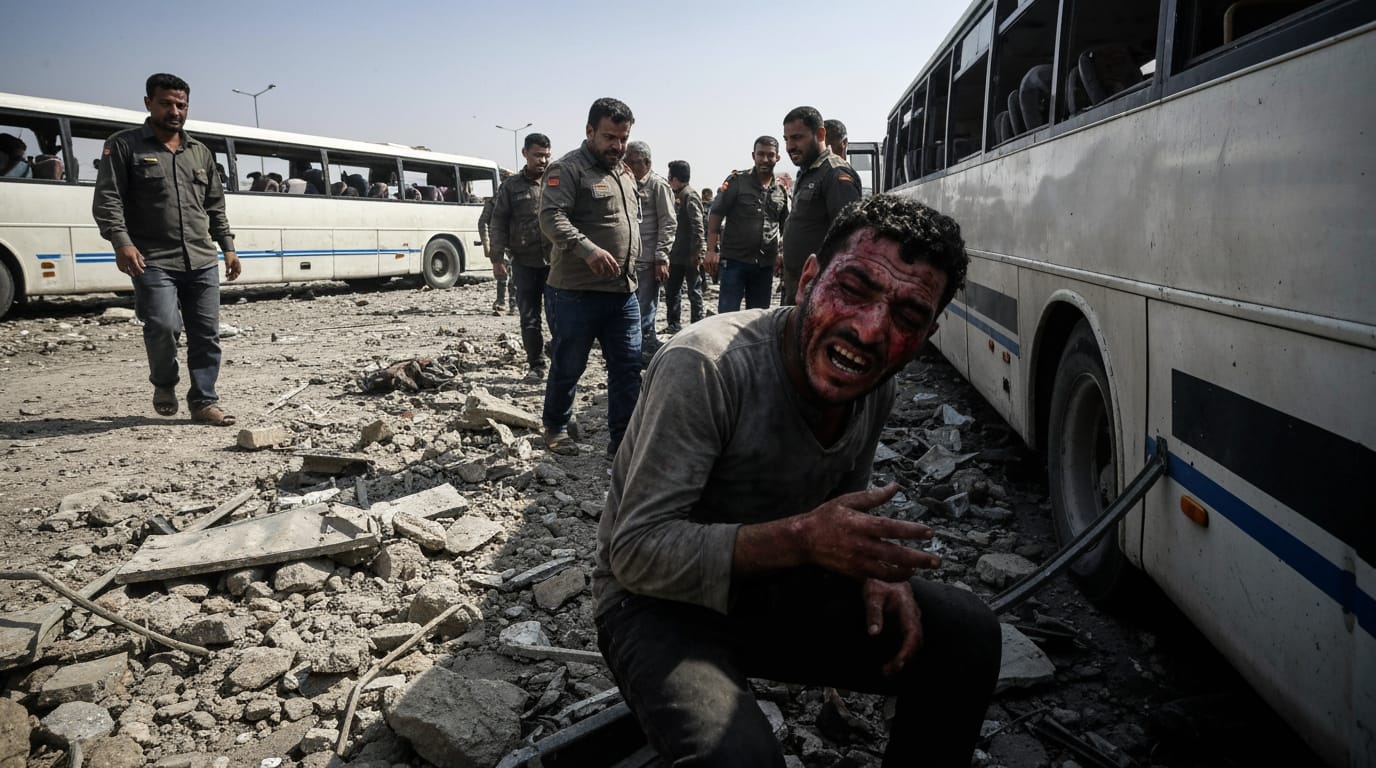
DAMASCUS, Syria – A devastating head-on collision between two buses on a key highway linking the Syrian capital with the eastern province of Deir el-Zour has resulted in the deaths of at least 35 individuals and left approximately 30 others injured. The tragic incident occurred Saturday on a desert stretch between Al-Sukhnah and the historic city of Palmyra, a route notoriously prone to serious traffic accidents. The crash, which involved a civilian passenger bus and a bus transporting members of the Internal Security Forces, underscores the severe challenges facing Syria's transportation infrastructure and road safety in the aftermath of years of prolonged conflict.
The full extent of the calamity became tragically apparent as rescue teams navigated a chaotic scene where one of the buses was engulfed in flames, significantly impeding immediate recovery efforts. Syrian state media, including the SANA news agency, reported the soaring casualty figures, initially citing a preliminary toll before confirming the higher numbers of fatalities and injuries. The collision adds another grim chapter to the country's struggle with road safety, often exacerbated by degraded infrastructure and challenging conditions following more than a decade of civil war.
Scene of Devastation and Heroic Response
The impact of the collision, described as head-on, was immense, tearing apart both vehicles and scattering debris across the desolate highway. Eyewitnesses and initial reports painted a harrowing picture, with one of the buses rapidly catching fire, trapping victims and complicating the already difficult task for first responders. The inferno required immediate action from firefighters before rescue personnel could fully engage in recovering victims and aiding survivors. The remote nature of the crash site, with the nearest hospital reportedly 50 kilometers away, presented additional logistical hurdles for emergency services.
In a rapid and coordinated response, ambulances were dispatched to the scene, and Syrian military helicopters were mobilized to medically evacuate the critically injured to Homs Military Hospital, highlighting the severity of the situation and the urgent need for specialized medical attention. Health ministry officials, including Najib al-Naasan, director of the Referral, Ambulance and Emergency Directorate, confirmed the rising death toll and the significant number of wounded. The Syrian Ministry of Interior also acknowledged the incident, confirming the involvement of a bus carrying Internal Security Forces personnel and expressing condolences to the affected families. Recovery operations were expected to continue as authorities worked to identify all victims and ensure all casualties were accounted for, with officials cautioning that casualty figures remained preliminary during ongoing efforts.
The Perilous Damascus-Deir el-Zour Highway
The highway connecting Damascus to Deir el-Zour, a critical artery stretching over 400 kilometers (249 miles), traverses vast desert landscapes and is well-known for its precarious safety record. Often dubbed the "Road of Death" by locals and media, this route has been the site of numerous fatal accidents. Its significance lies in its role as a vital link between the capital in the west and the eastern regions of Syria, facilitating both civilian travel and the movement of goods and security forces.
However, the strategic importance of this highway is overshadowed by persistent safety concerns. Factors contributing to the danger include long stretches of undivided road, challenging desert driving conditions, and a general state of disrepair stemming from years of neglect and damage during the conflict. The blend of high speeds, potentially fatigued drivers on long journeys, and compromised road infrastructure creates a volatile environment for travelers. This latest tragedy serves as a stark reminder of the inherent risks faced by those traversing Syria's extensive, yet often hazardous, road network.
Syria's Decimated Infrastructure and Road Safety Crisis
The bus collision cannot be viewed in isolation but rather as a symptom of a broader crisis within Syria's transportation infrastructure, severely degraded by over a decade of civil war. The conflict, which began in 2011, inflicted extensive damage across nearly all transport modes, including roads and railways, leading to a drastic curtailment of connectivity, economic logistics, and civilian mobility. While road transport remains the most widely used mode in the country, the network, despite its extensive coverage of approximately 70,000 kilometers, has suffered immensely.
Years of conflict have left many roads in a state of disrepair, with damaged surfaces, inadequate lighting, and a scarcity of proper road markings or safety barriers. Maintenance efforts have been sporadic and insufficient due to ongoing instability, economic sanctions, and a lack of resources. This degradation contributes significantly to the high incidence of road traffic accidents across the nation. In a telling statistic from October, Raed al-Saleh, the Minister of Disaster Management and Emergency Response, revealed that more than 2,000 road traffic accidents occurred between January and September alone, positioning such incidents among the leading causes of death in Syria. These figures underscore a systemic problem that goes beyond individual driver error, pointing to deeper issues with vehicle maintenance standards, driver training, and overall road safety enforcement in a country still grappling with the ramifications of war.
The Path Forward: Reconstruction and Reform
The investigation into the precise cause of Saturday's collision is ongoing, with authorities working to piece together the sequence of events that led to such a devastating outcome. While the immediate focus remains on humanitarian aid and supporting the victims and their families, this incident inevitably reignites urgent discussions about the critical need for comprehensive infrastructure reconstruction and enhanced road safety measures across Syria.
As the country tentatively embarks on a path toward recovery, rebuilding its transport networks will be paramount for economic stability, social connectivity, and the re-establishment of communities. This immense task requires not only significant financial investment but also a concerted effort to implement stringent safety regulations, improve road maintenance, and address factors such as vehicle roadworthiness and driver qualifications. Without sustained efforts to overhaul its ailing infrastructure and prioritize public safety, tragedies such as the one witnessed on the Damascus-Deir el-Zour highway risk becoming a distressingly common occurrence, adding to the already heavy burden borne by the Syrian populace. The human cost of a fragmented and perilous transportation system is undeniable, and the urgent call for reform resonates across the nation.


