Dozens Reported Killed in Overnight Gaza Air Strikes, Shattering Ceasefire
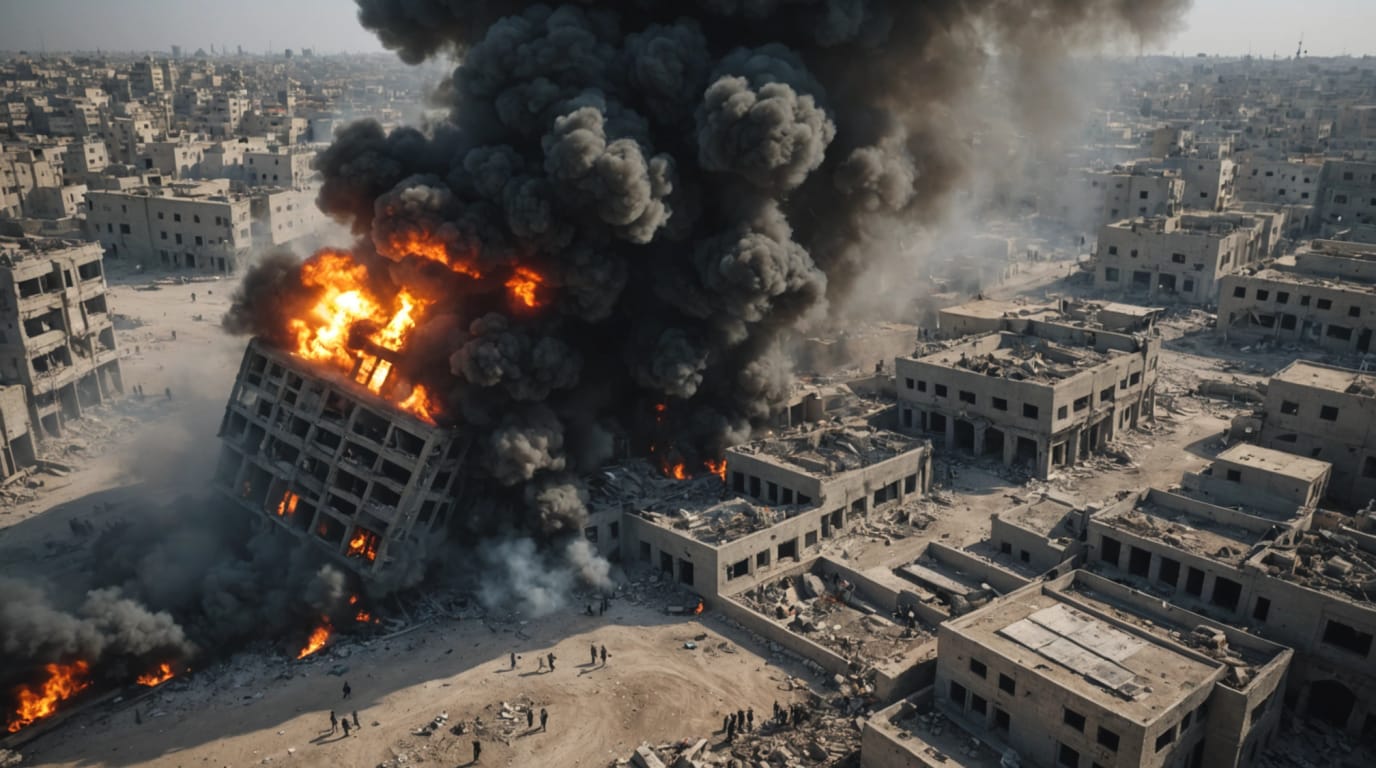
GAZA STRIP – A fragile two-month ceasefire between Israel and Hamas collapsed Tuesday as Israel launched a series of air strikes across the Gaza Strip. Palestinian health officials reported that the strikes killed more than 400 people, with hundreds more wounded. The renewed violence raises concerns about a potential escalation of the 17-month conflict and its impact on civilians.
Strikes Target Hamas, Inflict Civilian Casualties
The Israeli military said the strikes targeted dozens of Hamas sites in what it described as its heaviest assault since the January ceasefire. According to Israeli Prime Minister Benjamin Netanyahu, the operation was launched in response to Hamas's refusal to release half of the remaining hostages as a precondition for extending the ceasefire. Netanyahu stated that the strikes were "only the beginning" and vowed to continue until Israel achieves its goals of destroying Hamas and freeing all hostages.
Palestinian officials, however, reported that the strikes hit densely populated areas, resulting in a high number of civilian casualties. The Gaza Health Ministry stated that over half of those killed were women and children. Zaher al-Waheidi, head of the ministry's records department, described it as the deadliest day in Gaza since the start of the war. Hamas officials said at least six senior officials were killed in the strikes. Israel claimed these officials included the head of Hamas's civilian government, a justice ministry official, and two security agency chiefs.
Humanitarian Crisis Deepens
The renewed fighting exacerbates an already dire humanitarian situation in Gaza. The territory has been under a strict blockade by Israel since 2007, leading to widespread poverty, unemployment, and limited access to essential resources. International organizations have warned of a looming famine and the collapse of the healthcare system.
Caritas Internationalis, a confederation of Catholic aid agencies, condemned the resumption of air strikes and called for an immediate ceasefire. The organization highlighted the full blockade of humanitarian aid and the continued closure of the Rafah crossing, warning of an increased risk of mass starvation. "Conditions in Gaza were already an extreme humanitarian catastrophe, with people living in famine, without food, water, shelter, sewage removal or any reliable basic services," said Alistair Dutton, Secretary General of Caritas Internationalis.
UNICEF reports that at least 14,500 children have reportedly been killed in the Gaza Strip since October 7, 2023, representing an average of 32 children killed every day. The organization also estimates that 17,000 children are unaccompanied and/or separated.
International Condemnation and Calls for Ceasefire
The Israeli strikes have drawn widespread condemnation from the international community. United Nations Secretary-General Antonio Guterres expressed his shock and called for the ceasefire to be respected. The Palestinian presidency condemned the attacks and called on the international community to intervene.
Several countries, including the United Kingdom, Saudi Arabia, France, Turkey, Iran, Egypt, and Qatar, have also condemned the strikes. British Foreign Minister David Lammy called the civilian casualties "appalling" and urged all parties to re-engage in negotiations. Saudi Arabia's foreign ministry denounced Israel's actions "in the strongest terms" and called on the international community to stop crimes against Palestinians.
Hamas accused Israel of carrying out a "treacherous" strike on defenseless civilians to overturn the ceasefire deal and accused the United States of complicity.
Hostage Negotiations in Jeopardy
The renewed violence has cast a shadow over ongoing efforts to negotiate the release of Israeli hostages held by Hamas. Hamas official Izzat al-Risheq said that Netanyahu's decision to resume the war was "a decision to sacrifice the occupation's prisoners and impose a death sentence on them."
Families of the hostages have also criticized the Israeli government's actions, questioning why it chose to pull out of the ceasefire deal. The Hostages and Missing Families Forum said they "cannot believe that after all of the things that they've told the Israeli public through interviews that the government does not do everything they can to get them out because everyone knows which horrific conditions they're in."
A Return to Full-Scale Conflict?
The collapse of the ceasefire and the resumption of Israeli air strikes raise the specter of a return to full-scale conflict in Gaza. The Israeli military has issued evacuation orders for neighborhoods in Gaza, leading to speculation about a potential ground invasion.
The Gaza-Israel conflict has a long and complex history, marked by repeated cycles of violence. The current war began on October 7, 2023, when Hamas launched a surprise attack on Israel, killing approximately 1,200 people and taking 251 hostages. Israel responded with a military offensive that has killed over 48,000 Palestinians, according to local health officials, and displaced an estimated 90% of Gaza's population.
Uncertain Future
As the violence continues, the future of Gaza remains uncertain. The immediate priority is to protect civilians, ensure humanitarian access, and de-escalate the conflict. However, a lasting solution to the Gaza-Israel conflict will require addressing the underlying issues that have fueled the violence for decades, including the Israeli occupation of Palestinian territories, the blockade of Gaza, and the unresolved status of Palestinian refugees. Without a comprehensive approach, the cycle of violence is likely to continue, perpetuating the suffering of both Israelis and Palestinians.


