Drone Barrage Engulfs Libya's Largest Oil Refinery, Jeopardizing Fragile Economy
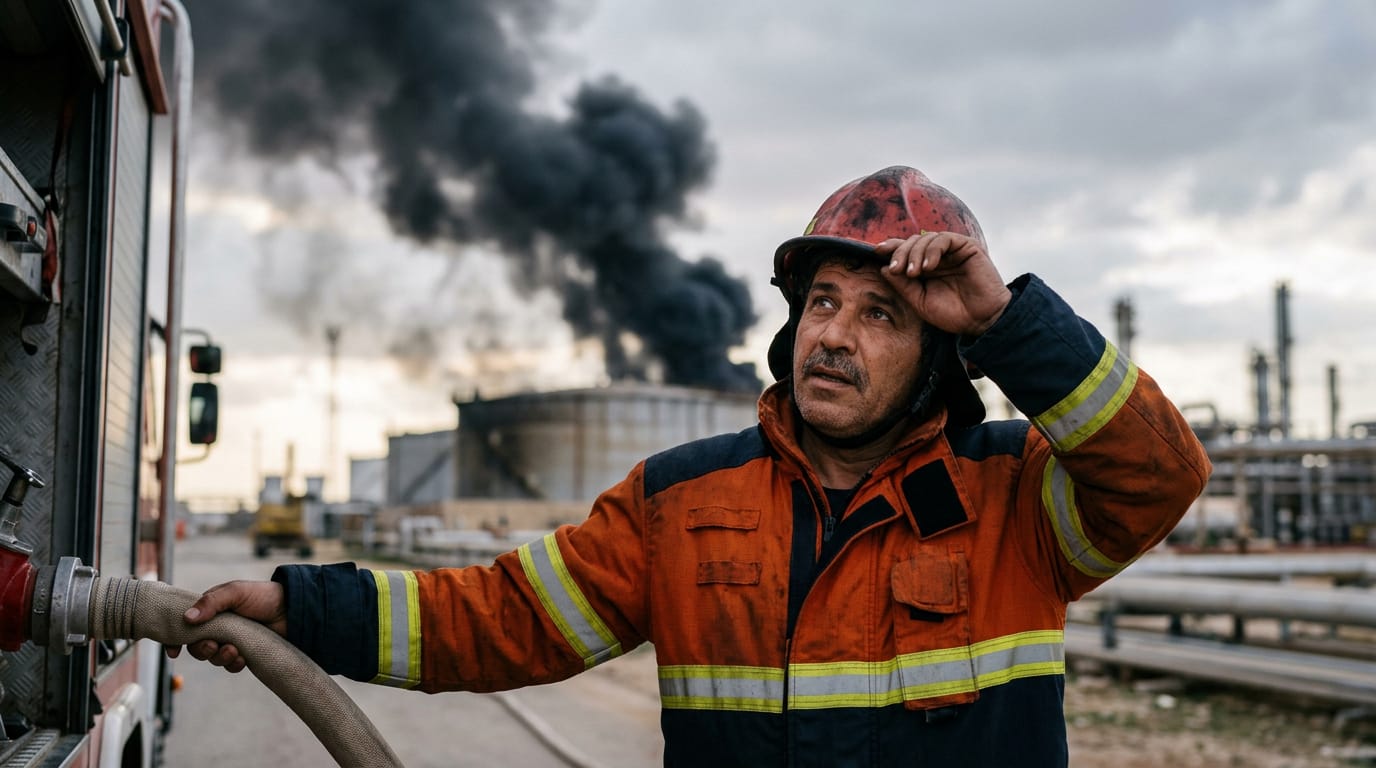
Zawiya, Libya – A series of sophisticated drone attacks has crippled Libya's largest operational oil refinery in Zawiya, approximately 40 kilometers (25 miles) west of the capital, Tripoli, triggering a massive blaze and forcing the National Oil Corporation (NOC) to declare force majeure. The coordinated assaults, spanning from Saturday through Tuesday, have highlighted the perilous state of the North African nation's vital energy infrastructure and cast a long shadow over its already fragile economic stability. While no group has claimed responsibility for the strikes, the incidents underscore the persistent insecurity plaguing Libya amidst its protracted political fragmentation.
Escalating Aerial Assaults at Zawiya
The aerial bombardment of the Zawiya complex began on Saturday with a drone strike targeting an untreated naphtha tank, which caused a leak that emergency personnel managed to contain. The attacks escalated on Sunday, with additional drones hitting a crucial water desalination plant within the facility.
The most significant incident occurred on Monday when a drone directly struck a gasoline storage tank (tank number 402-T) belonging to the Brega Oil Company. The tank, which held an estimated 4.5 million liters of fuel, ignited into a massive inferno, with footage showing "huge flames and thick black smoke billowing over the facility." The intensity of the blaze led to the complete collapse of the tank, a severe blow to the refinery's operations. Concurrently, another drone impacted near a different key oil tank, though it reportedly caused no casualties, and a third targeted an oil blending and filling plant.
The barrage continued into Tuesday, as drones targeted diesel tank No. 2/4 and subsequently No. 4/4, with the latter strike piercing its roof. Firefighting teams managed to contain these fires relatively quickly, preventing widespread damage. In a concerning development, the town's power plant, also part of the critical infrastructure in Zawiya, was hit by two drones on Tuesday. One damaged its firefighting system, while the other landed near its main fuel storage, causing another fire that was swiftly brought under control. Despite the extensive nature of these attacks, the National Oil Corporation consistently reported no casualties across all incidents.
Libya's Vulnerable Oil Lifeline
The Zawiya oil refinery stands as Libya's largest operational refining facility, boasting a capacity of 120,000 barrels per day. Its strategic importance extends beyond mere processing, as it is intricately linked to the Sharara oilfield, a major crude oil producer with a capacity of 300,000 barrels per day. The refinery plays a critical role in supplying the domestic market with refined petroleum products, making its disruption a direct threat to the country's energy security and daily life.
In response to the escalating attacks, the National Oil Corporation announced a halt to all operations at the Zawiya refinery and declared force majeure. This legal declaration effectively absolves the NOC of contractual obligations due to circumstances beyond its control and signals a severe disruption to production and supply. While the NOC initially stated that fuel supplies to gas stations were continuing on schedule and that fuel reserves remained unaffected, the prolonged cessation of refinery operations will inevitably strain domestic resources and potentially necessitate increased imports. Libya, Africa's second-largest oil-producing nation, is heavily reliant on its oil sector for revenue, with exports forming the backbone of its struggling economy. Any sustained disruption at key facilities like Zawiya sends tremors through the entire national financial system.
A Nation Divided, A Sector Under Siege
The drone attacks on the Zawiya refinery are a stark reminder of the enduring instability plaguing Libya since the 2011 overthrow of its longtime leader. The country remains politically fractured, divided primarily between the Tripoli-based Government of National Unity (GNU) and a rival administration operating from Benghazi. This deep-seated division has fostered an environment where various armed groups vie for control and influence, often leading to clashes that jeopardize critical infrastructure.
Zawiya, a coastal city west of Tripoli, has frequently been a flashpoint for such conflicts. Its strategic importance, housing not only the refinery but also an export terminal and a power plant, makes it a prime target in any power struggle. Recent weeks have seen an uptick in violence, with clashes between armed factions in Zawiya extending to the nearby city of Surman, resulting in casualties and even a prison break.
The lack of any group immediately claiming responsibility for the drone strikes further complicates an already opaque situation. This ambiguity points either to a clandestine operation by one of the myriad armed factions seeking to gain leverage or a deliberate attempt to sow chaos without direct attribution. Regardless of the perpetrator, the sophisticated nature of the drone attacks and their sustained targeting of vital components within the complex underscore a calculated effort to inflict maximum disruption. The consistent targeting of Libya's energy assets in the midst of ongoing internal strife illustrates the challenging security landscape that undermines any efforts toward national reconciliation and economic recovery.
Economic Ripples and Future Uncertainty
The immediate economic impact of the Zawiya refinery shutdown, though mitigated by existing fuel reserves and ongoing deliveries, presents a looming threat to Libya's economy. The declaration of force majeure directly affects contractual agreements and raises concerns among international buyers and partners about the reliability of Libyan oil supplies. Prolonged instability and attacks on such critical infrastructure deter much-needed foreign investment, which is essential for the modernization and expansion of the oil sector.
While the incident's impact on global oil prices may be limited in the short term given the refinery's focus on domestic supply, the cumulative effect of disruptions in major oil-producing nations like Libya contributes to market volatility and uncertainty. For ordinary Libyans, the attacks represent a further erosion of confidence in their government's ability to provide basic services and maintain order. The potential for future fuel shortages, even if not immediate, creates anxieties and disrupts daily life in a country already struggling with economic hardship. The repeated targeting of facilities like desalination plants also carries humanitarian implications, as access to clean water is a fundamental need.
A Precarious Future for Libyan Oil
The drone attacks on the Zawiya oil refinery serve as a stark and urgent reminder of the precarious situation facing Libya's vital energy sector and, by extension, its entire future. While casualties were fortunately avoided, the physical damage to infrastructure, particularly the complete collapse of a major gasoline tank, represents a significant setback. The National Oil Corporation's decision to halt operations and declare force majeure underscores the severity of the threat and the critical need for enhanced security measures.
The continued targeting of key oil facilities amidst a backdrop of political division and armed conflict reinforces the urgent necessity for a comprehensive and lasting political resolution in Libya. Without a unified and effective central authority capable of securing its strategic assets, the nation's economic lifeline will remain vulnerable to such destructive acts. The incidents at Zawiya highlight that until genuine stability is achieved, Libya's path to recovery will remain fraught with uncertainty, with its most valuable resource held hostage to ongoing internal strife.


