Drone Incursion Grounds Flights at Hanover Airport Amid Rising German Aviation Security Concerns
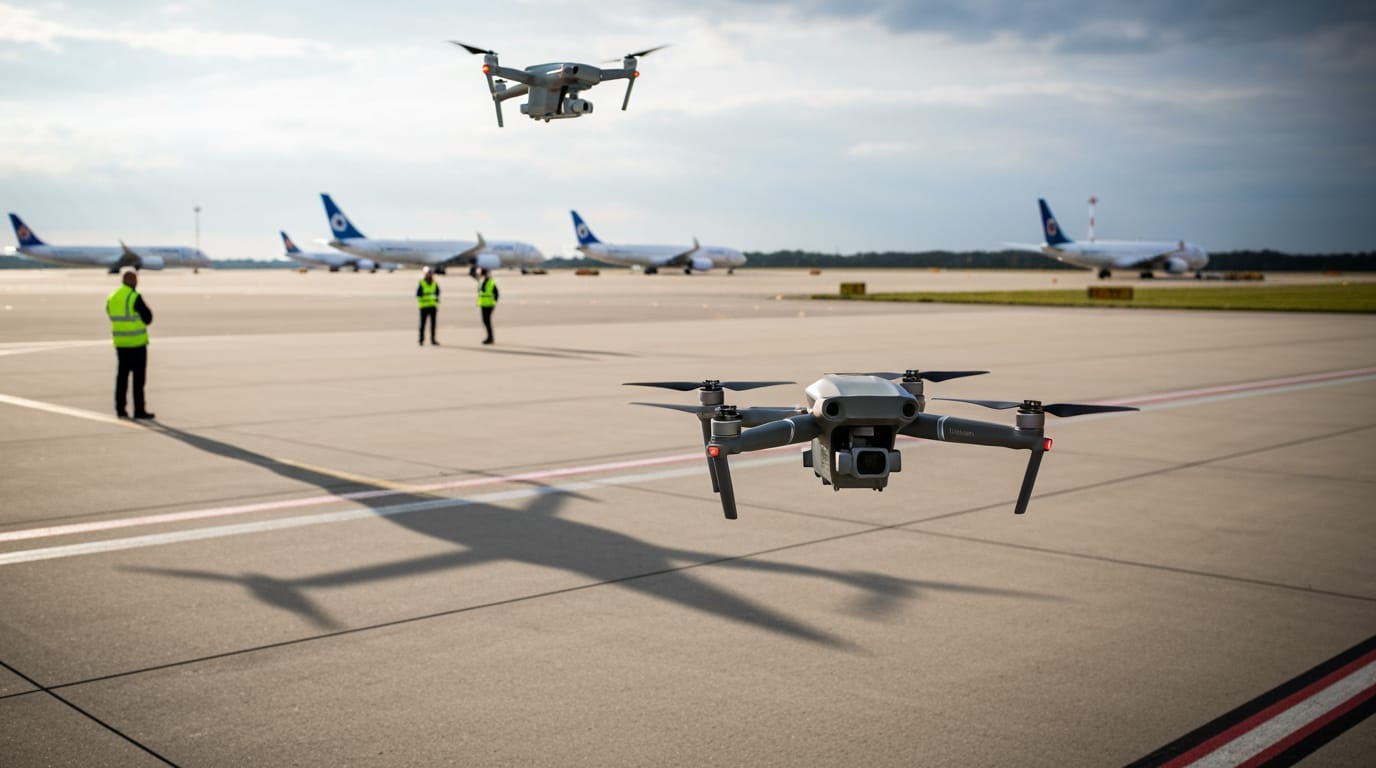
Hanover, Germany – Air traffic at Hanover Airport was temporarily suspended on the evening of November 5, 2025, after the sighting of an unidentified drone, marking another incident in a rapidly escalating pattern of unmanned aerial vehicle (UAV) disruptions affecting German airports. The brief shutdown grounded operations and forced flight diversions, underscoring the persistent and growing challenge posed by unauthorized drone activity to aviation safety and national security across Europe.
The incident at Hanover, which saw the airport close for 45 minutes from 10:00 PM local time, forced three aircraft to be rerouted to alternative destinations, including one flight from Frankfurt that was diverted to Hamburg. Several other flights experienced significant delays. Reports indicated the rogue drone was observed flying over an industrial zone adjacent to the airport before disappearing. This event adds to a concerning tally, as Hanover Airport had already recorded four drone-related incidents by the end of August this year.
Germany's Airspace Under Siege: A Mounting Threat
The disruption in Hanover is far from an isolated event, reflecting a broader and alarming trend across Germany's aviation sector. German authorities reported 208 confirmed drone incidents by November 2025, where UAVs posed a danger to manned aircraft. This figure represents a significant increase from previous years, surpassing 161 cases in all of 2024 and 99 incidents in 2023. Airports in major cities such as Berlin, Frankfurt, and Munich have frequently experienced close calls and operational halts due to unauthorized drones, particularly near flight paths and high-traffic airspaces. Frankfurt am Main Airport, the nation's busiest hub, recorded 45 drone sightings in the first eleven months of 2025 alone, a substantial rise from 17 during the same period last year. These disruptions not only jeopardize flights but also present considerable challenges for air traffic management.
The proliferation of drones, alongside their increasing accessibility for both recreational and commercial purposes, has intensified the risks associated with UAVs operating in restricted zones. Current German law strictly prohibits drone flights within a 1.5-kilometer radius of airports, with violations potentially leading to severe penalties, including prison sentences of up to ten years for endangering air traffic. Despite these regulations, the threat persists, primarily because drones are largely invisible to conventional airport radar systems, making detection reliant on pilot sightings or specialized equipment.
Bolstering Defenses: Germany's Strategic Response
In response to this escalating threat, German authorities have intensified efforts to enhance airport security and counteract drone risks. Specialized counter-drone units have been established and are being deployed at major airports, equipped with advanced detection systems to monitor airspace for unauthorized UAVs. These units are a critical component of a nationwide initiative to bolster capabilities against aerial threats.
A significant legislative development occurred in October 2025 when the German cabinet approved new measures aimed at strengthening drone security. The draft legislation, which awaits parliamentary approval, grants federal police new powers to intercept and neutralize suspected drones. These measures include the authorization to use electromagnetic pulses, signal jamming, GPS interference, and even physical interventions, such as intercepting or shooting down drones, in cases of acute threat or serious harm. This marks a substantial shift from previous approaches, which primarily focused on detection rather than active neutralization. Furthermore, the government plans to establish a dedicated national drone defense center and ensure new drone defense units are operational by the end of 2025, enhancing rapid response capabilities. Munich Airport, for instance, has reportedly deployed a laser-based system to detect and track unauthorized drones.
Broader Implications and International Concerns
The challenge of drone incursions extends beyond Germany's borders, with numerous European countries experiencing similar disruptions. Recent months have seen airport operations temporarily suspended in Denmark, Norway, Poland, and Romania, among others. In September 2025 alone, 14 European airports were affected by drone incursions. The most striking incidents occurred in late September and early October 2025, with major Nordic and German airports, including Copenhagen and Munich, facing repeated breaches that led to widespread cancellations and diversions.
The precise motives behind these drone flights often remain unclear. While some incidents may be attributed to inexperienced hobby pilots unaware of restricted airspace, authorities are increasingly considering more malicious intentions, including intelligence gathering or terrorist motives. German Chancellor Friedrich Merz has publicly linked some drone flights to Russia's "hybrid war efforts," a claim that Moscow denies. This perspective highlights the complex and potentially geopolitical dimensions of the drone threat, elevating it beyond a mere safety concern to a matter of national security.
Charting a Course for Safer Skies
The escalating frequency and potential severity of drone incidents necessitate a comprehensive and coordinated response. German Air Traffic Control (DFS) noted that while most reports originate from pilots or control towers, newly installed detection systems operated by the Federal Police are also contributing to the increased number of recorded cases, indicating improved surveillance. The German Airports Association (ADV) has strongly advocated for a legally secured, state-funded system for drone detection and defense, stressing that protecting airport infrastructure is a sovereign responsibility requiring cutting-edge technology and clear operational frameworks.
As the aviation industry grapples with this evolving threat, continued advancements in counter-drone technology, coupled with robust regulatory frameworks and collaborative efforts between federal and regional authorities, will be essential. The goal is to ensure comprehensive monitoring, swift intervention, and ultimately, secure German and European airspace from the growing menace of unauthorized drone activity, safeguarding both travelers and critical infrastructure.


