East Asian Powers Forge Energy Alliance Amidst Geopolitical Volatility
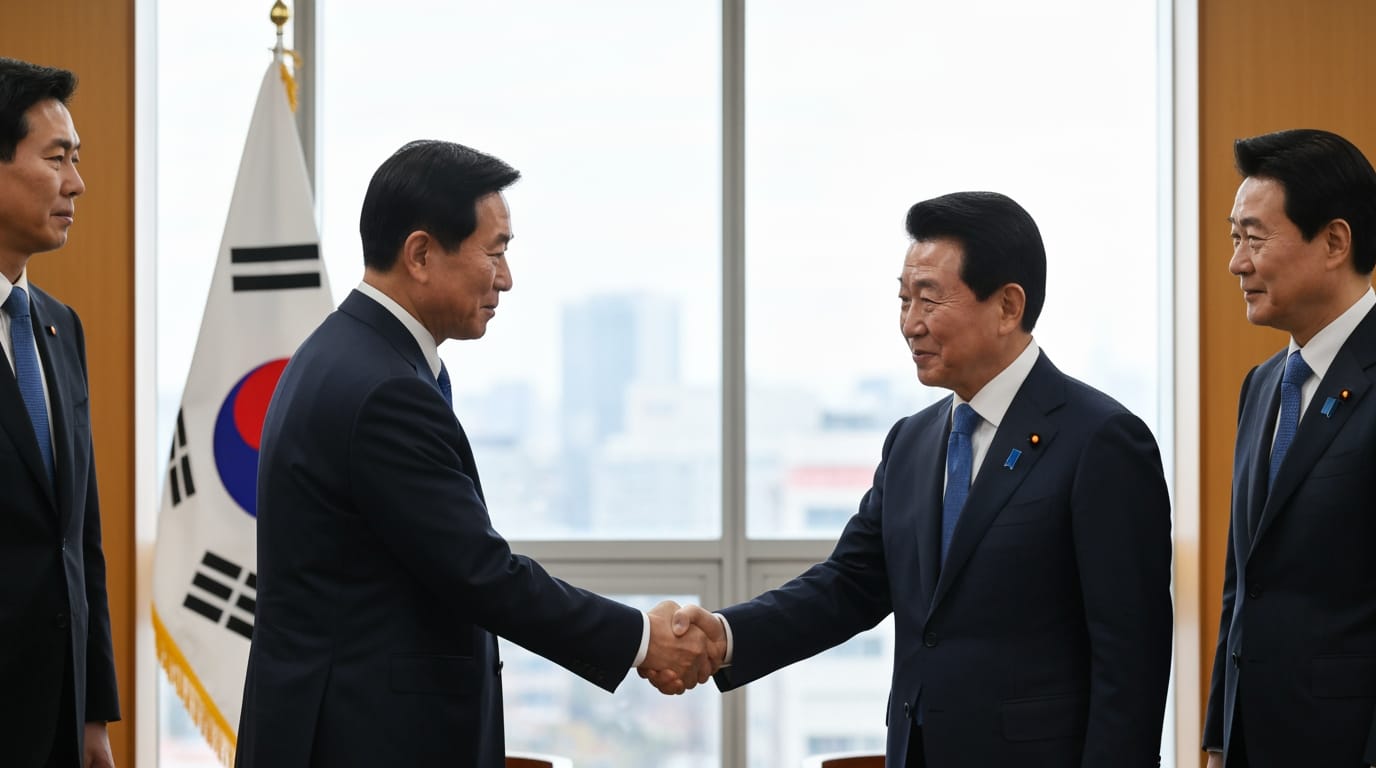
Andong, South Korea – In a significant move to bolster energy security and stabilize critical supply chains, South Korea and Japan have cemented a comprehensive agreement to expand cooperation on liquefied natural gas (LNG) and crude oil. The landmark accord, reached during a bilateral summit on May 19, 2026, between South Korean President Lee Jae-myung and Japanese Prime Minister Sanae Takaichi, comes as escalating geopolitical tensions, particularly a widening Middle East conflict impacting the Strait of Hormuz, threaten global energy markets. Facing shared vulnerabilities as two of the world's most energy-import-dependent nations, the agreement underscores a renewed commitment to pragmatic collaboration aimed at mitigating external shocks and fostering regional resilience.
A Strategic Response to a Shifting Landscape
The agreement, forged in President Lee's hometown of Andong, North Gyeongsang Province, signifies a deepening of diplomatic ties often referred to as "shuttle diplomacy," with reciprocal visits aimed at strengthening bilateral relations beyond historical complexities. Both leaders emphasized the urgency of the moment, citing the profound instability in supply chains and energy markets stemming from the ongoing Middle East conflict. The core of the new partnership centers on immediate and tangible actions: establishing mutual exchanges and swap arrangements for crude oil, petroleum products, and LNG. This includes reinforcing strategic stockpiles and enhancing information-sharing and communication channels to better anticipate and respond to supply disruptions. The latest accord builds upon prior foundational efforts, including an "LNG Supply Cooperation Agreement" signed in March between Korea Gas Corporation and JERA, Japan's largest power company, and a broader "Korea-Japan Supply Chain Partnership" established the same month.
Foundations of Vulnerability and Common Cause
The impetus for this intensified cooperation is deeply rooted in the structural energy realities of both South Korea and Japan. As advanced economies with limited domestic energy resources, both nations rely heavily on imports to fuel their industries and power their societies. Japan maintains an energy self-sufficiency rate of only 13%, while South Korea's stands at 19%, making them acutely susceptible to global energy market volatility. They are among the world's largest importers of LNG and crude oil, with significant portions originating from the Middle East. The current geopolitical climate, particularly the effective closure of the Strait of Hormuz due to regional conflict, has underscored these shared vulnerabilities and highlighted the critical need for diversified and secure energy pathways. Beyond immediate crisis response, the alliance also signifies a commitment to broader regional energy stability, with South Korea announcing its intention to join Japan's "POWERR Asia" (Partnership on Wide Energy and Resources Resilience) initiative. This framework aims to strengthen energy supply resilience across the Indo-Pacific, supported by a substantial $10 billion in financial assistance for infrastructure like petroleum storage facilities.
Diversifying the Energy Portfolio for the Future
While immediate concerns focus on traditional fossil fuels, the expanded energy dialogue between Seoul and Tokyo extends to future-oriented solutions and decarbonization efforts. Both nations are actively pursuing cleaner energy technologies, dedicating 92% of their total energy investments to clean energy, significantly higher than the global average of 66%. A key area of emerging collaboration is in hydrogen and ammonia, viewed as next-generation energy sources critical for achieving decarbonization goals. Discussions initiated in 2023 and formalized in a June 2024 Hydrogen Cooperation Dialogue highlight efforts to establish stable supply chains, develop maritime transport technologies, and balance supply and demand for these nascent fuels. However, this push is not without debate; some experts caution against an over-reliance on "blue hydrogen" (produced using fossil fuels with carbon capture), arguing it could prolong fossil fuel dependence rather than accelerate a genuine transition to fully renewable "green hydrogen." Further collaboration includes joint efforts to reduce methane emissions in the LNG value chain through initiatives like the "CLEAN" project, launched in 2023 by JERA and Korea Gas Corporation. Additionally, a global working group on carbon-free energy was established in September 2024, demonstrating a long-term commitment to shared research and development in this sector.
Broader Implications and Enduring Challenges
The strengthened energy cooperation between South Korea and Japan carries significant regional and global implications. It not only enhances the energy security of two major Asian economies but also signals a deepening of broader security coordination, particularly in trilateral frameworks with the United States. This unified front seeks to address a range of shared challenges, including regional stability and cybersecurity. Economically, the agreement aims to safeguard vital industries by ensuring a stable flow of essential energy resources, with potential economic benefits extending to other Asian nations through initiatives like POWERR Asia. While the recent summit prioritized immediate energy security needs, the ongoing efforts to collaborate on hydrogen, clean energy, and methane reduction underscore a parallel commitment to long-term sustainability. The challenge will be to balance these immediate imperatives with the strategic goals of decarbonization, navigating the complexities of emerging clean energy technologies while ensuring that the transition genuinely reduces reliance on fossil fuels. Despite lingering historical issues that have periodically strained relations, the current leadership in both nations has consistently prioritized future-oriented cooperation, recognizing the strategic importance of their partnership in a rapidly evolving global environment.
Looking Ahead
The recent agreement between South Korea and Japan marks a pivotal moment, transforming a history of occasional discord into a strategic partnership essential for navigating contemporary global challenges. By prioritizing energy security and supply chain resilience, both nations are not only protecting their immediate economic interests but also laying groundwork for deeper collaboration across critical sectors, from advanced technology to regional stability. The enduring success of this alliance will depend on its ability to adapt to ongoing geopolitical shifts, balance traditional energy needs with ambitious decarbonization targets, and continue building mutual trust in pursuit of a stable and prosperous Indo-Pacific.


