Eastern Mediterranean Alliance Solidifies: Greece, Cyprus, and Israel Deepen Military Ties for 2026
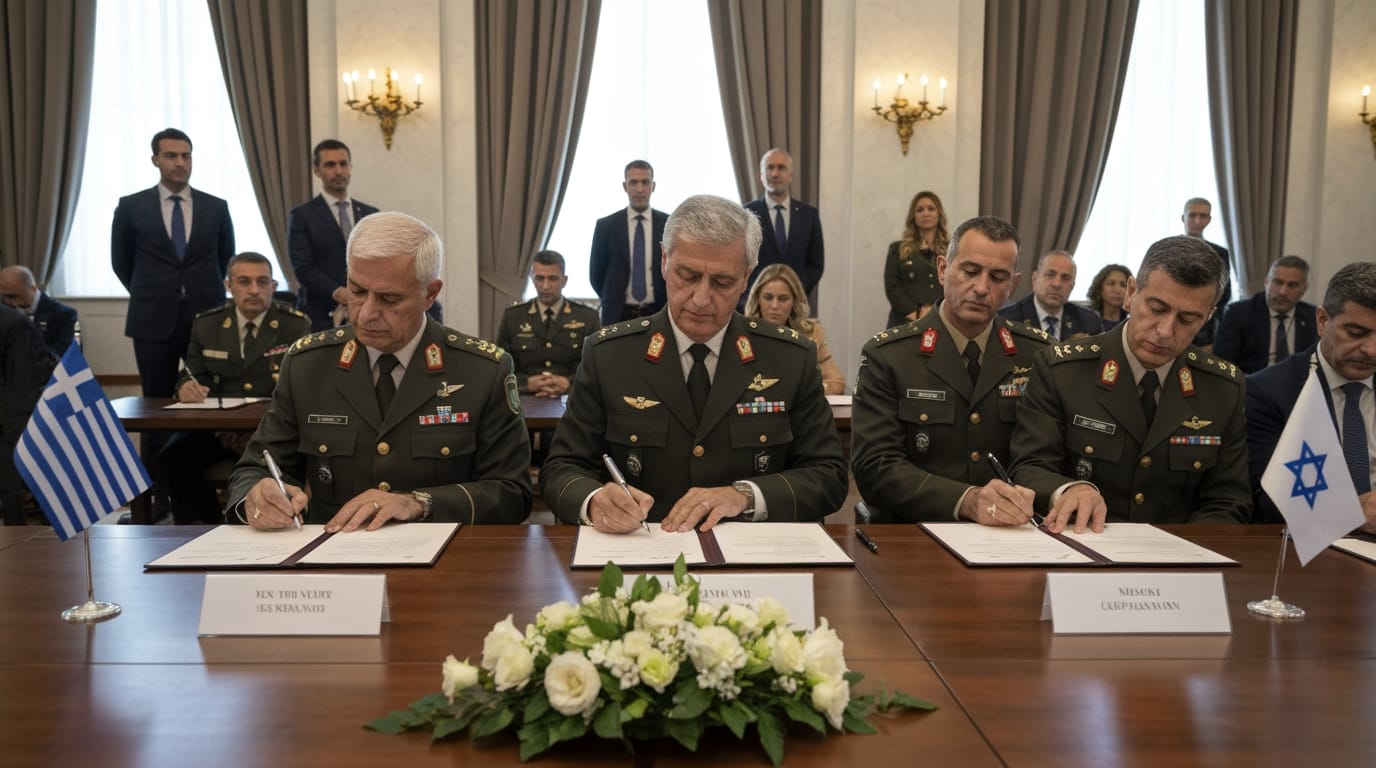
NICOSIA — In a significant escalation of defense collaboration, Greece, Cyprus, and Israel have formally signed new military cooperation plans for 2026, marking a deepening of their strategic alliance in the Eastern Mediterranean. The comprehensive agreement, finalized in Nicosia last week, underscores a concerted effort to bolster regional stability, security, and peace, particularly amidst evolving geopolitical dynamics and perceived challenges to shared interests. The move follows a high-level trilateral summit in Jerusalem where leaders committed to reinforcing cooperation across security, defense, and military spheres, reflecting a decade-long trajectory of increasing collaboration among the three nations.
The newly inked accords, publicly announced by the Israel Defense Forces (IDF) on Sunday, December 28, 2025, outline a robust framework for expanded joint military activities across air, land, and sea. This strategic alignment is largely viewed as a response to regional tensions, particularly concerns over Turkish assertiveness and the need to protect burgeoning energy interests in the Eastern Mediterranean. While emphasizing cooperation for stability, the alliance signals a more unified approach to shared security challenges, aiming to create a formidable deterrent in a complex geopolitical landscape.
Expanding the Scope of Defense Collaboration
The core of the new cooperation plans for 2026 involves a substantial increase in joint military exercises, training programs, and strategic dialogue. Senior military officials from the IDF, Greece's Hellenic Armed Forces, and the Cypriot National Guard formalized a trilateral Joint Action Plan (JAP), alongside bilateral defense cooperation programs between Israel and each of its European partners. These agreements are designed to enhance interoperability and collective readiness, covering a wide array of operational activities, including special forces training and staff-level consultations. A senior Greek official indicated that the military deal would facilitate the transfer of Israeli defense know-how to Greece and Cyprus, enabling them to address both "asymmetrical" and "symmetrical" threats more effectively. Greece, a long-standing participant in Israeli-led exercises, is also slated to join the upcoming "Noble Dina" naval exercise in the Mediterranean, further cementing maritime cooperation.
Beyond drills, the partnership is exploring the creation of a joint rapid-response force. Discussions are reportedly centered on establishing a brigade-level unit comprising approximately 2,500 troops, with 1,000 each from Israel and Greece, and 500 from Cyprus. This proposed force, envisioned for rapid deployment during crises, would safeguard critical infrastructure and respond swiftly to emergencies across land, sea, and air domains, utilizing assets from the Israeli Air Force and Navy. The focus on practical, actionable defense measures underscores the seriousness with which these nations view regional security.
Strategic Imperatives in a Volatile Region
The deepened military alliance is a direct outcome of a complex interplay of strategic imperatives in the Eastern Mediterranean. A primary driver is the collective desire to counter what is perceived as growing military activity and assertive postures from Turkey in the region. For over a decade, Greece, Cyprus, and Israel have drawn closer, moving from initial energy cooperation to robust defense ties, as developments like Turkish challenges to maritime borders and energy exploration have intensified.
The discovery of significant natural gas reserves in the Eastern Mediterranean has intertwined energy security with defense strategy. Collaborative projects like the proposed EastMed pipeline, designed to transport gas to Europe, and the EuroAsia Interconnector, an underwater electricity cable, require robust protection. The new military cooperation plan acts as a vital shield for these economic interests, creating a regional security architecture that aims to deter any disruptions. Israel, in particular, views this alliance as crucial for its strategic depth, potentially providing access to Greek and Cypriot air and sea ports in times of conflict, especially given threats from state and non-state actors in the broader Middle East.
Evolution of a Trilateral Partnership
The recent agreements represent the culmination of a steadily evolving relationship built over the last decade. Initially focusing on economic and energy partnerships, the trilateral framework has progressively expanded into security and defense. This progression has been marked by a series of joint military drills and defense procurement initiatives. Greece and Cyprus have already invested significantly in Israeli missile systems, with Greece in discussions to acquire advanced anti-aircraft and anti-ballistic missile systems for its "Achilles Shield" defense program, and recently approving the purchase of 36 PULS rocket artillery systems.
The relationship has provided tangible benefits, as evidenced by earlier collaborations where Greece offered strategic depth for Israeli training in long-range attack techniques. These historical precedents underscore a mature defense partnership, now being codified and expanded to address contemporary threats. The United States has also expressed its support for this trilateral framework, viewing it as a stabilizing force against Russian influence and a mechanism to manage regional dynamics, particularly concerning Turkey's role within NATO.
Geopolitical Ripples and Future Outlook
The strengthening of this Eastern Mediterranean alliance is poised to have significant geopolitical implications. While proponents emphasize its role in fostering regional stability, the move is likely to be viewed with apprehension by other regional actors. Turkey, a traditional rival to both Greece and Cyprus, and increasingly at odds with Israel, is expected to react. Analysts predict potential responses ranging from increased naval patrols and military exercises to heightened diplomatic pressure, raising concerns about accidental escalation in disputed maritime zones.
The growing defense ties also introduce complexities for NATO, given that both Greece and Turkey are member states. The potential for strained cohesion within the alliance is a notable consideration. Internally, while the agreements generally receive broad support in Greece and Israel, some voices, such as the Communist AKEL party in Cyprus, have expressed reservations, citing potential risks and consequences from deepening military-political cooperation with Israel.
As Greece, Cyprus, and Israel solidify their defense pact for 2026, they are not merely signing military plans; they are actively shaping the future security architecture of the Eastern Mediterranean. This deepening alliance reflects a clear commitment to shared security, energy interests, and regional stability, signaling a new chapter in the strategic landscape of a vital geopolitical crossroads.


