Ebola Crisis Deepens in DRC, Neighbors Boost Defenses Amid Regional Threat

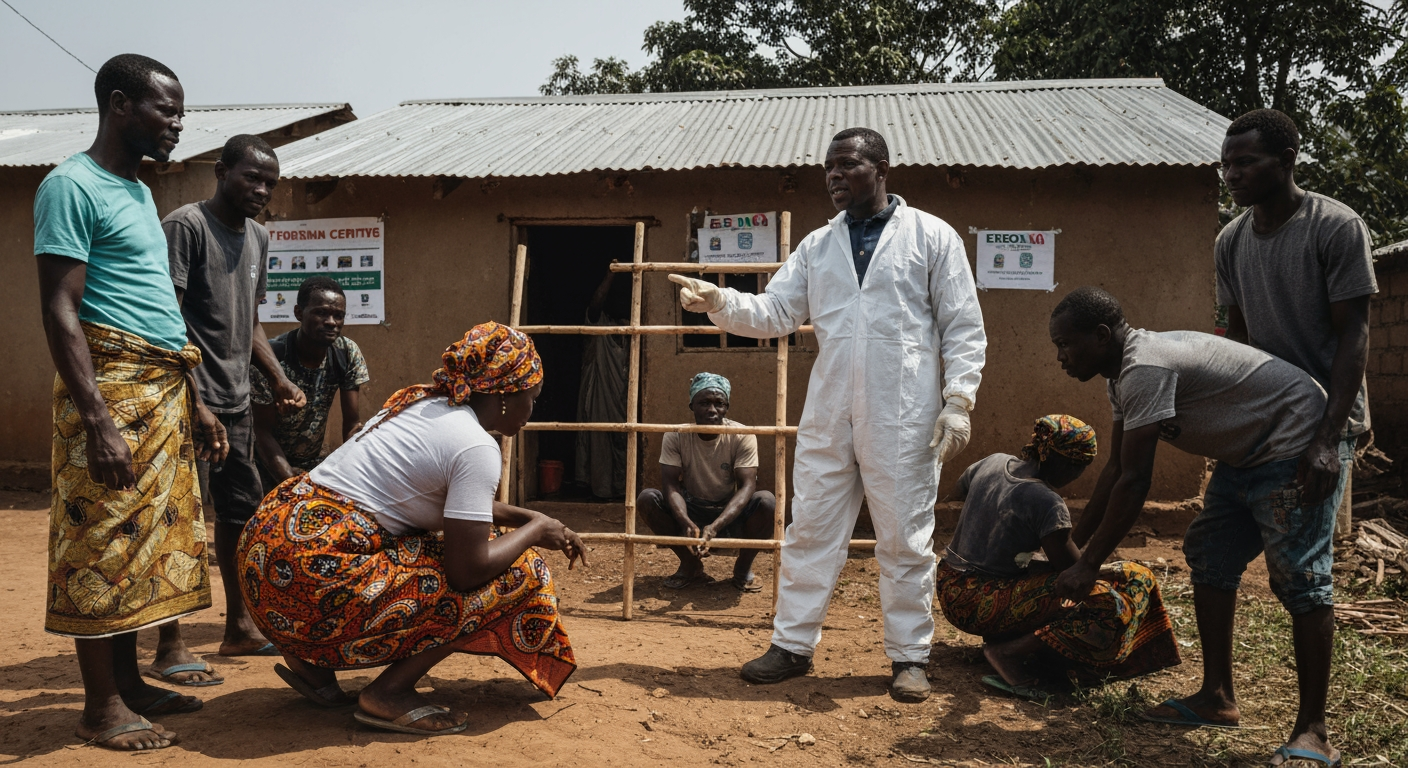
KINSHASA, DR Congo – A rapidly escalating Ebola outbreak in the Democratic Republic of Congo (DRC), driven by the particularly challenging Bundibugyo virus, has prompted its neighbors to significantly bolster their preparedness measures, raising alarms across Central and East Africa. The World Health Organization (WHO) has declared the situation a Public Health Emergency of International Concern (PHEIC), with experts warning that the fast-moving epidemic is currently outpacing response efforts within the DRC, amplifying the risk of wider regional transmission.
DRC Grapples with Worsening Epidemic
The current Ebola outbreak, the DRC's 17th since 1976, was officially declared on May 17, 2026, centered in the northeastern Ituri Province. As of July 15, 2026, the nation has reported a cumulative total of 2,124 confirmed cases, including 828 deaths, resulting in a stark case fatality ratio of 39 percent. The virus, identified as the Bundibugyo species (BVD), presents a severe challenge as there are currently no approved vaccines or specific treatments available, complicating efforts to contain its spread. The outbreak has now spread across 46 health zones in five provinces: Ituri, North Kivu, South Kivu, Haut-Uele, and Tshopo, with active transmission continuing in 38 of these zones.
A significant hurdle in controlling the epidemic stems from delays in detection, with WHO Director-General Tedros Adhanom Ghebreyesus noting that responders are "playing catch-up." Data indicates that a staggering 92.3 percent of deaths investigated until July 5, 2026, occurred within communities or before patients reached health facilities, underscoring critical delays in identifying, referring, and isolating cases. The outbreak's epicenter is also plagued by a complex humanitarian crisis, ongoing insecurity, and high population mobility, which collectively impede effective response and foster community distrust.
Neighbors Fortify Borders and Healthcare Systems
With the DRC sharing extensive and often porous borders with several nations, the threat of cross-border transmission is exceptionally high, prompting neighboring states to implement urgent preparedness measures.
Uganda, which reported 20 confirmed cases and two deaths earlier in the outbreak, has successfully discharged its last Ebola patient by July 16, 2026, showcasing the effectiveness of its sustained preparedness investments. The country established dedicated treatment facilities, trained medical teams, and pre-positioned essential supplies, contributing to a significantly lower case fatality rate of under 10 percent. Demonstrating a proactive approach, Uganda has dispatched 50 health workers and deployed four mobile laboratories into the DRC to assist in containment efforts, aiming to "stop the virus where it starts."
Rwanda, despite reporting no confirmed cases within its borders as of July 16, 2026, has adopted stringent precautionary measures. These include enhanced health screening at all land points of entry along the DRC border and Kigali International Airport. The government has also implemented strict entry controls, denying entry to foreign nationals who have traveled through the DRC within the last 30 days and subjecting Rwandan citizens and residents to mandatory quarantine if they have transited through the affected areas. Following a confirmed case in Goma, the border city adjacent to Rwanda, the Rwandan government closed its land border with the DRC on May 17, 2026. While public health officials defend these restrictions, the WHO has historically advised against border closures, citing their ineffectiveness and potential to disrupt essential trade and livelihoods.
Burundi faces a considerable risk due to its geographical proximity to the affected Ituri, North Kivu, and South Kivu provinces of the DRC, coupled with intense cross-border movement of traders and refugees. The country has been actively engaged in preparedness, with approximately 8 million travelers screened at its 21 official Points of Entry (POEs). Burundi's National Ebola Preparedness and Response Plan, finalized on May 22, 2026, includes strengthening public health surveillance, training border officials, and equipping POEs with necessary health and non-health materials.
South Sudan remains highly vulnerable, with projections indicating the outbreak is advancing northward towards its borders. The presence of conflict, mass displacement, and porous frontiers significantly exacerbates its exposure. In response, South Sudan has established dedicated Infectious Disease Units, expanded laboratory capacity, trained frontline health workers, and pre-positioned medical supplies. Screening has been intensified at five major points of entry, including Juba International Airport, where around 390,000 travelers have been screened. The country's Ministry of Health, with support from the WHO and other partners, continues to investigate alerts and activate its comprehensive Ebola readiness plan.
International Coordination and Aid Ramps Up
The global health community has mobilized to support both the DRC and its vulnerable neighbors. The WHO, along with other international partners such as the UN, CDC, and various NGOs, is providing critical financial, technical, and logistical assistance. The UN's Global Emergency Fund (CERF) has allocated $2 million specifically to strengthen Ebola readiness in Rwanda, as part of a broader $60 million commitment to accelerate response efforts in the DRC and support preparedness across the region. The United States has also pledged an additional $20 million towards preparedness efforts in Burundi, Kenya, Rwanda, and South Sudan, focusing on national emergency operations centers, surveillance, testing, border screening, infection prevention, and control.
These collaborative efforts aim to bolster emergency coordination systems, reinforce border surveillance, facilitate training for healthcare workers, and enhance community engagement strategies to prevent wider transmission. The International Organization for Migration (IOM) is playing a crucial role in supporting preparedness and surveillance activities at points of entry and along key cross-border corridors, recognizing the significant impact of population movement on disease spread.
Persistent Challenges and the Path Forward
Despite the heightened alert and collaborative efforts, controlling the current Ebola outbreak remains exceptionally complex. The absence of specific treatments or approved vaccines for the Bundibugyo strain means that response strategies heavily rely on comprehensive public health measures, including early detection, rigorous contact tracing, strict infection prevention protocols, and community engagement. However, persistent insecurity, armed conflict, and community mistrust within the DRC continue to disrupt these vital interventions, leading to patient flight and even attacks on health facilities.
The high mobility of populations, including trade flows and refugee movements, across the region further complicates containment, turning borders into potential vectors for the virus. Lessons learned from previous Ebola outbreaks emphasize the critical need for rapid action, building trusted community relationships, and unwavering support for frontline health workers. Clinical trials for Bundibugyo-specific vaccines are reportedly underway, offering a glimmer of hope for future interventions.
The current Ebola surge in the DRC serves as a stark reminder of the interconnectedness of public health in the region. The determined efforts of neighboring countries, supported by international partners, are crucial in preventing the crisis from engulfing a wider geographic area. Sustained vigilance, robust cross-border cooperation, and community-centric approaches will be paramount in mitigating the risks and ultimately bringing an end to this challenging epidemic.
Related Articles

Beyond the Final Whistle: Unpacking the Enduring Legacy of the 2026 World Cup
As the echoes of roaring crowds fade and the last confetti settles, the 2026 FIFA World Cup has concluded, leaving behind a complex tapestry of economic transformations, infrastructural advancements, and environmental...


UK Demands FIFA Investigation After Argentina Players Display Falklands Banner in World Cup Semi-Final Uproar
Atlanta, USA — Following a dramatic World Cup semi-final victory over arch-rival England, Argentina's triumphant football squad ignited a fresh international controversy by displaying a banner proclaiming "Las Malvinas...