Ebola Patient Admitted to Berlin's Charité Hospital Amidst Escalating DRC Outbreak
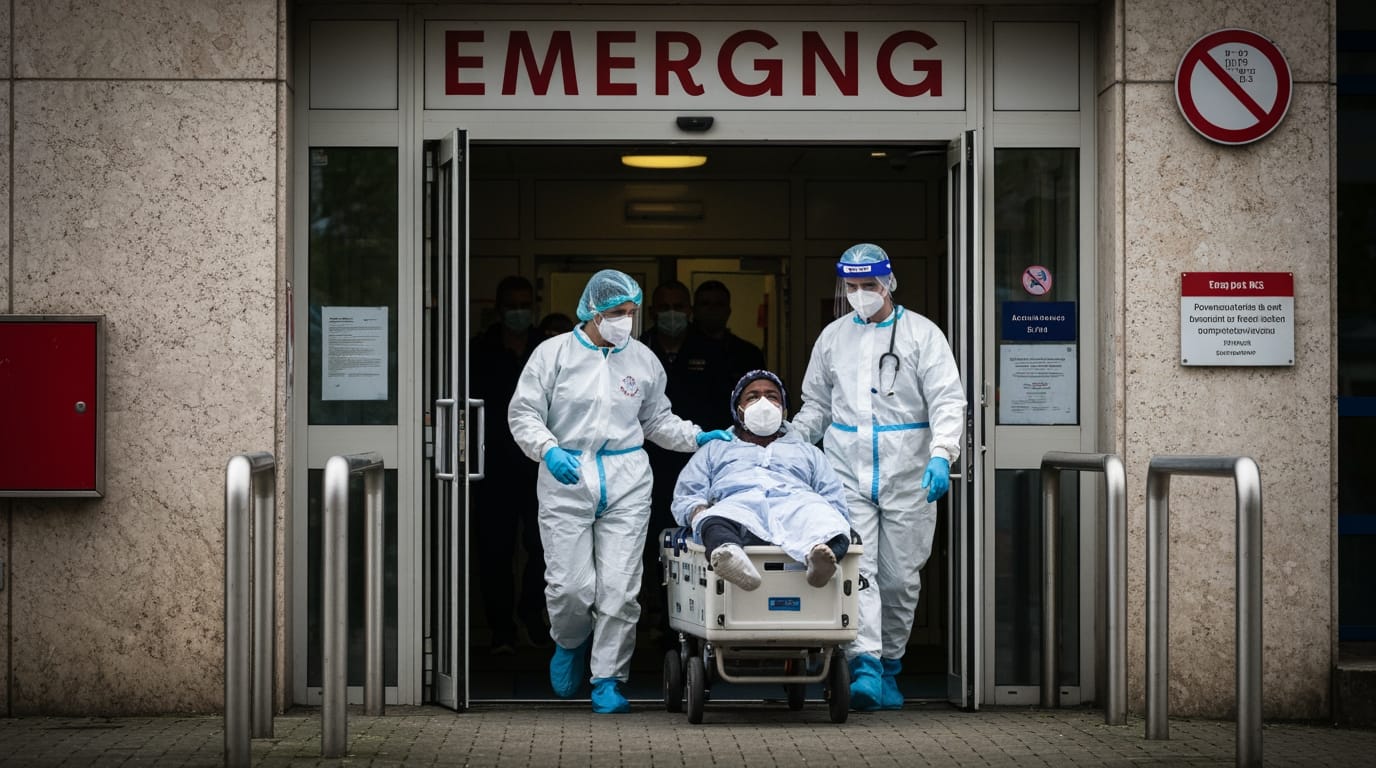
Berlin, Germany – In a meticulously coordinated international operation, an American medical missionary infected with the Ebola virus was admitted in the early hours of May 20, 2026, to the highly specialized isolation unit at Berlin's Charité University Hospital. The critical transfer underscores Germany's pivotal role in global health security and its advanced capabilities in managing highly contagious and life-threatening diseases, as the Democratic Republic of Congo (DRC) grapples with a rapidly expanding outbreak.
The patient, identified as Dr. Peter Stafford, contracted the virulent disease while working at Nyankunde hospital in the Democratic Republic of Congo, where he had been serving since 2023. His condition necessitated urgent transfer to a facility equipped to provide intensive care for such a severe infection. The United States government formally requested Germany's assistance, citing Germany's specialized medical infrastructure and a significantly shorter flight duration from the affected Central African region as key factors in the decision. This high-stakes medical evacuation highlights the collaborative spirit required to address international health crises.
Precision Transfer to Europe's Elite Medical Facility
The complex operation to transport Dr. Stafford began with a special aircraft from Uganda, followed by a highly secure ground transfer to the Charité hospital. Around 3:00 AM, a specially equipped vehicle, escorted by a substantial convoy of police motorcycles, cars, fire brigades, and ambulances, delivered the patient to the Virchow-Klinikum campus. This extensive escort aimed to ensure the safe and rapid transit of the patient while maintaining stringent security and containment protocols. Upon arrival, Dr. Stafford was immediately placed in the hospital's specialized isolation ward, which operates entirely separate from the regular clinical activities of the university hospital.
German Federal Minister Nina Warken of the CDU, whose portfolio was not specified in the search results but is implied to be related to health or aid, affirmed the government's commitment to international cooperation, stating that assisting partners is "self-evident." She also emphasized Germany's robust healthcare network, particularly its preparedness for patients with highly infectious diseases, and assured the public of the highest safety precautions.
Charité's Advanced Biocontainment Capabilities
The Charité University Hospital's special isolation ward on the Virchow-Klinikum campus represents a pinnacle of medical preparedness for highly infectious diseases. This self-contained and protected unit boasts a highly specialized infrastructure designed for the isolation, diagnosis, and treatment of patients with life-threatening infections such as Ebola. It is recognized as the largest facility of its kind in Germany and is uniquely capable of integrating infectiology and intensive care medicine.
The facility is equipped with its own access routes, airlock systems, and advanced ventilation and filtration systems, which meticulously purify exhaust air before it is released externally. Furthermore, all wastewater is collected in specialized tanks and neutralized, and used protective gear and other waste are disposed of by a specialized company, adhering to the highest safety standards. This comprehensive system ensures that there is no contact between the Ebola patient and other hospital patients or the general public, effectively eliminating any risk of broader transmission. Medical personnel undergo rigorous training, practicing procedures and emergency scenarios twice a month to maintain peak readiness. The ward can isolate and treat up to 20 individuals simultaneously without disrupting the hospital's other operations.
Escalating Outbreak in the Democratic Republic of Congo
Dr. Stafford's infection stems from the ongoing Ebola outbreak in the Democratic Republic of Congo, which the World Health Organization (WHO) has declared an international health emergency. The outbreak is primarily centered in the northeastern Ituri province, a gold-mining hub where frequent cross-border movements contribute to the rapid spread of the virus. As of recent reports, the outbreak has resulted in an estimated 131 deaths from 513 suspected cases, underscoring the severity and widespread concern among health authorities.
The current strain identified in this outbreak is the Bundibugyo strain, for which specific vaccines or treatments are not yet available. Ebola is transmitted through direct contact with infected bodily fluids and can initially present with symptoms similar to the flu or diarrheal diseases, before progressing to a more severe course, often leading to multi-organ failure. However, advances in treatment methods and new medications have significantly improved patient outcomes, with the mortality rate having decreased from approximately 60 percent to between 20 and 30 percent in recent years.
Global Response and Continued Vigilance
In addition to Dr. Stafford, six individuals identified as high-risk contacts have also been transported to Europe for observation. While one person will be quarantined in the Czech Republic, the remaining contacts will be monitored in Germany, ensuring thorough vigilance against further spread. The German government has also committed to providing further assistance to the affected regions in Africa, including the delivery of 500 protective suits in the coming week and offering training programs for handling suspected Ebola cases. This initiative complements efforts by the U.S. State Department, which plans to fund up to 50 Ebola treatment clinics and related operations in the DRC, Uganda, and Congo, aiming to bolster screening, triage, and isolation capabilities.
The arrival of Dr. Stafford in Berlin highlights the critical importance of a coordinated global health response to outbreaks of highly infectious diseases. Germany's highly capable medical infrastructure and commitment to international cooperation position it as a key player in addressing such crises. While medical teams at Charité focus on providing the best possible care for Dr. Stafford, the broader public health community remains vigilant, working to contain the outbreak at its source and prevent further international transmission. The case serves as a powerful reminder of the ongoing threats posed by infectious diseases and the indispensable role of specialized medical expertise and international solidarity in combating them.


