Eduardo Bolsonaro Convicted of Coercion in Landmark US Lobbying Case
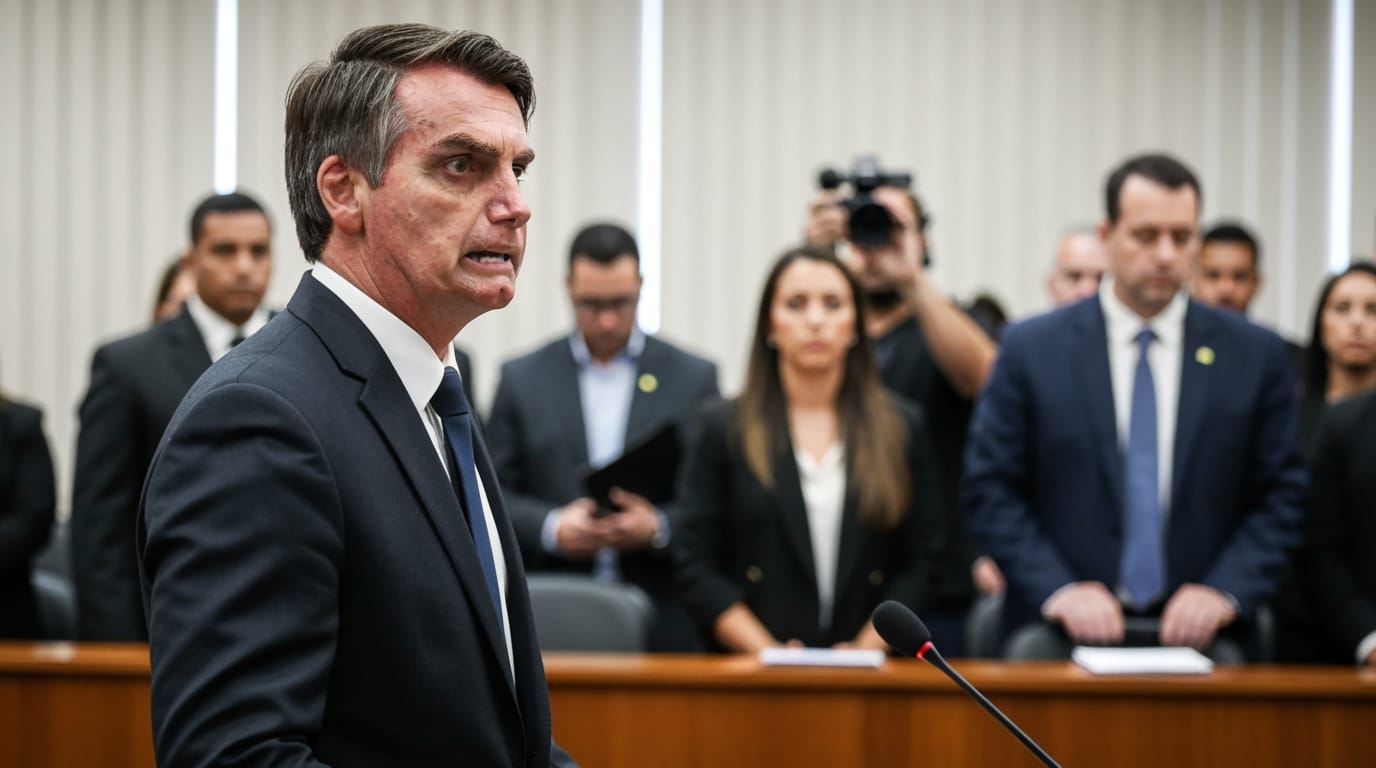
BRASILIA, Brazil — Brazil's Supreme Court on Tuesday delivered a unanimous verdict, convicting former federal lawmaker Eduardo Bolsonaro, son of ex-President Jair Bolsonaro, of coercion and illegally seeking U.S. government intervention against his own country's judiciary. The landmark ruling sentences Bolsonaro to four years and two months in prison, effectively stripping him of political rights for eight years and imposing a substantial fine, marking a significant legal and political development in Brazil. The court found that Bolsonaro engaged in a concerted lobbying effort in the United States to pressure the Trump administration into imposing sanctions on Brazilian judges investigating his father and levying tariffs against Brazil.
The Verdict and Its Immediate Ramifications
The Supreme Court, Brazil’s highest judicial body, rendered its decision following a unanimous vote by the justices. Eduardo Bolsonaro, who has been residing in the United States since February 2025, was not present in the Brasília courtroom to hear the verdict. The conviction carries a sentence of four years and two months in a semi-open prison facility, alongside a fine of approximately 162,100 reais (about $31,700). Crucially, the ruling automatically disqualifies him from holding public office for eight years, a severe blow to his political career. Justice Alexandre de Moraes, who presided over the case, underscored the gravity of the offense, stating that "a federal lawmaker's job is not to lobby overseas against his own country," emphasizing that the defendant's international campaign sought to unlawfully obstruct justice and interfere in ongoing domestic judicial proceedings.
A Campaign Abroad: Seeking US Interference
The charges against Eduardo Bolsonaro stemmed from his travels to the United States in early 2025, where he actively lobbied the then-Trump administration. His objective was to persuade U.S. officials to impose economic tariffs on Brazil and enact punitive sanctions against the very judges overseeing the legal proceedings involving his father, Jair Bolsonaro. Evidence presented during the trial included videos and interviews in which the younger Bolsonaro made self-incriminating statements regarding his efforts to promote sanctions against Brazil and its Supreme Court justices. The court concluded that these actions constituted coercion and an illegal attempt to interfere with the judicial system. This campaign coincided with a period of heightened diplomatic tension, with the U.S. briefly implementing aggressive coercive measures and tariffs against Brazil last year in response to the prosecution of the Bolsonaro family, though these penalties were later rolled back.
The Bolsonaros' Legal Entanglement and Judicial Independence
Eduardo Bolsonaro’s lobbying efforts were directly linked to the extensive legal challenges facing his father, former President Jair Bolsonaro. The elder Bolsonaro is currently serving a 27-year prison term under house arrest after being convicted of plotting a coup d'état following his 2022 electoral defeat. The Supreme Court judges targeted by Eduardo Bolsonaro’s campaign were central to these investigations and convictions. Justice Alexandre de Moraes, a key figure in the case against Jair Bolsonaro and the presiding judge in Eduardo’s trial, was himself among those targeted by U.S. sanctions in July of last year. The ruling reaffirms the Brazilian judiciary's commitment to its independence and its resolve to protect the integrity of its institutions against external and internal pressures.
Defense Arguments Rejected and Future Implications
Throughout the proceedings, Eduardo Bolsonaro's defense team contended that his diplomatic outreach in Washington constituted legitimate "political dialogue" protected by freedom of speech and did not amount to unlawful coercion or a genuine institutional threat. They also claimed he was not properly notified of the legal proceedings and alleged the trial was a partisan maneuver designed to prevent his participation in Brazilian politics. However, the court unanimously rejected these arguments, interpreting his actions as a direct threat to the Brazilian judicial system. The conviction automatically triggers an eight-year political ban, significantly altering the political landscape for the Bolsonaro family, who have been active figures in Brazilian politics for decades. Eduardo Bolsonaro's brother, Senator Flávio Bolsonaro, is anticipated to challenge President Luiz Inácio Lula da Silva in upcoming elections, and this verdict could cast a long shadow over that campaign.
The conviction of Eduardo Bolsonaro marks a critical moment for Brazil, underscoring the judiciary's steadfast stance against perceived attempts to undermine democratic institutions. The ruling sends a clear message regarding the boundaries of political action, particularly when it involves engaging foreign powers in domestic legal disputes. As the nation continues to navigate a period of intense political polarization, this verdict reinforces the judiciary's role as a guarantor of constitutional order and rule of law, even for prominent political figures.


