Elaborate Deception: Trump's Secret Departure from Turkey Amid Iranian Threat
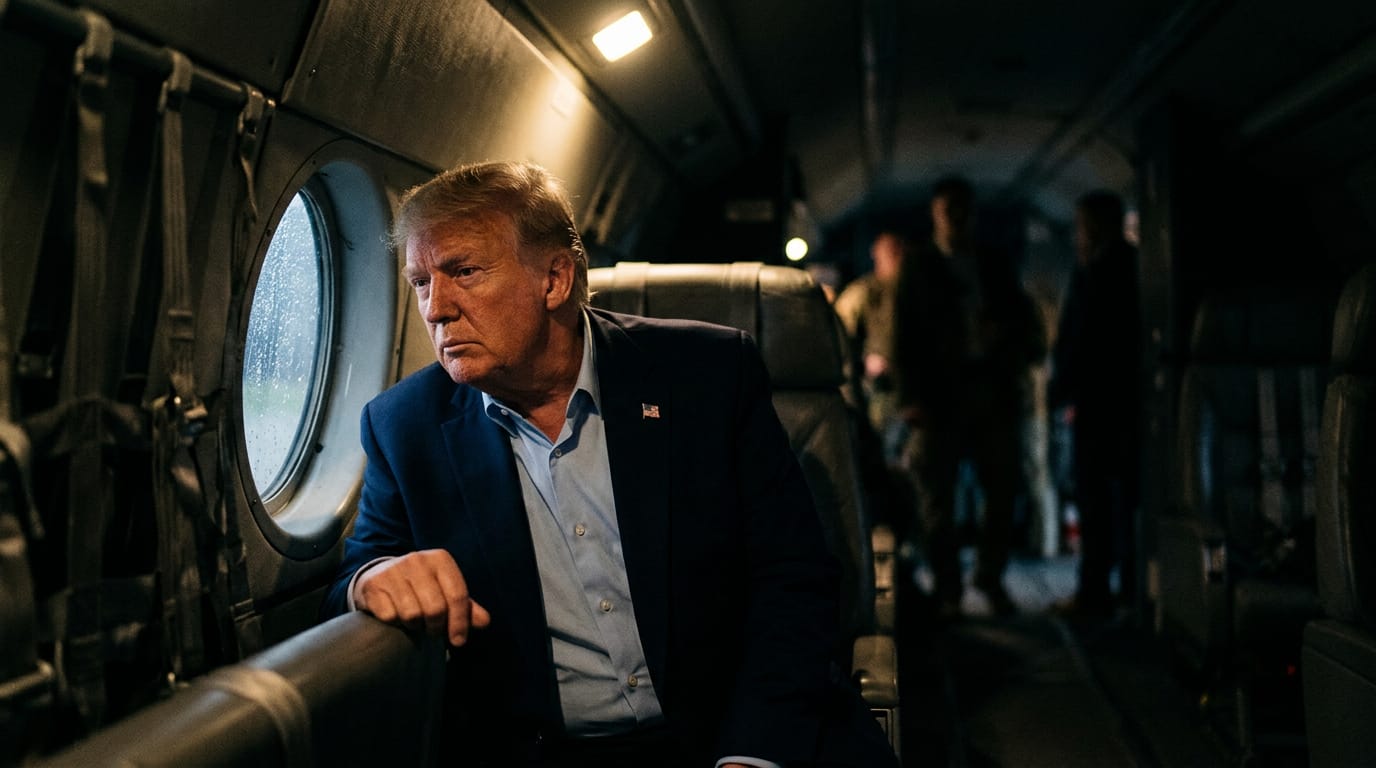
In an extraordinary operation last month, former President Donald Trump executed a clandestine departure from Turkey, utilizing an alternate military aircraft and an elaborate ruse to circumvent a credible Iranian assassination threat. The covert mission, which remained undisclosed to journalists and some White House staff at the time, underscores the severe security challenges faced by the American presidency in an era of heightened geopolitical tensions. Publicly, the White House maintained that the president was aboard Air Force One as he concluded a NATO summit in Ankara, a statement that masked a complex security maneuver triggered by an urgent intelligence assessment.
The Looming Shadow of a Threat
The decision for such an unprecedented security operation stemmed from a specific and credible Iranian assassination threat against President Trump. U.S. security officials reportedly held deep concerns regarding his safety as he prepared to depart Turkey, a NATO ally that shares a border with Iran. The intelligence indicating an imminent danger prompted a swift and decisive response from those responsible for presidential security, highlighting the volatile nature of U.S.-Iran relations during the Trump administration. This threat emerged amidst escalating hostilities between Washington and Tehran, adding another layer of complexity to the president's international travel.
The threat assessment likely considered the broader context of strained U.S.-Iran relations. Throughout Trump’s presidency, tensions between the two nations frequently flared, marked by significant events such as the U.S. withdrawal from the Joint Comprehensive Plan of Action (JCPOA) in 2018, the imposition of stringent sanctions on Iran, and several military confrontations in the Persian Gulf region. These actions, coupled with the targeted killing of Iranian General Qassem Soleimani in early 2020, created an environment where retaliatory actions from Iran, even against the highest levels of U.S. leadership, were considered a tangible risk. The intelligence concerning the assassination plot thus could not be dismissed, leading to extreme precautions for the president's return journey.
The Intricacies of a Secret Departure
The deceptive operation involved a meticulously planned sequence of events designed to mislead potential adversaries and ensure the president’s safety. After attending the NATO summit in Ankara, President Trump had initially arrived in Turkey aboard a newer Boeing 747-8, a state-of-the-art aircraft gifted by Qatar for use as Air Force One. This particular jet, which had been fielded by the Air Force in July and underwent upgrades costing hundreds of millions of dollars, reportedly lacked some of the defensive countermeasures integrated into the legacy Air Force One fleet. Concerns about the security capabilities of this newer aircraft may have played a role in the decision to implement the clandestine departure strategy.
To execute the secret flight, a multi-stage deception was employed. President Trump first boarded the older Air Force One in full view of cameras and the press, creating the impression that he was embarking on his publicized return journey. He even engaged in public appearances, including giving a peace sign to reporters, before ostensibly preparing for takeoff. However, this was merely a diversion. Following this public display, President Trump was covertly shuttled by an airport catering truck to a smaller, less conspicuous Air Force C-32A plane. This secondary aircraft then transported him out of Turkey, while the larger, decoy Air Force One, with unaware journalists and some White House staff onboard, proceeded with its flight plan. The journalists in the press cabin of the decoy aircraft were reportedly advised to keep their window shades closed, adding to the layers of secrecy surrounding the true nature of the presidential travel. This extraordinary maneuver highlights the extent to which U.S. security officials were willing to go to mitigate the perceived threat.
Precedent and Geopolitical Ramifications
While unusual, such deceptive operations for presidential travel are not entirely without precedent. A similar mission occurred in March 2000, when President Bill Clinton utilized an unmarked executive jet to fly into Pakistan while his formal Air Force One served as a decoy. These historical instances underscore the constant calculus of risk and the necessity for adaptable security protocols when the Commander-in-Chief travels to volatile regions or faces specific threats. The use of a smaller military aircraft like the C-32A (a military variant of the Boeing 757) for covert transport is a known tactic for high-value individuals requiring discretion and enhanced security.
The event, though now revealed, has several geopolitical implications. It momentarily strained the perception of presidential security, particularly concerning newer aircraft. The White House, in a statement through Communications Director Steve Cheung, later reiterated the robust security protocols in place for the president, acknowledging the existence of numerous adversaries and the deployment of all available tools to address threats. This incident also subtly underscored the strategic importance of Turkey as a NATO member, bordering a region where U.S. interests and adversaries frequently intersect. The necessity of such a deception in a friendly nation highlights the pervasive nature of state-level threats that transcend typical diplomatic relations.
The Enduring Challenge of Presidential Security
The clandestine departure of President Trump from Turkey serves as a stark reminder of the perpetual and evolving security challenges associated with the American presidency. In an interconnected yet frequently hostile world, the protection of the President requires constant vigilance, sophisticated intelligence gathering, and, at times, extraordinary measures. The incident illustrates the delicate balance between maintaining presidential visibility, which is a hallmark of a democratic leader, and ensuring their absolute safety against determined adversaries.
The event is more than a footnote in presidential travel; it is a case study in modern presidential security. It emphasizes the intricate planning, multi-layered intelligence, and the willingness to employ unconventional tactics to safeguard the nation's leader. As global dynamics continue to shift and new threats emerge, the protocols and strategies for presidential security will undoubtedly continue to adapt, often in ways that remain, by necessity, hidden from public view. The incident ultimately reinforced the reality that even the most powerful office in the world is susceptible to direct threats, demanding a security apparatus capable of responding with precision, discretion, and sometimes, elaborate deception.


