Emmanuel Grégoire Elected Mayor of Paris, Solidifying Left-Wing Governance and Charting a Progressive Course
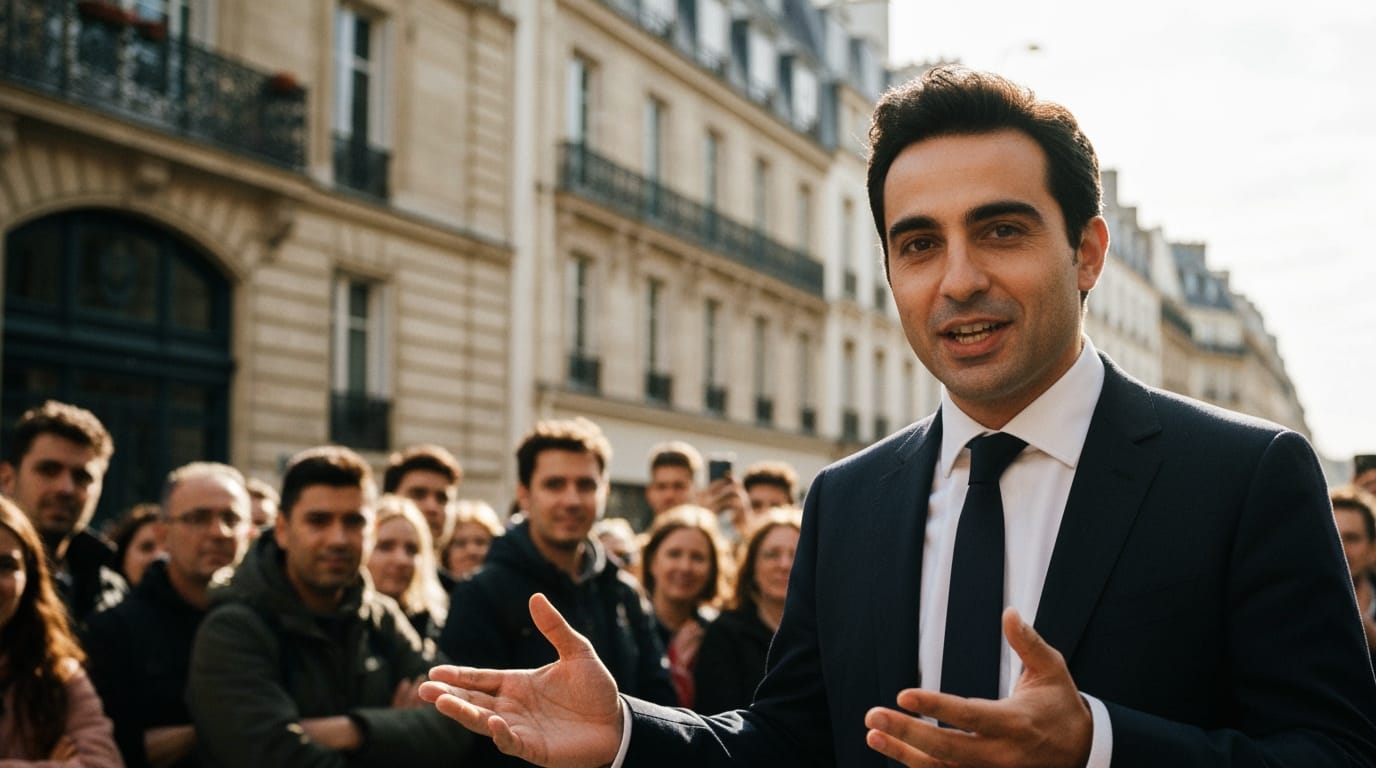
PARIS, France – Emmanuel Grégoire, a seasoned Socialist politician, has been elected the new mayor of Paris, securing a decisive victory in the runoff municipal elections held on Sunday, March 22, 2026. His triumph ensures the continuation of left-wing leadership in the French capital, extending a quarter-century-long tradition and sending a clear message against the rising influence of the far-right in national politics. Grégoire, 48, previously the first deputy mayor under his predecessor Anne Hidalgo, officially assumes office on March 29, 2026, inheriting a city grappling with complex urban challenges and a vibrant political identity.
The election of Grégoire underscores a deep-rooted commitment within Paris to progressive values, environmental stewardship, and social solidarity. His campaign, built on a united left ticket that included the Greens and Communists, resonated with voters seeking continuity in the city's direction while also demanding fresh solutions to pressing local issues. The outcome is seen not only as a mandate for Grégoire’s platform but also as a significant indicator of the political currents flowing through France as the nation looks towards the 2027 presidential elections.
A Decisive Mandate in a Pivotal Election
Emmanuel Grégoire clinched the mayoral seat with just over 50% of the vote, confidently surpassing his conservative rival Rachida Dati, who garnered approximately 41%. Hard-left candidate Sophia Chikirou received about 8% of the vote. Dati, a former right-wing minister, had vigorously campaigned to end 25 years of left-wing governance in the capital, making the contest particularly high-stakes. Grégoire's victory was a clear repudiation of her efforts, with the Socialist candidate himself warning during the campaign that Dati would turn Paris into a "Trumpist laboratory" for an alliance between the right and far-right.
The Paris mayoral race was a focal point of the broader municipal elections across France, which served as a crucial barometer of the national political landscape ahead of the 2027 presidential contest. While the final round of voting saw gains for traditional left and right parties in various communes, and a significant win for the far-right in Nice, the National Rally failed to capture key cities it had targeted. Grégoire's assertion that Paris "is not, and never will be, a far-right city" resonated strongly, highlighting the capital's role as a bastion of left-wing resistance. The turnout, just over 48 percent in mainland France, indicated a higher engagement compared to the 2020 elections held during the COVID-19 pandemic, though it remained lower than the 2014 figures.
From City Hall Aide to Mayor: A Career Forged in Local Governance
Grégoire's path to the mayoralty is rooted in extensive experience within Paris's municipal administration. Born in Les Lilas in 1977, he joined the Socialist Party in 2002 at the age of 24. His political career quickly gained momentum, starting with his role as chief of staff to then-Paris Mayor Bertrand Delanoë from 2010 to 2012. He subsequently served in the prime minister's office under Socialist President François Hollande, further solidifying his credentials within the party.
In 2014, Grégoire was elected to the Paris City Council. His influence grew significantly under Mayor Anne Hidalgo, serving as her first deputy mayor from 2018 until 2024. In this crucial role, he oversaw key portfolios including budget, urban policies, and public services, gaining an intimate understanding of the city's operational complexities and policy challenges. Despite their close working relationship, tensions arose during the succession process, with Hidalgo initially favoring another candidate. However, Grégoire secured the Socialist nomination with 52.61% of the vote in the first round, demonstrating his strong base of support. He also won a seat in the National Assembly in 2024, but relinquished his first deputy mayor position in compliance with anti-cumulation rules.
Charting a Progressive Future: Key Policy Directives
Upon his victory, Grégoire wasted no time in outlining his vision for a "vibrant Paris, a progressive Paris." His policy agenda focuses heavily on social justice, ecological transition, and enhancing the quality of life for all Parisians. A central tenet of his campaign was a staunch commitment to addressing housing issues, famously declaring "Airbnb is my enemy." He pledged to prioritize making housing accessible to residents rather than allowing large swathes of apartments to be used exclusively for tourist rentals, which he argues have emptied neighborhoods of their local populations.
Grégoire's administration is expected to continue and expand upon his predecessor's pro-cycling and environmental policies. His victory ride to City Hall on a bicycle, immediately after claiming triumph, served as a symbolic affirmation of his commitment to making the French capital greener and more pedestrian- and cyclist-friendly. Other key priorities include strengthening public services, improving air quality, and investing in education, culture, and solidarity initiatives. He also emphasized supporting the most vulnerable, addressing homelessness, and tackling social inequality. Grégoire's program champions a "popular, vibrant and proud city" where social welfare and collective well-being take precedence over private interests.
Challenges and the Road Ahead
Emmanuel Grégoire steps into the mayoral office at a sensitive juncture for Paris. While his victory ensures a degree of policy continuity, he faces immediate challenges including managing ongoing social issues, particularly housing affordability and homelessness. His public disclosure during the campaign about suffering sexual abuse as a schoolboy, and his connection of this personal experience to current discussions about alleged abuse in Parisian public schools, highlighted a human interest element and underscored the city's need for robust social protections.
Grégoire's leadership will also be crucial in steering Paris through the aftermath of the 2024 Olympic Games, which Hidalgo oversaw, and preparing the city for future national political contests. His win is a strong affirmation for the left-wing coalition, providing a significant boost as France approaches the 2027 presidential elections. Paris, under Grégoire, is poised to remain a critical symbolic and practical stronghold for the French left, a beacon of progressive governance, and a city committed to social and environmental innovation. His administration will be closely watched as it navigates these complexities, aiming to uphold Paris's reputation as a dynamic, inclusive, and forward-thinking global capital.


