Erdogan Vows to Resist Protests Amidst Political Turmoil in Turkey
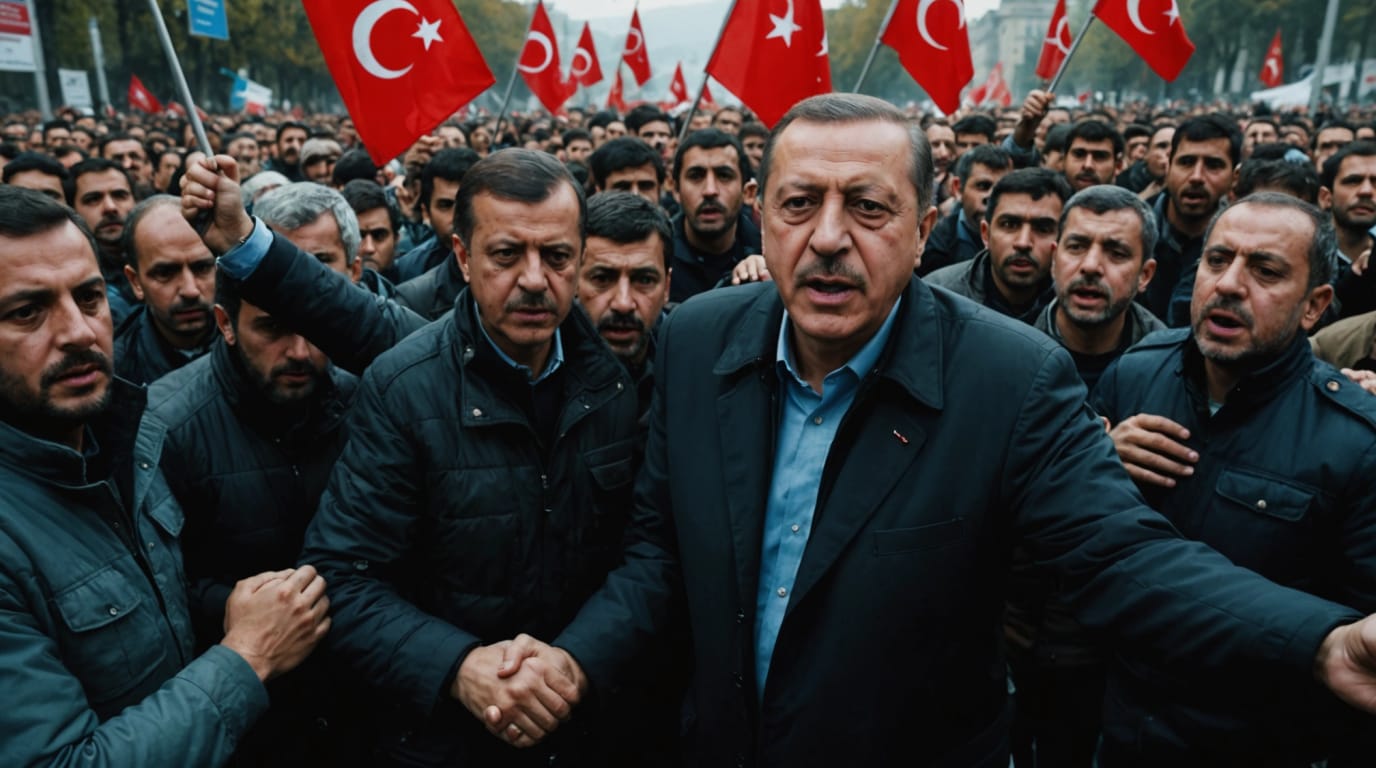
Turkey is currently facing a period of significant political unrest, triggered by the arrest of Istanbul's mayor, Ekrem İmamoğlu, a prominent opposition figure and potential challenger to President Recep Tayyip Erdoğan. The arrest has sparked widespread protests across the country, with demonstrators decrying what they perceive as a politically motivated attack on democracy. In response, Erdoğan has asserted that he "won't give in" to the protests, vowing to maintain public order and resist any threats to stability.
The detention of İmamoğlu, who is accused of corruption and alleged links to the Kurdistan Workers' Party (PKK), has been widely condemned both domestically and internationally. Critics view the arrest as a calculated move by Erdoğan to consolidate his power and eliminate potential rivals ahead of the 2028 presidential election. The situation is further complicated by a government-imposed ban on protests and reports of restricted access to social media platforms, raising concerns about freedom of expression and assembly in Turkey.
Protests Erupt Across Turkey
Following İmamoğlu's arrest, thousands of people have taken to the streets in major cities such as Istanbul, Ankara, and Izmir. Despite the government ban on demonstrations, protesters have clashed with riot police, particularly in Taksim Square, a historic focal point for political demonstrations in Istanbul. The protesters, who include students, opposition party members, and concerned citizens, are demanding İmamoğlu's release and an end to what they see as the erosion of democratic principles in Turkey.
The protests have drawn comparisons to the Gezi Park protests of 2013, which began as a response to urban development plans but quickly evolved into broader demonstrations against Erdoğan's government. While the current protests are primarily focused on İmamoğlu's arrest, they also reflect deeper concerns about freedom of expression, media censorship, and the rule of law in Turkey.
Erdoğan's Firm Stance
In response to the growing unrest, President Erdoğan has adopted a firm stance, vowing to maintain public order and resist any attempts to destabilize the country. "We will not allow public order to be damaged. We will not give in to vandalism or street terrorism," Erdoğan stated in a recent speech. He has also accused protesters of being manipulated by external forces and has defended the actions of the Turkish judiciary, asserting its independence from political influence.
Erdoğan's rhetoric reflects a pattern of authoritarian tendencies that have been observed in Turkey in recent years. Critics argue that he has consolidated power through constitutional changes, imprisoned opponents and critics, and undermined the independence of the judiciary. The recent crackdown on the opposition, including İmamoğlu's arrest, is seen as further evidence of this trend.
International Reactions and Concerns
The arrest of İmamoğlu and the subsequent protests have drawn strong reactions from the international community. The European Union has expressed deep concern about the situation, with some officials condemning the arrest as a blow to democracy in Turkey. Germany's chancellor has called for an immediate end to the crackdown and for the opposition and government to compete fairly.
The United States has also voiced concerns about the erosion of democratic norms in Turkey, urging the government to respect freedom of expression and assembly. International human rights organizations have echoed these concerns, calling for the release of İmamoğlu and an end to the suppression of dissent.
Turkey's relationship with the West has been strained in recent years due to concerns about human rights, the rule of law, and foreign policy. The current political turmoil is likely to further complicate these relations, particularly with the EU, where Turkey's accession process has been at a standstill.
Implications for Turkey's Future
The current political crisis in Turkey has significant implications for the country's future. The arrest of İmamoğlu has not only sparked widespread protests but has also raised serious questions about the state of democracy and the rule of law. The government's response to the protests, including the ban on demonstrations and reports of restricted access to social media, has further fueled concerns about freedom of expression and assembly.
The situation poses a major dilemma for the main opposition party, the CHP, which was expected to name its presidential candidate soon. İmamoğlu's arrest has thrown the party's plans into disarray and has created uncertainty about the future of the opposition movement in Turkey.
The long-term consequences of the current crisis will depend on how the government and the opposition respond in the coming days and weeks. A continued crackdown on dissent and a refusal to engage in dialogue could further polarize Turkish society and undermine democratic institutions. On the other hand, a willingness to address the concerns of protesters and to uphold the rule of law could help to restore trust and stability.
A Nation Divided
Turkey stands at a crossroads. The arrest of Ekrem İmamoğlu has exposed deep divisions within Turkish society and has raised fundamental questions about the country's commitment to democracy. President Erdoğan's vow to resist protests reflects a determination to maintain control, but it also risks further alienating segments of the population and undermining Turkey's international standing. The path forward will require a commitment to dialogue, respect for human rights, and a willingness to address the underlying grievances that have fueled the current unrest. The coming days will be critical in determining whether Turkey can navigate this crisis and emerge as a stronger, more democratic nation.


