Escalating Border War: Pakistan Claims Hundreds of Afghan Taliban Troops Killed Amid Fierce Clashes
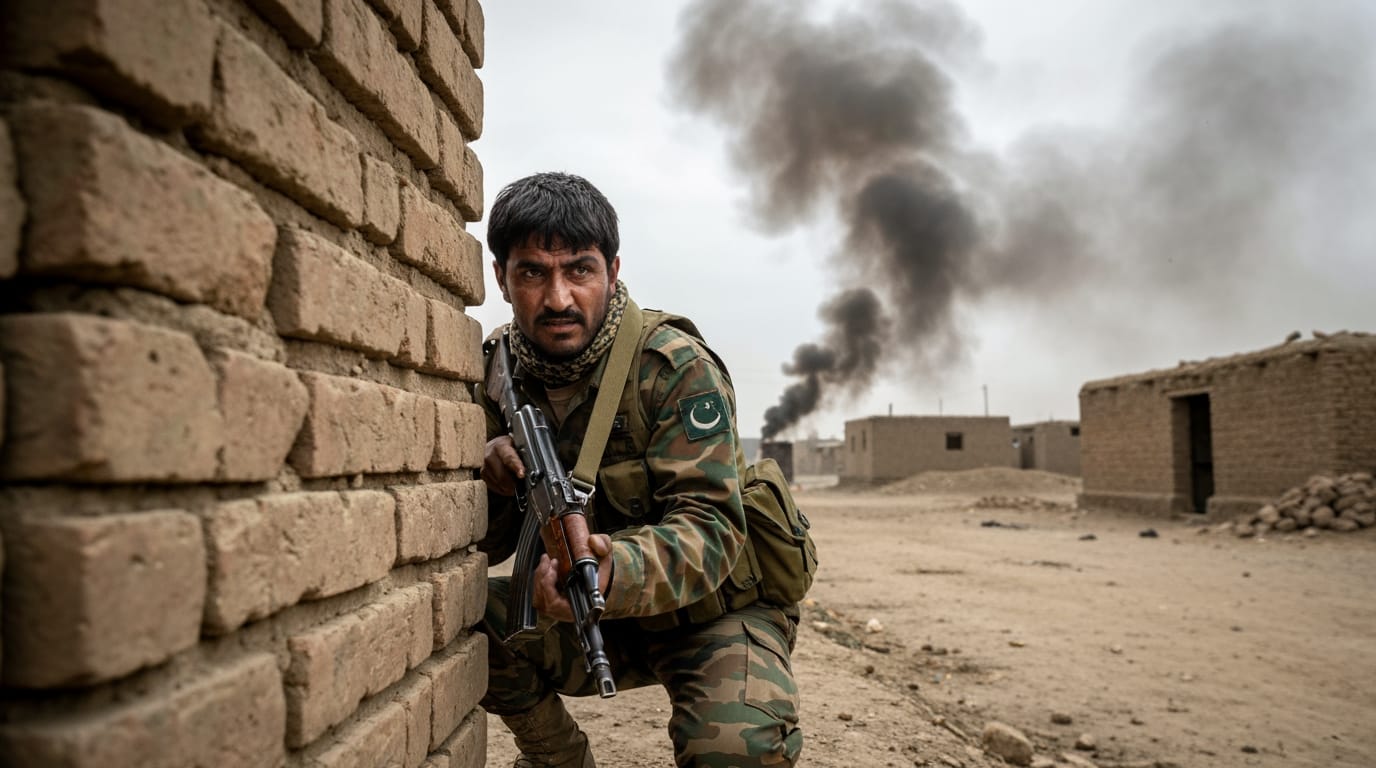
ISLAMABAD, Pakistan – A rapidly escalating conflict along the disputed Afghanistan-Pakistan border has seen Islamabad claim the deaths of hundreds of Afghan Taliban fighters in recent days, a stark indicator of intensifying hostilities that threaten regional stability. Pakistan's claims, which include successful airstrikes and ground operations, follow what it describes as unprovoked aggression and a persistent refusal by the Afghan interim government to address the presence of anti-Pakistan militant groups operating from Afghan soil. The situation has been characterized by Pakistan's defense minister as an "open war," while Afghanistan dismisses the casualty figures as baseless and asserts that Pakistani actions have led to significant civilian deaths.
The latest round of intense fighting, which began in late February 2026, has quickly spiraled into a cross-border confrontation involving artillery, airpower, and ground skirmishes across multiple locations. Pakistani officials assert that their forces have neutralized a substantial number of militants in retaliation for coordinated attacks on its border posts and a surge in terrorist activities within Pakistan, largely attributed to the Tehrik-i-Taliban Pakistan (TTP). The profound discrepancies in casualty figures and mutual accusations underscore the deep mistrust and complex dynamics at play between the two South Asian neighbors, with independent verification of claims remaining elusive.
A Flurry of Strikes and Counter-Strikes Define Escalation
The current conflagration marks the most significant escalation between Pakistan and the Taliban-led Afghan government since the latter's return to power in 2021. Pakistani Information Minister Ataullah Tarar has been at the forefront of Islamabad's official statements, detailing the extent of their military's actions and the reported toll on the Afghan side. On March 3, 2026, Tarar initially reported that Pakistani forces had killed 67 Afghan Taliban fighters in cross-border clashes across Balochistan and Khyber Pakhtunkhwa provinces, areas frequently targeted by militants. He specified that Afghan Taliban forces had initiated "physical attacks" at 16 locations in northern Balochistan, including Qilla Saifullah, Noshki, and Chaman districts, and engaged Pakistani troops in "fire raids" at 25 other locations. Pakistan claimed to have "effectively repulsed" these attacks, with one soldier from the Frontier Corps sacrificing his life and five others sustaining injuries.
As the conflict wore on, Tarar’s reported figures dramatically increased. Later on March 3, he claimed that 502 Afghan Taliban operatives and suspected militants had been killed, and hundreds more injured, in airstrikes and clashes since the previous Thursday. Further consolidating these claims under "Operation Ghazab-ul-Haq" (Operation Wrath for Truth), Tarar asserted that by March 3, 464 Taliban members had been killed and over 665 wounded. This operation reportedly involved the destruction of 188 posts, the capture of 31 others, and the obliteration of 192 tanks, armored vehicles, and artillery pieces. Airstrikes, according to Pakistani claims, targeted 56 locations across Afghanistan, including critical military facilities and alleged militant hideouts in provinces such as Kabul, Kandahar, Khost, Paktia, Paktika, and Nangarhar. Pakistan's Defense Minister Khawaja Muhammad Asif, reacting to the initial cross-border attacks, declared that Pakistan's "patience has run out" and that there would "now be open war."
Contradictory Narratives and Unverified Casualties
In sharp contrast to Islamabad's narrative, the Afghan Taliban administration has vehemently rejected Pakistan's casualty figures and offered a dramatically different account of the ongoing fighting. Enayat Khwarazmi, spokesman for the Taliban defense ministry, stated on March 3, 2026, that only 28 Taliban forces had been killed and 42 wounded since the clashes began on February 26. Khwarazmi countered Pakistan’s claims by asserting that Afghan forces had killed at least 150 Pakistani military personnel and wounded over 200, though he provided no evidence to support these figures. He also claimed that Afghan forces had repelled Pakistani attacks, destroying approximately a dozen Pakistani military posts and killing four Pakistani soldiers.
Adding another layer of complexity to the conflicting reports, Afghan officials have accused Pakistan of causing substantial civilian casualties through its airstrikes. Hamdullah Fitrat, deputy spokesperson for the Afghan government, stated on March 2 that 55 civilians, including women and children, had been killed and 69 injured since Thursday (February 27), with casualties reported in Paktika, Khost, Kunar, Nangarhar, and Kandahar provinces. The United Nations also reported 42 civilian deaths in the cross-border clashes. Taliban spokesman Zabihullah Mujahid confirmed Pakistani strikes but claimed civilian casualties, reporting 46 killed and 6 wounded, mostly children and women. The Afghan side maintains that Pakistan's actions constitute a violation of Afghanistan's sovereignty and that Islamabad's security failures are domestic in nature, not attributable to Afghanistan. The inaccessibility of the border areas to independent media makes it exceedingly difficult to verify either side's casualty claims.
The Enduring Shadow of the Durand Line and Cross-Border Militancy
The current flare-up is deeply rooted in long-standing historical grievances and unresolved territorial disputes, primarily centering on the 2,640-kilometer (1,640-mile) Durand Line. This border, demarcated in 1893 by British colonial authorities, has never been formally recognized by any Afghan government, including the current Taliban administration, which views it as an imposed division of Pashtun lands. This non-recognition fuels a constant state of tension, with minor clashes often imbued with symbolic nationalistic meaning.
A primary catalyst for Pakistan's recent military actions is its accusation that the Afghan Taliban harbors and provides safe haven to the Tehrik-i-Taliban Pakistan (TTP), an organization responsible for numerous deadly attacks within Pakistan. Islamabad asserts that TTP militants operate from Afghan territory, planning and launching cross-border assaults. Pakistan launched targeted strikes against alleged TTP hideouts and infrastructure inside Afghanistan, a move it claims is an act of self-defense. The Afghan Taliban, however, consistently denies these allegations, arguing that Pakistan's internal security problems are a result of its own policies and should not be blamed on Afghanistan. This cycle of accusation and denial has led to repeated border skirmishes and diplomatic standoffs, with the current hostilities being the most severe since October, when earlier cross-border fighting resulted in over 70 deaths on both sides.
Regional Stability and International Calls for De-escalation
The escalating conflict between Pakistan and Afghanistan carries significant implications for regional stability, particularly given the already volatile security landscape of South Asia. The hostilities have disrupted essential cross-border movement, with land crossings largely remaining closed, impacting trade, regional connectivity projects, and the flow of refugees. The closure of major trade routes like the Torkham and Chaman crossings further exacerbates economic pressures on both nations.
Concerned by the rapidly deteriorating situation and the mounting civilian casualties, international bodies and various nations have urged an immediate de-escalation of tensions and a return to diplomatic channels. The United Nations and Russia have called for an immediate ceasefire and peaceful resolution. Furthermore, regional powers, including Russia, China, the European Union, and the United Kingdom, have reportedly contacted the Afghan Taliban in efforts to end the war. These international interventions underscore the alarm over the potential for wider destabilization if the conflict continues to intensify.
A Precarious Path Forward
The current military confrontation between Pakistan and the Afghan Taliban represents a critical juncture in their historically troubled relationship. While Pakistan emphasizes its right to self-defense against militant groups operating from across the border, Afghanistan accuses Islamabad of violating its sovereignty and causing civilian casualties. The starkly contrasting narratives and casualty figures highlight the deep-seated animosity and lack of trust that define their interactions. Without a diplomatic breakthrough and a mutually agreed-upon mechanism to address border security and cross-border militancy, the cycle of violence is likely to persist, leaving an already fragile region vulnerable to further instability and humanitarian crises. The path forward remains precarious, demanding urgent and sustained efforts from both sides, as well as the international community, to foster dialogue and prevent a full-scale regional conflict.