Escalating Cross-Border Conflict: Pakistan Strikes Militant Targets in Afghanistan Amid Soaring Tensions
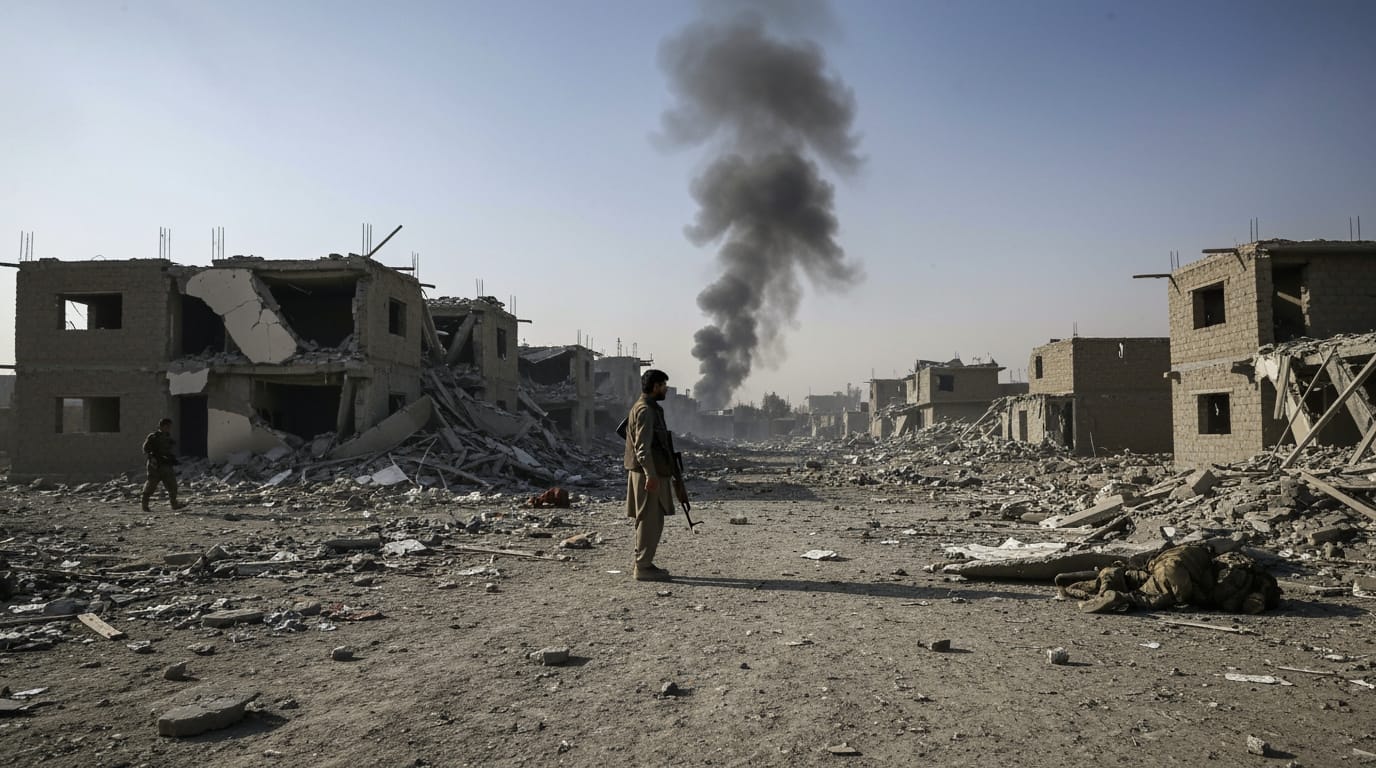
Islamabad, Pakistan – Pakistan has declared it conducted a series of "intelligence-based" ground operations and precision airstrikes targeting militant hideouts within eastern Afghanistan, further intensifying a long-standing cross-border conflict. The latest actions, announced on Sunday, June 28, 2026, by Pakistan's Information Minister Attaullah Tarar, were described as a direct response to a surge in militant attacks within Pakistan's borders, including a recent deadly assault on paramilitary troops in Karachi. The operations reportedly destroyed three militant targets in Afghanistan's Paktia, Paktika, and Kunar provinces, resulting in the deaths of 25 militants. These events mark a significant escalation in a volatile relationship, characterized by mutual accusations of harboring militant groups and a growing humanitarian toll.
Pakistan's Stance: Counter-Terrorism and Sovereign Defense
Pakistan's government has consistently asserted that its military actions are defensive measures aimed at neutralizing militant groups, particularly the Tehrik-i-Taliban Pakistan (TTP) and its affiliates, which Islamabad alleges operate from sanctuaries on Afghan soil. The recent strikes targeted groups such as Jamaat-ul-Ahrar and what Pakistan refers to as Fitna al-Khwarij, both frequently linked to the TTP. According to Pakistani officials, these militants are responsible for a wave of violence across Pakistan, prompting the necessity of cross-border intervention.
The operations on June 28 followed an attack two days prior in Karachi that claimed the lives of three paramilitary soldiers. Pakistani authorities have repeatedly urged the interim Afghan government to fulfill its international obligations by preventing its territory from being used to launch attacks against Pakistan. This demand underscores a fundamental point of contention: while Pakistan maintains it is acting against a clear and present threat emanating from its neighbor, the Afghan interim government steadfastly denies allowing any group to use its territory for cross-border militancy.
Afghanistan's Condemnation and Claims of Civilian Casualties
The Afghan interim government has vehemently condemned Pakistan's military incursions, labeling them as flagrant violations of Afghanistan's sovereignty and international law. Following earlier Pakistani airstrikes in late February and early March 2026, Afghan officials reported significant civilian casualties. The Taliban's deputy spokesman, Hamdullah Fitrat, stated on April 5, 2026, that between February 22 and April 3, Pakistani airstrikes and artillery fire had killed at least 761 civilians and injured 626 others across multiple Afghan provinces. These provinces reportedly included Kabul, Kandahar, Paktia, Paktika, Nangarhar, Khost, Kunar, Laghman, and Nuristan.
Beyond human lives, the Afghan government detailed extensive damage to civilian infrastructure, claiming approximately 1,140 homes, 13 religious schools, 13 public schools, three health centers, 34 mosques, and 42 vehicles were destroyed. More recently, on June 10, 2026, the Taliban alleged that Pakistani airstrikes killed at least 13 civilians, including 11 children, in the provinces of Kunar, Khost, and Paktika. The United Nations Assistance Mission in Afghanistan (UNAMA) has also reported credible accounts of civilian harm, noting that 13 civilians were killed in Pakistani airstrikes in Nangarhar province in February 2026. The Afghan Defense Ministry has warned of an "appropriate and measured response" to what it views as unprovoked aggression.
Historical Context and the TTP Nexus
The current flare-up is rooted in a complex and fraught history between Pakistan and Afghanistan, particularly concerning the disputed Durand Line border and the issue of cross-border militancy. Tensions have intensified significantly since the Afghan Taliban's return to power in August 2021. Pakistan had initially hoped that the new government in Kabul would help curb the activities of the TTP, a group that shares deep ideological and operational ties with the Afghan Taliban. However, instead of diminishing, TTP attacks within Pakistan have reportedly increased, leading Islamabad to accuse the Afghan Taliban of providing safe havens.
The TTP, designated as a terrorist organization by the United Nations and Pakistan, was founded in 2007 as a coalition of hardline Islamist factions. Its primary objective is to overthrow the Pakistani government and establish an emirate governed by its interpretation of Islamic law. A 2024 UN monitoring group report indicated that the TTP maintains a significant presence in Afghanistan, with an estimated 6,000 to 6,500 fighters. This enduring presence and the perceived inaction of the Afghan interim government have fueled Pakistan's frustration and its decision to resort to military force.
Regional and International Implications
The escalating conflict between Pakistan and Afghanistan has drawn international concern, with various global actors urging de-escalation and a diplomatic resolution. The United Nations Secretary-General Antonio Guterres has expressed deep concern over the rising violence and emphasized the critical need to protect civilians. China, a significant regional player and ally to Pakistan, has called for an immediate ceasefire and offered to mediate between the two nations. Other countries, including Saudi Arabia, Iran, Russia, and Turkey, have also voiced their concerns, advocating for restraint and diplomatic dialogue.
However, international responses have not been uniform. While India condemned Pakistan's airstrikes as a violation of international law, the United States affirmed Pakistan's right to self-defense against terrorist threats. The divergent reactions highlight the geopolitical complexities surrounding the conflict and the difficulty in forging a unified international approach. The "open war" declared by Pakistan in February 2026, followed by a cycle of retaliatory strikes and counter-claims, underscores the fragility of regional stability. Efforts to broker lasting peace, including Chinese-mediated talks in April, have yielded limited success, with both sides continuing to engage in cross-border military actions.
The ongoing military engagements between Pakistan and Afghanistan represent a dangerous phase in their already strained relationship. Pakistan's determination to eliminate what it views as a persistent terrorist threat from Afghan soil clashes directly with Afghanistan's assertions of sovereignty and its claims of widespread civilian casualties. The deepening cycle of violence, fueled by historical grievances and the persistent presence of militant groups, poses a significant risk to regional stability and the humanitarian situation. Without a substantial diplomatic breakthrough and a verifiable commitment from both sides to address the root causes of the conflict, the border region is likely to remain a flashpoint, with profound implications for its inhabitants and beyond.


