Escalating Ebola Crisis Prompts Urgent WHO Intervention in DR Congo
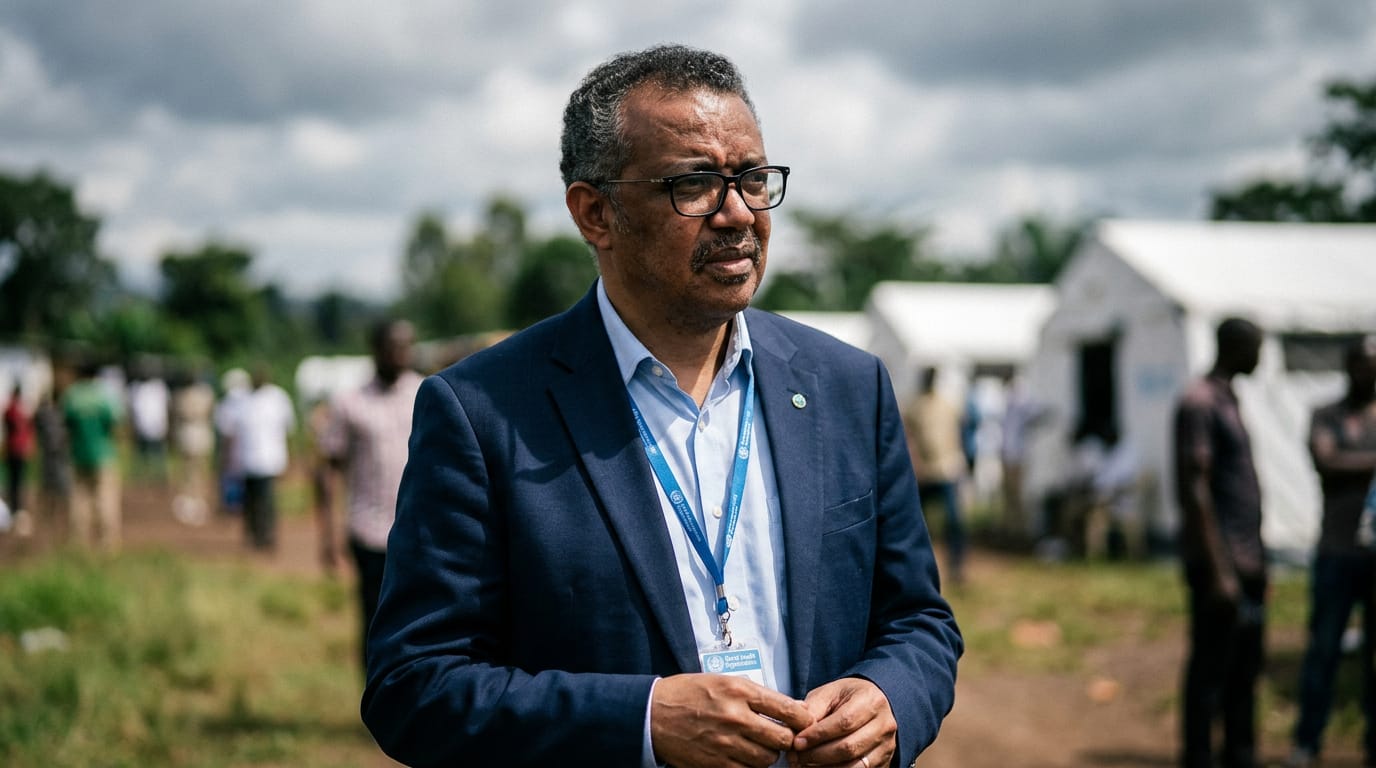
KINSHASA, DR Congo – As the Democratic Republic of Congo grapples with an Ebola outbreak spiraling at an unprecedented rate, World Health Organization Director-General Tedros Adhanom Ghebreyesus has made a critical visit to the nation, underscoring the severe challenges and global concern surrounding the burgeoning public health emergency. His second trip to the affected region since the outbreak's declaration in mid-May highlights the urgency of scaling up response efforts against a deadly virus that continues to outpace containment measures.
The current outbreak, driven by the Bundibugyo strain of Ebola, has intensified, becoming the fastest-spreading in history in terms of its initial transmission rate and now ranks as the second-largest Ebola outbreak on record globally. With nearly 4,000 cases and over 1,700 deaths reported, the situation demands immediate and comprehensive international action to prevent further catastrophe.
A Relentless Surge and a Dire Strain
The latest figures paint a grim picture: as of late July, 3,605 confirmed cases and 1,587 deaths were reported, marking a crude case fatality ratio of 44%. More recent updates push these numbers higher, indicating 3,874 cases and 1,751 deaths by early August, maintaining a fatality rate around 45.1%. The outbreak, initially concentrated in the Mongbwalu health zone of Ituri province, has alarmingly spread to five of the DRC's provinces—Ituri, North Kivu, South Kivu, Haut-Uélé, and Tshopo—affecting 49 health zones. Ituri remains the epicenter, accounting for nearly 90% of all cases.
A significant factor contributing to the accelerated spread is the nature of the Bundibugyo virus itself; unlike the more common Zaire strain, there is currently no approved vaccine or specific treatment for Bundibugyo. This absence of readily available countermeasures places immense pressure on traditional public health interventions such as contact tracing, isolation, and safe burials. Compounding the issue, officials believe the virus circulated undetected for weeks, possibly months, before the outbreak was officially declared on May 15. This silent spread has allowed the disease to establish a deeper foothold within communities, making eradication increasingly difficult.
Challenges Mount Amidst Conflict and Distrust
The response to this Ebola outbreak is complicated by a confluence of deeply entrenched challenges unique to eastern DRC. Foremost among these is the pervasive insecurity and armed conflict plaguing the region. Ituri province, the heart of the epidemic, is a hotbed of violent clashes involving numerous armed groups, which severely impede access for health workers and humanitarian aid. Attacks on health facilities, including an Ebola treatment center in Bunia, further disrupt critical operations and jeopardize the safety of frontline responders.
Beyond the physical dangers, community resistance and widespread misinformation present formidable hurdles. The lack of trust in external interventions, often fueled by rumors and cultural beliefs, leads to difficulties in contact tracing, case identification, and adherence to public health protocols. At least 60% to 70% of new cases are being identified outside of known contact lists, signifying persistent undetected transmission chains. This phenomenon underscores the urgent need for enhanced community engagement and transparent communication to foster cooperation. Moreover, the existing health infrastructure in eastern DRC, already fragile, struggles to cope with the demands of a major outbreak, characterized by inadequate isolation facilities, care systems, and referral mechanisms. Recent reports also indicate some health workers have initiated strikes over unpaid wages, adding another layer of complexity to an already strained response.
WHO's Concerted Efforts and Funding Gaps
In response to the escalating crisis, Director-General Tedros's visit on Wednesday was aimed at reinforcing the World Health Organization's commitment and coordinating with local partners and President Félix Tshisekedi. Earlier in May, his initial visit took him directly to Ituri, where he emphasized that despite the complexity, the outbreak could be stopped and assured affected communities they were not alone. Tedros has consistently called for increased international support and urged a focus on community-led solutions, stressing that Ebola cannot be stopped without the trust and leadership of the communities themselves.
The WHO, in collaboration with the Africa Centres for Disease Control and Prevention (Africa CDC), has initiated a joint plan to bolster the response in DRC and Uganda, aiming to raise $518 million over six months. While Uganda has successfully brought its Bundibugyo outbreak to an end as of late July, having gone 42 days without a new confirmed case, the situation in the DRC remains critical. Response efforts include expanding treatment capacity to over 800 beds, increasing the number of diagnostic laboratories from one to 16, and enhancing contact follow-up rates to nearly 80%. Additionally, more than 21,000 community health workers are undergoing training, and safe and dignified burial practices are being promoted. Cross-border surveillance has been strengthened with the establishment of a mobile laboratory at the DRC-Uganda border. Despite these efforts, a significant funding gap of over $400 million persists for the joint WHO-Africa CDC plan, with UNICEF also reporting only 25% of its required funding secured. This financial shortfall, coupled with previous funding cuts for health surveillance in the region, threatens to undermine the entire response.
A Socioeconomic Crisis Unfolding
Beyond the immediate health implications, the Ebola outbreak is unleashing a far-reaching socioeconomic crisis across the DRC. A United Nations Development Programme (UNDP) assessment warns that the epidemic could push an additional 985,000 people into poverty, erasing fragile development gains and costing African economies billions if not contained. Women are disproportionately affected, facing heightened risks of infection due to their roles as caregivers and their engagement in informal trade that exposes them to cross-border movements. The disruption extends to livelihoods, education, food security, and access to essential healthcare services, particularly impacting maternal and child health as resources are diverted or facilities become inaccessible. The convergence of health, security, and socioeconomic crises creates a complex humanitarian emergency that requires a holistic and sustained response.
Conclusion
The Democratic Republic of Congo faces an arduous battle against an aggressive Ebola outbreak, compounded by a volatile security environment, community mistrust, and significant funding shortfalls. Director-General Tedros Adhanom Ghebreyesus's renewed presence in the country serves as a stark reminder of the global stakes involved. While substantial efforts are underway to contain the spread, the virus’s relentless acceleration and expansion underscore the urgent need for a massive scaling up of resources, a unified international response, and deep engagement with affected communities. The outcome of this fight will not only determine the future of public health in the DRC but will also serve as a crucial test of the world's ability to confront complex and rapidly evolving health crises.


