Escalating Tensions: Trump's 'Locked and Loaded' Warning Ignites Fury in Tehran Amidst Iranian Protests
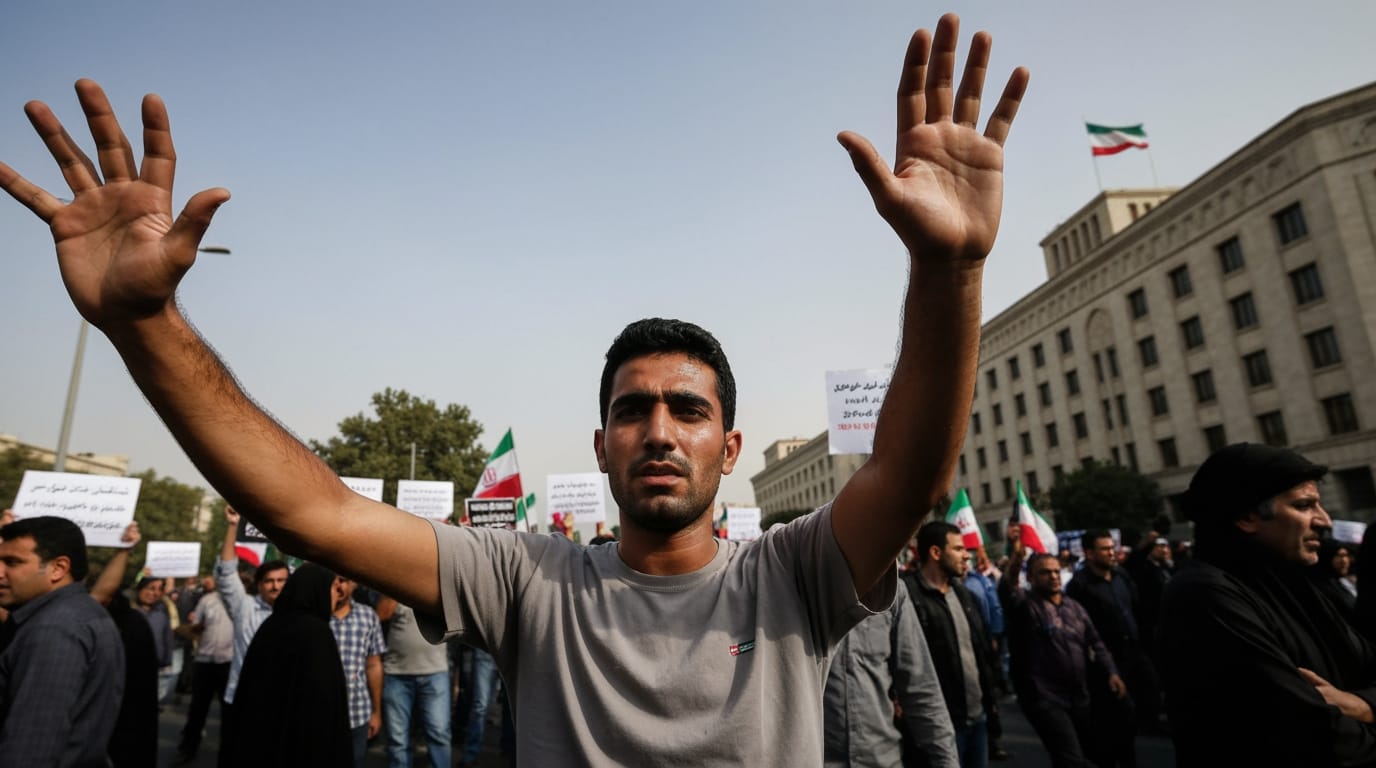
Washington D.C. / Tehran, Iran – The volatile relationship between the United States and Iran has reached a new boiling point, as President Donald Trump issued a stark warning that the U.S. stands "locked and loaded" to intervene if Iranian authorities violently suppress ongoing protests across the Islamic Republic. This aggressive rhetoric has drawn swift and furious condemnation from Tehran, whose officials have threatened severe retaliation against any perceived foreign interference, further exacerbating an already precarious geopolitical landscape. The exchange of threats unfolds against a backdrop of widespread economic discontent and anti-government demonstrations gripping Iran, echoing previous waves of unrest that have periodically challenged the clerical establishment.
The Resurgence of Public Dissent in Iran
Iran is once again experiencing a surge of public protests, fueled by deep-seated economic grievances, soaring inflation, and a collapsing currency. What began as localized demonstrations by shopkeepers and merchants quickly spread to numerous cities and provinces, with protesters expressing profound frustration over economic mismanagement and calling for systemic change. These latest demonstrations, observed across dozens of locations from Tehran to Qom, have seen participants openly chanting anti-regime slogans and even pro-monarchy sentiments, signaling a widening disillusionment with the Islamic Republic's leadership, including Supreme Leader Ali Khamenei. Security forces have responded with considerable force in some areas, and reports indicate at least seven protesters have been killed amid clashes.
This recent wave of unrest follows significant anti-government protests in late 2019, often referred to as "Bloody November" or "Bloody Aban," which were initially sparked by a sudden 50-200% increase in fuel prices. The 2019 demonstrations rapidly evolved into calls for the overthrow of the government and were met with a brutal crackdown by security forces. Reports indicated the use of live ammunition, resulting in hundreds, possibly up to 1,500, deaths, alongside mass arrests and a widespread internet shutdown aimed at stifling communication and concealing the scale of the violence. The underlying causes of public anger—government corruption, human rights abuses, and a struggling economy exacerbated by international sanctions—have persisted and appear to be driving the current protests.
Washington's Stance and the 'Locked and Loaded' Declaration
The Trump administration has consistently demonstrated strong support for Iranian protesters, a stance reiterated in President Trump's recent social media posts. Throughout his previous term, Trump frequently condemned the Iranian regime's corruption and human rights record, proclaiming that "the world is watching" the government's treatment of its citizens.
The latest and most explicit warning came as protests intensified across Iran. On Friday, President Trump declared on Truth Social that the United States was "locked and loaded and ready to go" if Iranian authorities were to "shoot and violently kill peaceful protesters." This statement built upon earlier threats from the week, where Trump had warned of severe consequences should Iran attempt to reconstitute its nuclear program following US-led strikes on Iranian nuclear facilities in June 2025. During a meeting with Israeli Prime Minister Benjamin Netanyahu, Trump stated, "we'll knock them down. We'll knock the hell out of them" if Tehran sought to rebuild its nuclear capabilities. The convergence of domestic unrest in Iran and the lingering geopolitical tensions over its nuclear program has created a highly combustible environment, with Washington signaling an unprecedented readiness for intervention on humanitarian grounds.
Tehran's Fierce Rebuke and Counter-Threats
Iranian officials have swiftly and unequivocally rejected what they perceive as blatant foreign interference in their internal affairs. They have consistently accused the United States and Israel of orchestrating and exploiting the protests to destabilize the country.
The response from Tehran has been equally defiant and menacing. Ali Shamkhani, a political advisor to Supreme Leader Ali Khamenei, asserted that Iran's "missile capabilities and defense are not containable or permission-based" and warned that "any aggression will face an immediate harsh response beyond its planners' imagination." President Masoud Pezeshkian echoed this sentiment, promising a "severe and regret-inducing" response to any "unjust aggression" against Iran.
Perhaps the most pointed retort came from Ali Larijani, Secretary of Iran's Supreme National Security Council, who directly addressed Trump's warnings. Larijani cautioned that "US interference in the internal issue would result in regional instability and the erosion of American interests." He also issued a stark warning to the American public, stating they "should understand that it was Trump who initiated adventurism," and urged them to "be mindful of the safety of US soldiers." Supreme Leader Ayatollah Ali Khamenei also weighed in, stating that "military action will exact a heavy price" and mocking Trump's remarks by noting that "every additional act of foolishness carries a price different from the last." These statements underscore Tehran's resolve to defend its sovereignty and its willingness to escalate tensions if challenged.
Geopolitical Ramifications and Regional Stability
The escalating rhetoric between Washington and Tehran carries significant geopolitical risks, threatening to further destabilize an already volatile Middle East. The Iranian regime views US backing of protesters as a direct challenge to its authority, while the US frames its support as a defense of human rights and democratic aspirations.
This cycle of threats and counter-threats occurs at a moment of heightened regional tension, especially following the US and Israeli strikes on Iranian nuclear sites in June 2025. The potential for miscalculation remains high, with each side interpreting the other's actions through a lens of suspicion and historical animosity. Experts note that while US statements aim to empower protesters, they can also be seized upon by Tehran to delegitimize the movement as a foreign plot, potentially enabling harsher crackdowns. The calls from Iranian officials warning of regional chaos and threats to US interests and personnel highlight the broader implications, suggesting that any direct intervention could ignite a wider conflict involving Iran's network of regional proxies. The delicate balance of power in the Persian Gulf now hangs precariously, contingent on the actions and reactions of these two nuclear-armed nations.
A Precarious Future
The current standoff between the United States and Iran represents a dangerous confluence of domestic upheaval and international confrontation. While the Iranian populace continues to voice its discontent over economic hardship and governance, the rhetorical battle between Washington and Tehran risks transforming internal protests into a flashpoint for broader regional conflict. The future remains uncertain, with calls for internal reform within Iran clashing with the regime's unyielding stance against foreign interference, and an American administration signaling an unprecedented willingness to intervene. The world watches anxiously as both sides weigh their next moves in a high-stakes geopolitical chess match.


