Escalation in Middle East: Israeli Strikes Devastate Lebanon Amid Broadening Regional Conflict
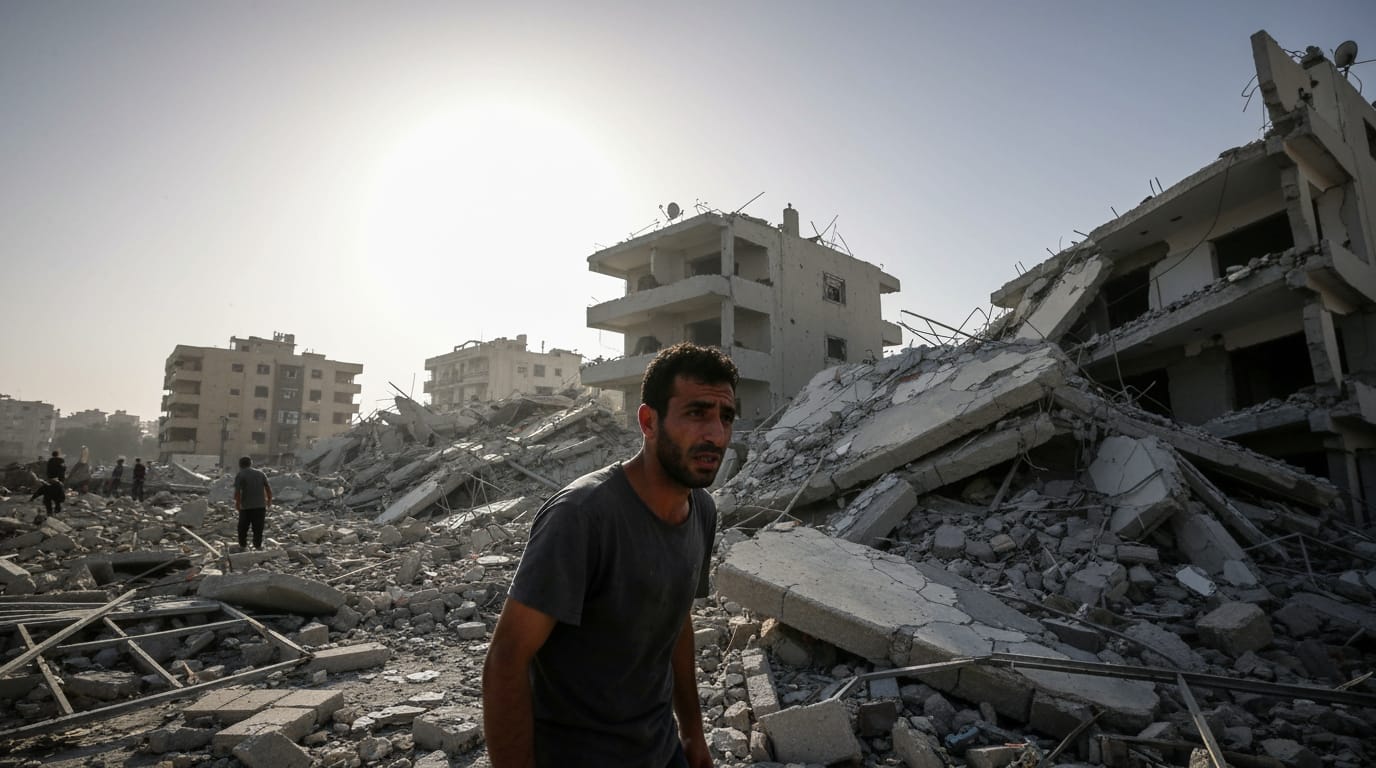
BEIRUT, Lebanon – A new and deadly wave of Israeli airstrikes has ravaged areas across Lebanon, including the capital Beirut and its southern suburbs, leaving dozens dead and scores wounded, as the broader Middle East grapples with an escalating regional conflict. The intense bombardments, which began on March 2, 2026, mark a significant intensification of hostilities between Israel and the Iran-backed Hezbollah militant group, drawing Lebanon deeper into a wider war involving the United States and Iran.
The recent violence erupted following Hezbollah's launch of rockets and drones into northern Israel, which the group stated was in direct retaliation for the killing of Iranian Supreme Leader Ali Khamenei. Khamenei's death occurred during a joint US-Israeli strike campaign against Iran that commenced on February 28, 2026. This rapid sequence of events underscores the precarious and interconnected nature of regional tensions, transforming long-standing proxy conflicts into a more overt and dangerous confrontation.
Deluge of Strikes and Mounting Casualties
Lebanese authorities have reported a grim toll, with at least 52 people killed and 154 injured by March 2, 2026, as Israeli warplanes executed an estimated 221 airstrikes across the country. Subsequent reports by March 3 and 4 indicated a continuous rise in casualties, with at least 40 individuals killed and 246 wounded in the intensified cross-border exchanges. Among the affected areas were Beirut's southern suburbs, Baalbek in eastern Lebanon, and the towns of Aramoun and Saadiyat, located outside of Hezbollah's traditional strongholds, where at least six people were killed and eight wounded in a single day. Residential buildings were struck, with rescue teams working to extract families from rubble.
Hezbollah's attacks preceding the Israeli retaliation targeted various sites in northern Israel, including a missile defense installation south of Haifa, the Ramat David airbase, and the Meron monitoring base. Air raid sirens blared across northern Israel and even reached the Tel Aviv metropolitan area as Hezbollah fired rockets, though Israeli defense systems intercepted many projectiles. The Israeli military has confirmed that "several" projectiles crossed into Israeli territory, with the majority intercepted. This exchange signals a dramatic shift from previous, more contained skirmishes.
Broader War Unfolds: The Iran-Israel-US Nexus
The current flare-up is explicitly linked to an "ongoing war with Iran between Israel and the United States," a context described as a "2026 Iran conflict." For decades, Iran has fostered a network of proxy forces, most notably Hezbollah, which it views as a critical element of its "axis of resistance" against US and Israeli influence in the Middle East. The killing of Supreme Leader Ali Khamenei, Iran's highest authority, in a joint US-Israeli operation served as a catalyst, prompting Hezbollah to enter the fray in defense of Tehran.
This expansion of hostilities follows months of heightened tensions and a series of escalations that have steadily eroded previous ceasefires. A US-brokered ceasefire in November 2024 had temporarily halted an Israeli invasion of southern Lebanon, which itself was a response to cross-border attacks by Hezbollah following the outbreak of the Gaza war in October 2023. Despite this truce, numerous violations were reported, with Israel conducting near-daily attacks into Lebanon and Hezbollah periodically launching projectiles. The current situation, however, represents a qualitative leap in the intensity and scope of the conflict.
Worsening Humanitarian Crisis and International Appeals
The renewed violence has triggered a severe humanitarian crisis in Lebanon. Over 28,500 people were displaced in the initial days of the escalation, a number that quickly surged to over 58,064 internally displaced individuals by March 3-4. The UN Human Rights Office has voiced profound concern over the impact on civilians, noting that prior to this latest surge, more than 2,000 people had been killed in Lebanon since October 2023, with over 300 fatalities occurring in the past week alone. The UN refugee agency also confirmed that at least 30,000 people have been displaced in Lebanon due to the escalation.
International bodies and governments have issued urgent appeals for de-escalation and adherence to international humanitarian law. The UN Human Rights Chief expressed deep shock at the civilian casualties and the widespread destruction, emphasizing the need for all parties to protect civilians. Amnesty International specifically called for the protection of civilians and a halt to unlawful attacks. Lebanese Prime Minister Nawaf Salam condemned Hezbollah's rocket and drone strikes, describing them as "irresponsible acts outside the authority of the Lebanese state" that endanger national security. The UN Security Council, in earlier warnings, highlighted the risk of a new conflict emanating from the Lebanon-Israel border due to ongoing violence and unauthorized weapons.
A Precarious History Echoes in the Present
The current confrontation is rooted in a decades-long history of conflict between Israel and Hezbollah, which emerged in the 1980s with substantial support from Iran. Iran's Islamic Revolutionary Guard Corps (IRGC) played a crucial role in establishing and arming Hezbollah, transforming it into a formidable political party and military force in Lebanon, equipped with a vast arsenal of rockets and missiles. This proxy relationship has been a cornerstone of Iran's regional strategy, aiming to deter potential attacks on its own territory.
Previous clashes, notably the 2006 Lebanon War, demonstrated the destructive potential of this rivalry. While a fragile calm often settled, periodic skirmishes and violations of UN Security Council Resolution 1701, which calls for a cessation of hostilities and a demilitarized zone, have been a constant feature of the border region. The current involvement of the United States and Israel in direct attacks on Iran, and Iran's subsequent regional responses, signifies a dangerous evolution, elevating the stakes and threatening to destabilize the entire Middle East.
The present situation in Lebanon is not merely a border skirmish but a critical front in a multi-faceted regional conflict. The escalating violence, severe civilian impact, and direct involvement of major regional and international powers underscore the urgent need for robust diplomatic efforts to halt the fighting and prevent a wider catastrophe. Without immediate intervention, the risk of a full-scale regional war with devastating consequences for millions remains acutely high.


