Escalation in Middle East: US Strikes Iran, Houthis Target Saudi Tankers Amid Mounting Regional Tensions
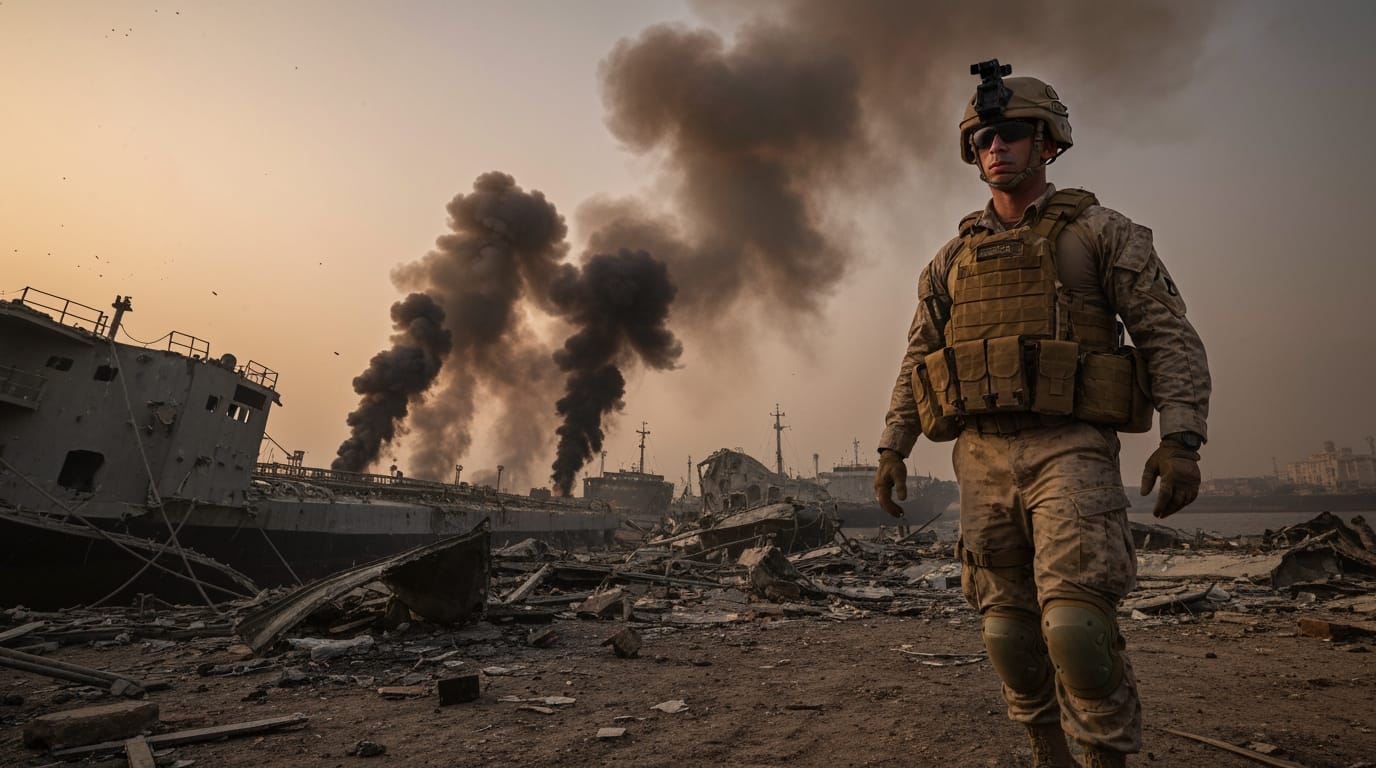
A precarious new chapter of heightened confrontation is unfolding across the Middle East, marked by a fresh wave of U.S. military strikes against Iran and simultaneous claims by Yemen's Houthi rebels of attacks on Saudi oil tankers. These intertwined developments signal a significant escalation in regional hostilities, threatening vital global shipping arteries and further destabilizing an already volatile geopolitical landscape. The dual crises, unfolding over the past week, underscore the complex interplay of long-standing rivalries and the profound economic implications for international energy markets.
U.S. Intensifies Pressure on Iran with Repeated Strikes
The United States has engaged in its twelfth consecutive night of strikes against Iranian military targets as of Wednesday, July 22, 2026, according to U.S. Central Command. These operations are aimed at "further degrad[ing] Iran's ability to threaten civilian mariners and commercial vessels transiting regional waters." Earlier U.S. military actions focused on Iranian military command centers, maritime capabilities, missile and drone launch sites, and air defense systems.
In response, Iranian state media reported that cities in the country's southwest, including Ramshir and Ahvaz, and Bushehr province along the Gulf coast, experienced "missile attack by the US terrorist enemy." The escalating exchange has drawn a sharp warning from U.S. President Donald Trump, who vowed on Wednesday to "bomb and destroy" an Iranian bridge or power plant for every new attack by Iran on a ship in the Strait of Hormuz. He explicitly stated that such retaliation would include targets within the capital city of Tehran if Iranian forces target vessels in the critical waterway. This tough stance follows an earlier U.S. decision on July 8, 2026, to revoke a license permitting Iran to sell oil, a measure enacted after three tankers reportedly sustained hits from projectiles in the Strait of Hormuz. Meanwhile, Kuwait's military reported actively intercepting Iranian drones, indicating broader regional engagement in the ongoing tensions. Kuwait has also faced Iranian attacks on its power and desalination plants.
Adding to the maritime tensions, Iran itself launched an attack on a tanker in the Strait of Hormuz early Tuesday, forcing the crew to abandon the vessel, as it endeavors to assert greater control over the waterway. Iran's Islamic Revolutionary Guards Corps also claimed that two oil tankers in the southern waterway of Hormuz caught fire after an explosion. Despite these incidents, the Pentagon maintains that the Strait of Hormuz remains open for transit, though commercial traffic has reportedly slowed, contributing to an uptick in global oil prices.
Houthis Claim Strikes on Saudi Tankers, Declare Embargo
Concurrently, Yemen's Houthi rebels, backed by Iran, claimed responsibility on Wednesday, July 22, 2026, for attacking two commercial oil tankers in the Red Sea. A Houthi spokesperson identified the targeted vessels as the "Encela" and "Laylia," asserting they were struck for violating a newly declared naval blockade against Saudi Arabia. The United Kingdom Maritime Trade Operations Centre (UKMTO) corroborated a related incident, reporting that a tanker was hit by an "unknown projectile" approximately 70 nautical miles southwest of Al Shuqaiq, off the Saudi coast in the Red Sea. The strike resulted in an onboard fire, though no casualties were reported.
This alleged attack follows the Houthis' declaration of a maritime embargo against Saudi Arabia on Monday, July 21, 2026. The rebel group warned all shipping companies against loading or discharging cargo at Saudi ports, stating that any vessels doing so would be subject to targeting within the Houthi's operational reach. This threat immediately impacted shipping traffic. Several tankers, laden with Saudi crude destined for China and India, reportedly executed U-turns in the Red Sea, altering their course toward the Suez Canal to avoid the Bab al-Mandeb strait. This demonstrates the immediate and tangible effect of the Houthi threat on global shipping routes. Houthi leader Abdul Malik al-Houthi has framed these actions as an "eye for an eye" response, threatening all Saudi oil facilities and vital infrastructure.
Critical Chokepoints Under Threat
The escalating tensions place two of the world's most critical maritime chokepoints, the Strait of Hormuz and the Bab el-Mandeb strait, at the center of the conflict. The Strait of Hormuz, nestled between Oman and Iran, is undeniably the planet's most vital oil transit route. In 2022, an estimated 21 million barrels of oil flowed through it daily, accounting for roughly 21% of global petroleum liquids consumption and approximately one-quarter of the world's seaborne oil trade. Any significant disruption here carries substantial global economic consequences.
Similarly, the Bab el-Mandeb strait, connecting the Red Sea with the Gulf of Aden and the broader Indian Ocean, is a crucial gateway for international commerce. Nearly 15% of global seaborne trade typically transits through this narrow passage. Houthi attacks in this area have already prompted major shipping companies to reroute vessels around Southern Africa, leading to increased shipping and insurance costs and raising concerns about potential inflationary pressures worldwide. Saudi Arabia has in recent months diverted significant volumes of oil through a pipeline to its Yanbu terminal on the Red Sea to bypass the Strait of Hormuz. However, the new Houthi threats in the Red Sea now imperil this alternative route, making the Bab el-Mandeb an increasingly critical and vulnerable artery for global energy markets.
International Reactions and Economic Repercussions
The international community has closely monitored and reacted to the escalating situation. The United Nations Security Council adopted Resolution 2722 in January 2024, condemning Houthi attacks and affirming the right to freedom of navigation. However, ongoing Houthi actions, including previous attacks on shipping linked to the Israel-Hamas conflict, highlight the persistent challenges to maritime security in the region. The United States and the United Kingdom have previously conducted coordinated air strikes against Houthi targets in Yemen in response to their persistent threats to shipping.
The combined impact of the U.S.-Iran confrontation in the Strait of Hormuz and the Houthi threats in the Red Sea has already begun to ripple through global markets. Oil prices have surged, with Brent crude futures climbing to over $95 a barrel, reflecting growing concerns about potential supply disruptions. The rerouting of ships around Africa adds significant time and expense to voyages, impacting supply chains and potentially leading to higher consumer costs. The current climate suggests that regional tensions are poised to inflict a substantial economic toll beyond the immediate conflict zones.
Conclusion
The confluence of sustained U.S. military pressure on Iran and renewed Houthi aggression against Saudi oil interests marks a dangerous escalation in the Middle East. With two of the world's most vital maritime chokepoints now firmly embroiled in the conflict, the implications for global energy supplies and international trade are profound. The current tit-for-tat exchanges between the U.S. and Iran, coupled with the Houthi's active threats to shipping, underscore the fragile stability of the region. As the situation evolves, the international community faces the daunting task of navigating this complex web of alliances and hostilities, with the urgent imperative of de-escalation to prevent a wider, more devastating regional conflict and its far-reaching global repercussions.