Escalation in the Middle East: Israel Retaliates Against Iran After Unprecedented Aerial Attack
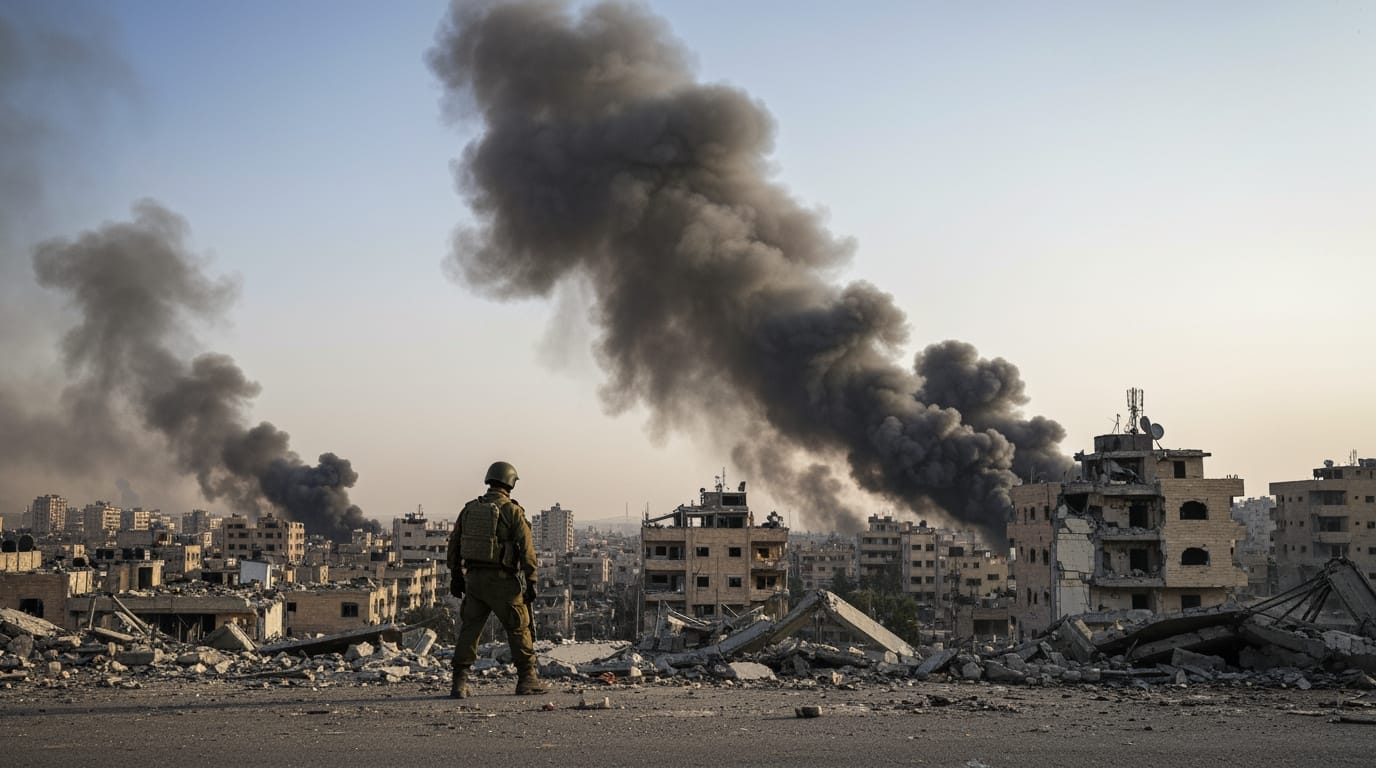
A new and perilous chapter in the long-standing animosity between Israel and Iran unfolded in April 2024, as direct military confrontations erupted, shattering decades of proxy warfare and igniting global alarm. In a dramatic sequence of events, Iran launched an unprecedented aerial assault on Israel, dubbed "Operation True Promise," on April 13-14, followed swiftly by a retaliatory Israeli strike on Iranian territory on April 19. This direct exchange of blows marked a significant escalation, underscoring the volatile nature of Middle Eastern geopolitics and raising urgent questions about regional stability and the potential for wider conflict.
The Precursor: A Strike in Damascus Ignites Retaliation
The immediate catalyst for Iran's large-scale attack was an Israeli airstrike on April 1, 2024, targeting a building adjacent to the Iranian consulate in Damascus, Syria. This strike proved deadly, killing Brigadier General Mohammad Reza Zahedi, a senior commander of the Islamic Revolutionary Guard Corps (IRGC) Quds Force, along with several other IRGC officers and affiliated militants. The building was part of Iran's diplomatic compound, making the incident a particularly provocative act in the eyes of Tehran. Iran swiftly vowed retaliation, characterizing the Damascus attack as a violation of its sovereignty and international law. This event was not an isolated incident but rather a sharp escalation within the broader context of the ongoing Israel-Hamas conflict in Gaza and a history of Israeli operations targeting Iranian assets and proxies in Syria.
Operation True Promise: Iran's Unprecedented Barrage
True to its word, Iran launched "Operation True Promise" on the night of April 13-14, an unprecedented direct assault on Israeli soil. The attack involved a massive barrage of over 300 drones and missiles, including loitering munitions, cruise missiles, and ballistic missiles. These projectiles were not only launched from Iran but also from allied groups in Iraq, Lebanon, and Yemen, highlighting the regional network of Iranian proxies. The stated objective of the Iranian attack was to damage or destroy Israeli military facilities believed to have been involved in the Damascus consulate bombing. It represented the first time since the 1991 Gulf War that Israel had been directly attacked by the military of another state.
Despite the sheer scale of the assault, the damage inflicted was remarkably limited. A coalition comprising Israel, the United States, the United Kingdom, France, and Jordan successfully intercepted approximately 99% of the incoming threats. Israeli and allied air defense systems, including the advanced Arrow 3 and David's Sling, neutralized the vast majority of the drones and missiles, many of them before they even entered Israeli airspace. While some ballistic missiles penetrated defenses, causing minor damage to the Nevatim Airbase in southern Israel, the base remained operational. One Israeli civilian was critically injured by shrapnel, and others received treatment for minor injuries or post-traumatic stress. The effectiveness of this multi-national defense effort, codenamed "Iron Shield," was widely seen as a significant strategic success for Israel and its allies.
Israel's Measured Response and Strategic Signaling
Following Iran's attack, Israel's war cabinet convened multiple times to deliberate its response, with international pressure mounting to avoid further escalation. Despite initial vows for a "significant response," Israel ultimately opted for a more limited, calibrated strike. On April 19, Israeli forces carried out retaliatory strikes near Isfahan, Iran. The targets included an air defense facility, specifically a radar system associated with the Natanz nuclear site.
Iranian officials initially downplayed the incident, reporting explosions as a result of their air defense systems shooting down drones. However, U.S. officials confirmed that Israeli aircraft had launched missiles targeting Iranian sites, and satellite images later suggested damage to an air defense battery and its radar system. Israel maintained official silence on the operation, a characteristic approach to such sensitive actions. This calculated ambiguity, coupled with the apparently contained nature of the strike, was interpreted by some analysts as a strategic signal to Iran, demonstrating Israel's capability to penetrate Iranian airspace and strike key facilities, including those related to its nuclear program, without provoking an all-out war. The objective, according to some U.S. officials, was to communicate Israel's capabilities while preventing an uncontrollable escalation.
Global Reactions and Calls for De-escalation
The direct exchange between Israel and Iran triggered a wave of international reactions, predominantly characterized by condemnation of Iran's initial aggression and urgent calls for de-escalation. The United States, the United Kingdom, France, and other G7 nations swiftly condemned Iran's attack, expressing solidarity with Israel and emphasizing the need for restraint. The U.S. affirmed its "ironclad" support for Israel's defense and coordinated a G7 meeting to forge a united diplomatic response, committing to further sanctions against Iran's missile and drone programs.
However, there was a palpable concern among allies that an unbridled Israeli retaliation could ignite a broader regional conflict. European nations, in particular, urged Israel to exercise restraint, viewing its successful defensive operation as a sufficient victory. Countries like Saudi Arabia and the United Arab Emirates, while concerned about regional stability, called for all parties to exercise utmost restraint and spare the region the dangers of war. Russia, a key ally of Iran, expressed extreme concern, calling for restraint from all sides and attributing heightened tensions to unresolved crises, particularly the Israeli-Palestinian conflict. The United Nations Security Council also convened an emergency session, though no immediate resolutions were debated.
Economic Repercussions and Future Uncertainties
The escalation between Israel and Iran carried significant economic implications, particularly for global energy markets and supply chains. Immediately following the attacks, oil prices experienced a modest jump, fueled by fears of supply disruptions in the Middle East. The Strait of Hormuz, a critical chokepoint for global oil and liquefied natural gas (LNG) trade, became a focal point of concern, with potential disruptions threatening to exacerbate inflationary pressures worldwide.
Analysts warned that a full-blown regional conflict, or even prolonged tensions, could lead to sustained higher oil prices, impacting global inflation, economic growth, and investment decisions. Asian economies, heavily reliant on Middle Eastern oil, were identified as particularly vulnerable. Beyond energy, the conflict highlighted the fragility of global supply chains, with disruptions in maritime shipping impacting various commodities. Both Israel and Iran face substantial economic burdens from military expenditures and potential damage to infrastructure, further straining their national economies already grappling with existing challenges like sanctions in Iran's case.
Conclusion: A Precarious Balance
The April 2024 direct exchange between Israel and Iran ushered in a new era of overt hostilities, transitioning from a "shadow war" to direct confrontation. While both sides demonstrated a degree of restraint in the immediate aftermath, the underlying tensions and the capacity for escalation remain acutely high. The successful interception of Iran's large-scale attack showcased Israel's advanced defensive capabilities, bolstered by a strong network of international allies. However, Israel's retaliatory strike, though limited, signaled its determination to respond directly to attacks on its sovereignty.
The events served as a stark reminder of the interconnectedness of regional conflicts and their potential to ripple across the globe, affecting energy markets, trade, and international diplomacy. As the Middle East continues to navigate a complex web of rivalries and alliances, the delicate balance between deterrence and escalation will remain a critical challenge for regional and international actors alike. The future trajectory of Israel-Iran relations, and with it, the stability of the broader Middle East, remains precariously poised.


