Escalation in Yemen: Saudi-Led Coalition Strikes After Separatist Leader's Ousting Ignites New Crisis
ADEN, Yemen – A volatile new chapter in Yemen's protracted conflict has unfolded, marked by a series of Saudi-led coalition airstrikes in the southern Dhale governorate. The military action comes amidst a dramatic political upheaval surrounding Aidarous al-Zubaidi, leader of the UAE-backed Southern Transitional Council (STC), who was accused of high treason and removed from his position on Yemen's internationally recognized Presidential Leadership Council (PLC) after failing to attend critical peace talks in Saudi Arabia. This rapidly developing situation further fractures the already complex web of alliances opposing the Iran-backed Houthi rebels, raising grave concerns about the future of stability in the war-torn nation.
Coalition Justifies "Preemptive Strikes" Amidst Rising Tensions
The Saudi-led coalition confirmed early Wednesday that it had launched "limited preemptive strikes" targeting secessionist forces in Yemen's southern Dhale governorate. This offensive follows intelligence reports indicating that Aidarous al-Zubaidi, leader of the Southern Transitional Council, had mobilized a significant military force, including armored and combat vehicles, heavy and light weapons, and munitions. The coalition stated that these forces were observed moving from Aden towards Dhale governorate, prompting the airstrikes at approximately 4 a.m. local time (01:00 GMT). The stated aim of the strikes was to "disable those forces and thwart al-Zubaidi's attempt to escalate the conflict" and prevent its spread into Dhale.
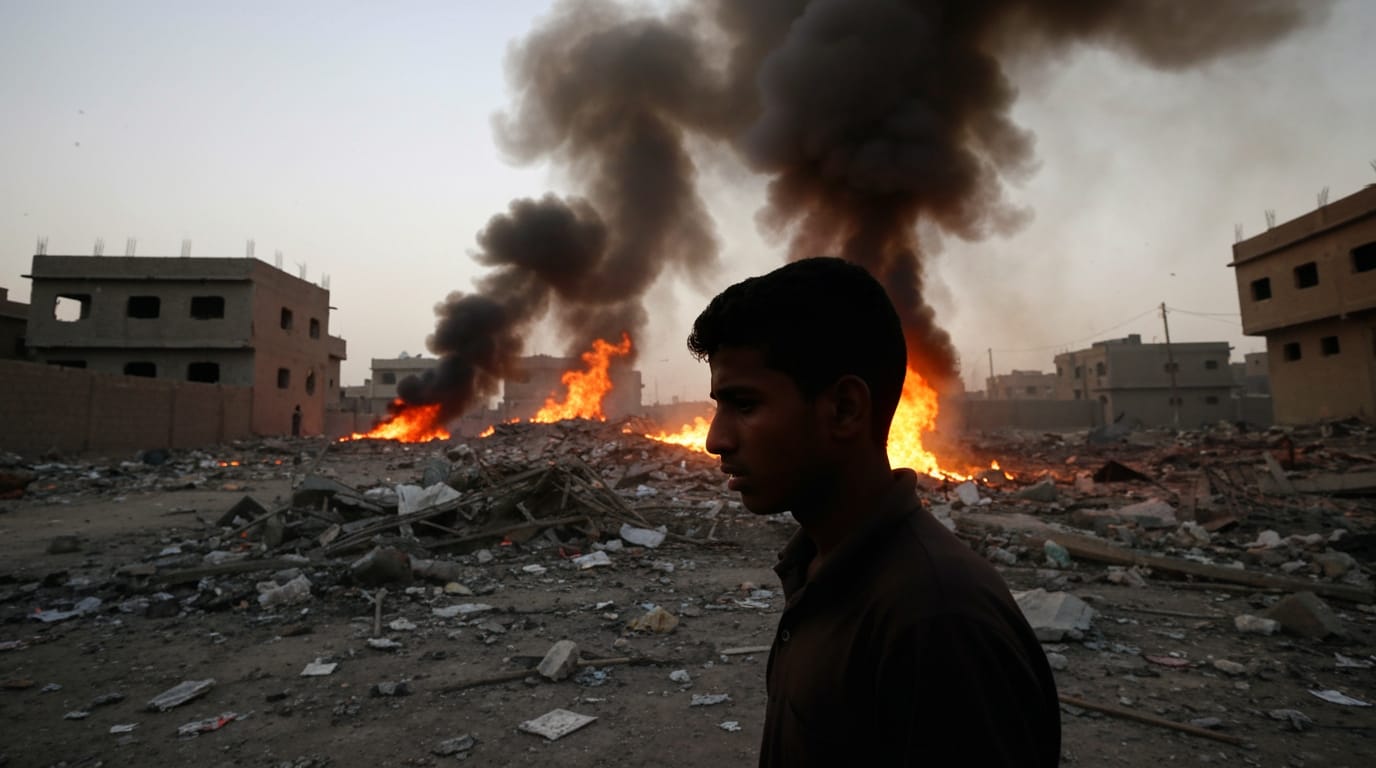
Local security officials and residents reported intense aerial activity, with some 14 to 15 strikes carried out within a short period in al-Zubaidi's hometown in Al-Dhalea. Hospital sources subsequently reported at least four civilian deaths and six wounded in the Dhale strikes, underscoring the immediate human cost of the renewed military action. The STC, in turn, accused Saudi Arabia of killing civilians, including women and children, labeling the attacks an "unjustified escalation" that undermines prospects for dialogue.
Al-Zubaidi's Disappearance and High Treason Accusations
The military escalation directly followed a significant political event: the alleged flight of Aidarous al-Zubaidi. According to the Saudi-led coalition, al-Zubaidi was scheduled to fly from Aden to Riyadh on Tuesday night for crucial talks aimed at de-escalating the conflict between the STC and the internationally recognized government of Yemen. However, he did not board the plane, and the coalition stated he "fled to an unknown location." Coalition spokesperson Major General Turki al-Maliki accused al-Zubaidi of having "distributed weapons and ammunition to dozens of elements inside Aden" prior to his disappearance.
In a swift and decisive response, Yemen's Presidential Leadership Council (PLC), led by Rashad al-Alimi, issued a decree dismissing al-Zubaidi from the council and referred him for prosecution on charges of "high treason." The PLC accused him of committing "grave crimes against civilians in the southern governorates" and exploiting the southern cause. This move came after the PLC also declared a nationwide state of emergency for 90 days and announced an air, land, and sea blockade on STC territories following the STC's recent territorial gains. An STC official, speaking anonymously, countered that al-Zubaidi was unwilling to travel to Riyadh under what he perceived as strong pressure and a deadline imposed by Saudi authorities, indicating he would be asked to dissolve the group. Despite his alleged flight, southern separatists later claimed al-Zubaidi was in Aden, overseeing military and security operations.
Widening Fissures in the Anti-Houthi Alliance
These latest events highlight a deepening rift within the anti-Houthi coalition, which originally united under Saudi leadership to restore the internationally recognized government in 2015. The Southern Transitional Council, established in 2017 and backed by the United Arab Emirates, advocates for self-determination and eventual independence for southern Yemen. While nominally part of the PLC since 2022, the STC's actions have frequently been at odds with the Saudi-backed government's vision of a unified Yemen.
In recent months, the STC launched a large-scale military offensive across southern Yemen, breaking years of military stalemate. This offensive saw STC forces seizing control of significant territories, including the oil-rich Hadramout and Al-Mahra governorates, which collectively constitute nearly half of Yemen's landmass and share borders with Saudi Arabia and Oman. This expansion was viewed by Saudi Arabia as a direct challenge to Yemen's territorial integrity and its own national security interests, prompting Riyadh to respond with earlier airstrikes on STC positions in Mukalla and pressure for the STC to withdraw. The UAE, a former key partner in the Saudi-led coalition, had reportedly supported these STC advances and even withdrew its remaining forces from Yemen after Saudi airstrikes on UAE-linked assets, further complicating the alliance dynamics.
Humanitarian Concerns and Stalled Peace Efforts
The renewed fighting and political turmoil pose significant threats to the already dire humanitarian situation in Yemen. The country has been embroiled in a civil war since 2014, resulting in one of the world's worst humanitarian crises. The internal clashes between the STC and government forces divert resources and attention from the primary conflict with the Houthis, potentially undermining fragile peace efforts. Frontlines between the Houthis and government-aligned forces have largely remained stable since a 2022 ceasefire, but these new southern hostilities risk reigniting broader instability.
International efforts to broker a lasting peace, often spearheaded by Saudi Arabia, rely on a degree of internal cohesion among anti-Houthi factions. The latest developments, however, demonstrate a profound fragmentation, making a unified approach to peace negotiations increasingly challenging. The sidelining of al-Zubaidi and the military action against his forces could lead to further power struggles and intensify the suffering of the Yemeni populace, which continues to grapple with widespread displacement, food insecurity, and a collapsed economy.
The immediate future of Yemen's south remains uncertain as the Saudi-led coalition asserts its authority and the STC faces leadership upheaval. This internal strife among once-allied forces further complicates the decade-long conflict, threatening to prolong the humanitarian crisis and push any prospects for a comprehensive peace settlement even further out of reach. The delicate balance of power in Yemen has been irrevocably altered, with far-reaching consequences for regional stability and the lives of millions.


