Honda Confronts $15.7 Billion Reversal in EV Strategy Amid Global Market Shifts
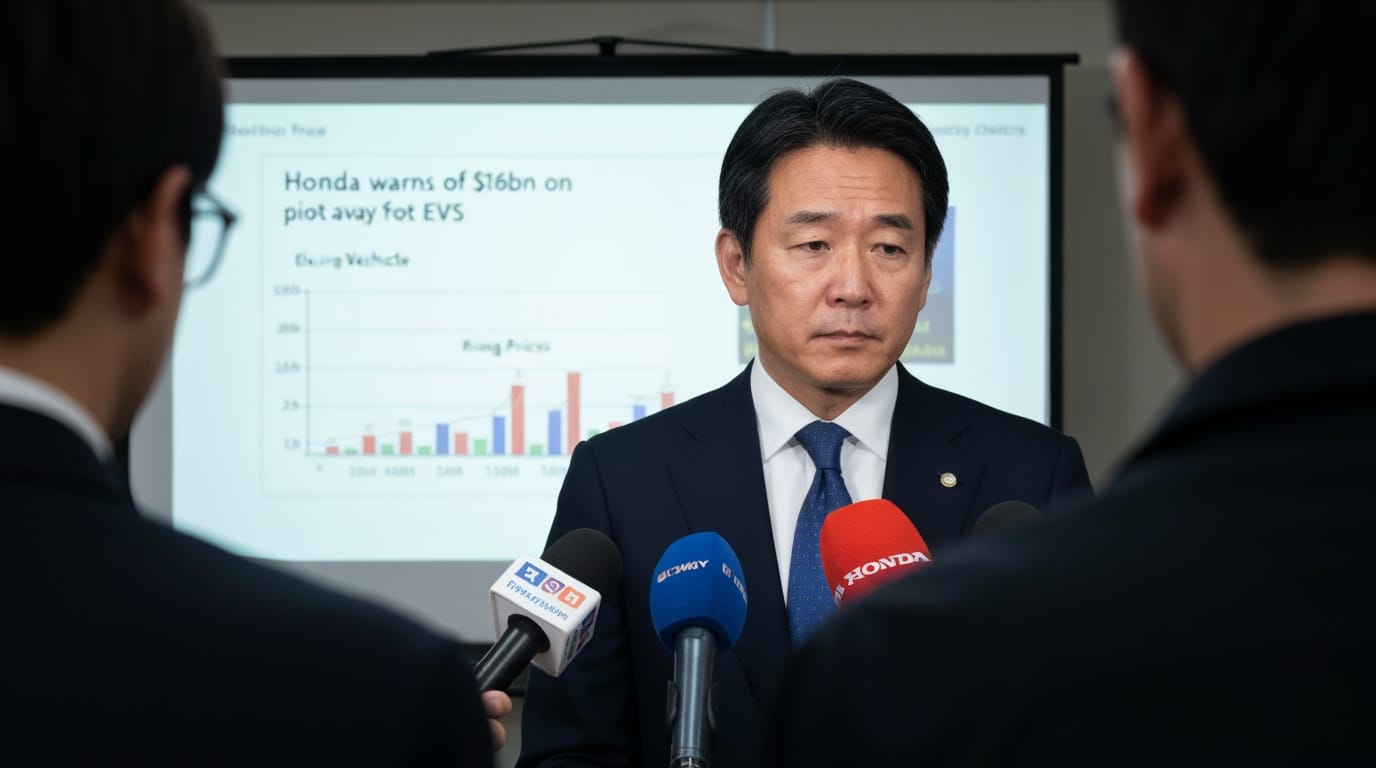
Tokyo, Japan – Honda Motor Co. is facing a substantial financial setback, anticipating charges of up to ¥2.5 trillion, approximately $15.7 billion, as it significantly recalibrates its electric vehicle (EV) strategy. The Japanese automaker announced a major reassessment of its electrification plans, citing a challenging business environment marked by a slowdown in global EV demand, particularly in key markets like North America and China. This strategic pivot includes the cancellation of three previously planned EV models for North America and a redirection of resources, signaling a more cautious approach to the full-electric transition.
The Abrupt U-Turn: Financial Impact and Canceled Models
Honda's pivot away from certain EV initiatives will result in substantial financial repercussions. The company expects to record significant losses in its consolidated financial results for the fiscal year ending March 2026, with forecasts ranging from ¥270 billion to ¥570 billion. These charges encompass write-offs and impairment losses on tangible and intangible assets specifically allocated for the production of the now-canceled EV models, along with additional expenses tied to the discontinuation of their development and sales.
Central to this revised strategy is the decision to scrap the development and market launch of three prominent EV models intended for North America: the Honda 0 SUV, the Honda 0 Saloon, and the Acura RSX. This move marks a departure from Honda's earlier ambitious targets, which aimed for EVs to constitute 30% of its sales by 2030, spearheaded by a lineup of 30 fully electric models. The company acknowledged that starting production and sales of these models in the current business climate, characterized by significantly declining EV demand, would likely lead to further long-term losses.
Market Realities Drive the Shift: A Slowdown in EV Momentum
Honda's decision is largely a response to evolving market dynamics that have challenged the rapid acceleration of EV adoption. The company highlighted a "slowdown in the expansion of the EV market," particularly noticeable in the U.S. and China. In the U.S., while overall EV sales saw an increase in 2024, the pace of adoption has been slower than initially anticipated, and the loss of federal tax credit incentives has also impacted demand.
The Chinese market, a crucial battleground for global automakers, has also presented significant hurdles. Foreign manufacturers, including Honda, have struggled to maintain their competitive edge as consumers increasingly favor domestic brands like BYD, which has emerged as the world's largest EV maker. Honda's new-car sales in China declined by 24% year-on-year in 2025, marking a five-year consecutive downturn. Furthermore, the impact of U.S. tariff policies on its gasoline and hybrid vehicle business has also contributed to a decline in profitability, adding another layer of complexity to Honda's operational challenges. This confluence of factors has compelled Honda to reassess its resource allocation and streamline its EV model lineup.
A Hybrid Bridge to the Electric Future
In light of the revised outlook, Honda is channeling resources into strengthening its hybrid vehicle (HEV) lineup. The company plans to introduce 13 next-generation hybrid models globally over a four-year span, commencing in 2027. This renewed focus on hybrids is viewed as a crucial bridge to the eventual widespread adoption of EVs, offering a more immediate and cost-effective solution for reducing emissions while consumer demand for pure EVs stabilizes.
The investment strategy has also been adjusted accordingly. Honda now plans to reduce its EV-related investment from an initial $69 billion (¥10 trillion) to $48 billion (¥7 trillion). This reallocation underscores a shift towards optimizing its current earnings situation and building a resilient supply chain strategy capable of adapting to market fluctuations. Despite the adjustments, Honda maintains its long-term commitment that EVs remain the optimal solution for achieving carbon neutrality for passenger vehicles. The company intends to proceed with future EV initiatives flexibly, aligning with profitability and market trends, with the "Honda 0 Series" still slated for a 2026 market introduction as a future pillar of its EV business.
Broader Industry Ripples: A Global Recalibration
Honda's decision is not an isolated event but rather indicative of a broader trend within the automotive industry. Several major global automakers are recalibrating their EV timelines and investment strategies in response to softening demand and production complexities. Stellantis NV, for example, is facing charges exceeding €22 billion ($25 billion) related to its own EV strategy adjustments, while Ford Motor has absorbed a $19.5 billion hit from its overhaul.
These adjustments reflect a collective acknowledgment that the transition to an all-electric future may be more protracted and capital-intensive than initially projected. Carmakers globally have faced challenges after Europe and the U.S. adjusted aggressive timelines and incentives for phasing out internal combustion engine vehicles, thereby reducing a key pillar of support for EV demand. This cautious stance signals a period of strategic re-evaluation across the industry, with a stronger emphasis on balancing electrification goals with immediate market realities and profitability.
Navigating an Uncertain Road Ahead
Honda's significant financial warning and strategic pivot underscore the complex and volatile landscape of the automotive industry's electrification journey. While the company reaffirms its long-term vision for carbon neutrality through EVs, the immediate focus has shifted to mitigating current losses, strengthening its hybrid offerings, and adapting to a less predictable market.
This recalibration presents both challenges and opportunities. For consumers, it may mean a continued strong presence of hybrid options and a potentially slower rollout of new pure-electric models from Honda. For the company, navigating this transitional period will require agile decision-making and a careful balance between aggressive innovation and financial prudence. The path to a fully electric future, for Honda and the industry at large, appears to be less of a sprint and more of a marathon, punctuated by strategic adjustments in response to an ever-evolving global market.


