China Enacts Sweeping "Ethnic Unity" Law, Drawing Global Scrutiny Over Assimilation Concerns
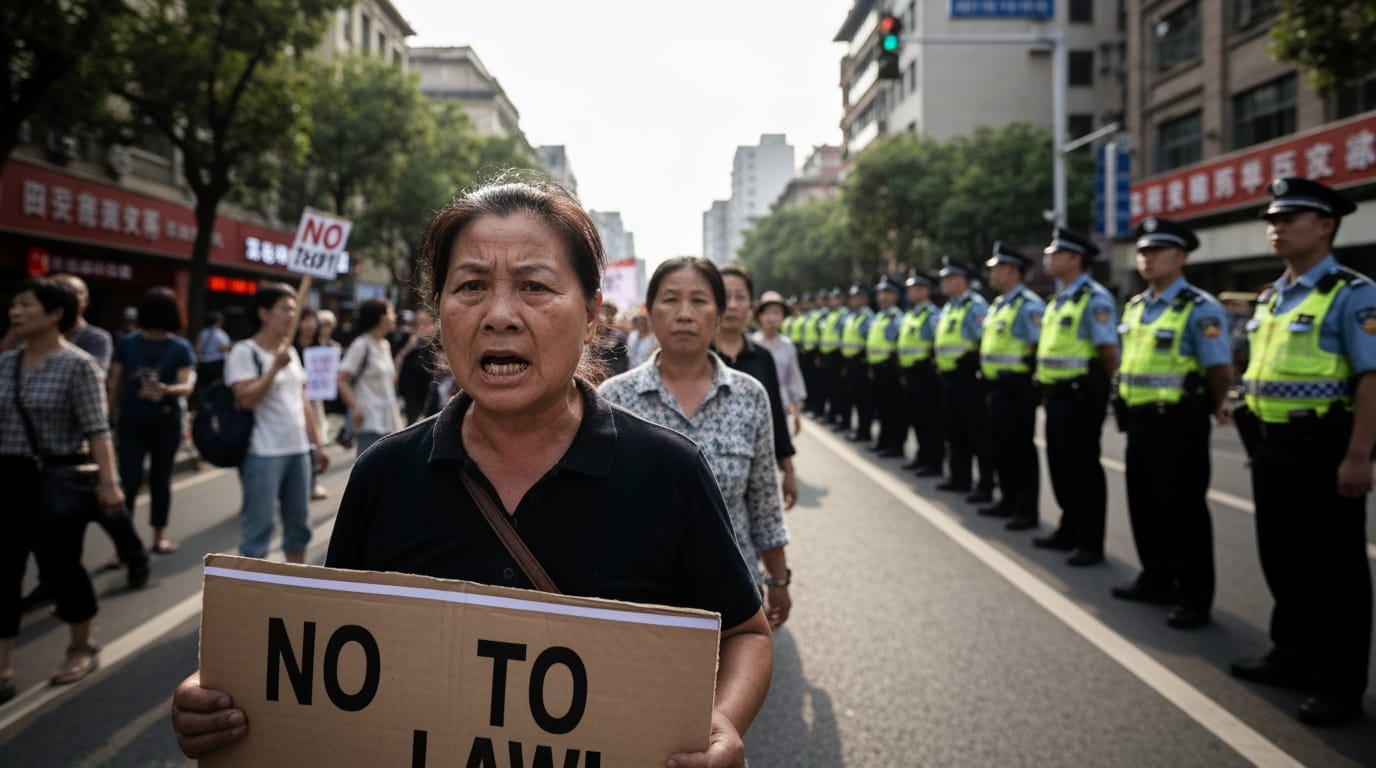
Beijing, China – China's national legislature, the National People's Congress (NPC), has adopted a comprehensive "Law on Promoting Ethnic Unity and Progress" this week, a measure critics contend will further cement assimilation policies and erode the distinct identities of the nation's ethnic minority groups. The legislation, presented as a framework to foster national cohesion, is being viewed by human rights organizations and international observers as a significant shift in Beijing's approach to ethnic affairs, potentially providing legal justification for intensifying ideological controls and cultural homogenization across the country and potentially beyond its borders.
A New Era for China's Ethnic Policy
The newly enacted law is designed to reinforce "a stronger sense of community among all ethnic groups in the Chinese nation" and to advance the "rejuvenation of the Chinese nation with the Chinese Communist Party (CCP) at its core." Official documents state that the law aims to promote "the common prosperity and development of all ethnic groups … along the path of rule of law" and is a direct implementation of General Secretary Xi Jinping's "important thinking" on ethnic matters. The legislation, comprising 62 articles, formalizes an ideological framework emphasizing "a common consciousness of the Chinese nation" across critical sectors such as education, religion, history, culture, mass media, and the internet. This includes directives for authorities to "establish and highlight Chinese cultural symbols" in public spaces, architectural designs, and even place names.
Analysts suggest this law represents a "major rethink" of ethnic policies under President Xi Jinping, codifying an "assimilationist" approach that prioritizes a unified Han-centric Chinese culture and identity over the expression of diverse minority identities. The law explicitly requires parents and guardians to "educate and guide minors to love the Chinese Communist Party" and to instill "the concept that all ethnic groups of the Chinese nation are one family," while prohibiting the teaching of concepts deemed "detrimental to ethnic unity and progress."
Erosion of Language and Cultural Autonomy
A central concern among critics is the law's mandate for Mandarin Chinese as the primary language of instruction in education, with specific provisions requiring ethnic minority children to begin learning Mandarin in kindergarten. This directive stands in stark contrast to China's 1984 Regional Ethnic Autonomy Law, which previously guaranteed ethnic minorities the freedom "to use and develop their own spoken and written languages" and allowed flexibility in the introduction of Mandarin.
Experts argue that this shift effectively signals the end of bilingual education at a legal level and will accelerate the erosion of minority languages and cultures. This policy has already seen implementation in regions like Inner Mongolia, where previous curriculum changes led to significant protests when native language textbooks were replaced with Chinese ones. Cornell University associate professor of anthropology, Magnus Fiskesjö, noted that the new law "openly contradicts" Article 4 of the Chinese constitution, which explicitly states that "All ethnic groups shall have the freedom to use and develop their own spoken and written languages."
The law's emphasis on "mutually embedded community environments" has also raised concerns that it may lead to the restructuring of minority-heavy neighborhoods, further integrating ethnic groups into the Han majority's living spaces. This approach, some scholars believe, aims to encourage intermingling and reduce distinct ethnic enclaves.
Expanding Repression: Domestic and International Implications
Beyond cultural and linguistic mandates, the "Law on Promoting Ethnic Unity and Progress" includes provisions that human rights advocates warn could be used to suppress dissent and target individuals both within China and abroad. The legislation prohibits acts that "damage ethnic unity," a broad categorization that has historically been used to penalize minority community members deemed noncompliant with Communist Party policies. This has drawn parallels to existing security laws, with critics suggesting that challenging "unity" could now be construed as separatism, punishable by law.
The law also features a "long-arm jurisdiction" clause, granting the Chinese government the authority to hold individuals or organizations outside China legally accountable for "undermining ethnic unity and progress or creating ethnic division." This provision has sparked significant concern, particularly in Taipei, where officials warn it could be leveraged against Taiwanese individuals perceived as supporting independence. Taiwan's Mainland Affairs Council Deputy Minister, Shen Yu-chung, noted that the law's vague definition of support for unity creates substantial legal ambiguity and could provide a basis for handling cross-Strait issues. Critics suggest this could expose overseas exile groups and dissidents to potential retaliation against family members in China or legal risks of transnational extradition.
Background of Assimilationist Policies
The new law is not an isolated development but rather a formalization and expansion of assimilationist policies that have been trialed and intensified over the past decade, particularly in regions with significant ethnic minority populations like Xinjiang and Tibet. In Xinjiang, the government's policies targeting Uyghurs and other Turkic Muslim minorities have been widely documented, including mass arbitrary detentions, cultural and religious persecution, forced labor, and forced sterilization. The Chinese government officially frames these actions as efforts to combat "violent terrorism and separatism" and to ensure "ethnic unity."
However, organizations like Human Rights Watch argue that the draft law provides a broad legal framework to justify such existing repression and forced assimilation. The emphasis on "sinicization of religion," as highlighted by Xi Jinping during his visit to the Xinjiang Uyghur Autonomous Region, underscores the broader goal of aligning all religious practices with state-sanctioned Chinese characteristics.
The adoption of this law signals a clear governmental intent to prioritize national unity, as defined by the CCP, over the distinct cultural and linguistic rights of its numerous ethnic minorities. As the world watches the implementation of these new provisions, questions persist regarding their impact on human rights, cultural diversity, and the future of ethnic relations within China and its engagement with the international community.


