Escalation of Banditry Leaves Over 20 Dead in Zamfara State, Nigeria
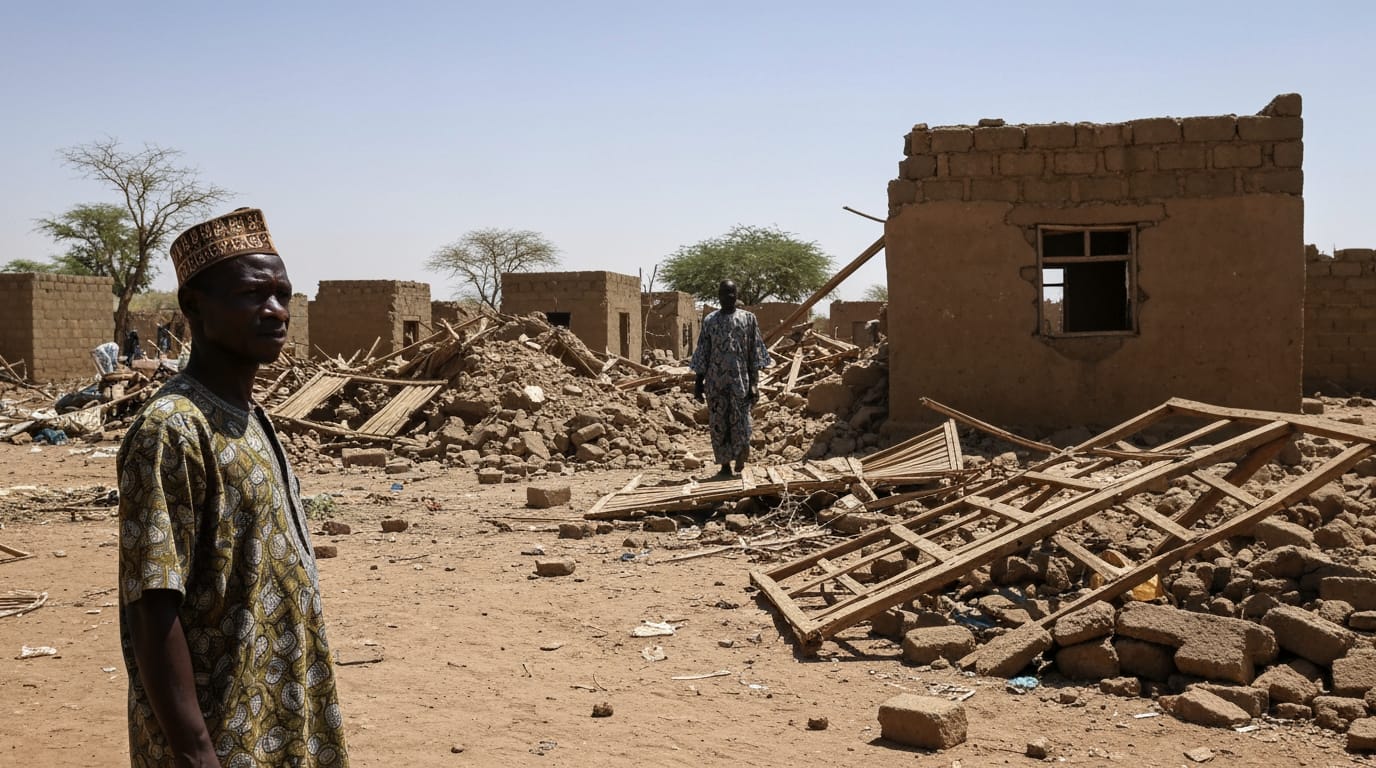
GUSAU, ZAMFARA STATE – Armed gangs, commonly referred to as "bandits," launched a brutal assault on several villages in Nigeria's northwestern Zamfara State on Wednesday, July 22, 2026, killing at least 20 people in the latest surge of violence to plague the region. The attacks, which primarily targeted agrarian communities in the Talata Mafara local government area, underscore the persistent and escalating insecurity that continues to destabilize life and livelihoods across large swathes of northern and central Nigeria.
The tragic incident, occurring between 3:00 PM and 4:00 PM local time, saw heavily armed assailants invade multiple settlements within the Sauna district, indiscriminately firing upon residents and triggering widespread panic. Initial reports from local officials, including Nasiru Lauwali, a councillor representing the affected Sauna district, confirmed a death toll of 21, with another local secretary, Alhaji Shehu Garba, placing the figure at 23, predominantly farmers. Three individuals wounded in the attacks were initially taken to Talata Mafara General Hospital before being transferred to a teaching hospital in the neighboring Sokoto state for advanced medical care. This recent massacre adds to a grim tally of lives lost as communities grapple with a relentless wave of violence.
The Deep Roots of Banditry in Nigeria's Northwest
The phenomenon of banditry in Nigeria's Northwest, particularly Zamfara State, is a complex and multifaceted crisis with deep roots, evolving from historical conflicts and exacerbated by socio-economic vulnerabilities. Initially stemming from intensified clashes between farmers and herdsmen, the conflict has morphed into sophisticated criminal enterprises engaged in cattle rustling, mass kidnappings, and violent raids. Experts point to several driving factors, including what has been termed "eco-survivalism," where bandits, facing challenges from government forces and vigilantes, escalate violence in desperate attempts to maintain their illicit sources of wealth.
Beyond these survivalist tactics, the proliferation of banditry is fueled by widespread poverty, high unemployment rates, and chronic political marginalization in rural areas. Ungoverned spaces provide safe havens for these groups, allowing them to operate with relative impunity. A significant, and often overlooked, element is the nexus between illicit mining activities and banditry. Zamfara State is rich in minerals like gold, copper, and lithium, but illegal mining has become intricately linked with criminal groups who exploit these resources for profit, using the proceeds to procure sophisticated weaponry. Weak law enforcement, porous borders facilitating arms smuggling, and even allegations of state complicity through political interference and policy inconsistencies have further entrenched the crisis.
A Widening Humanitarian and Economic Chasm
The consequences of this unchecked banditry extend far beyond immediate casualties, creating a catastrophic humanitarian and economic crisis in Zamfara and other affected states. The sheer scale of displacement is staggering, with over 300,000 people displaced in Zamfara alone as of April 2025, and more than 100 villages deserted. Many displaced persons live in makeshift shelters or with host communities, often without the benefit of official internally displaced persons (IDP) camps, exacerbating their vulnerability.
Economically, the impact is devastating. Agriculture, the backbone of the region's economy, has been severely disrupted as farmers are frequently attacked or extorted, leading to significant drops in production and widespread food insecurity. Livestock farming, another crucial economic activity, is crippled by rampant cattle rustling. The constant threat of violence and kidnapping deters both domestic and foreign investment, further stifling development. Kidnapping for ransom has evolved into a highly lucrative criminal industry, with attackers collecting over $1.6 million in ransom payments in 2024 and billions of Naira in 2025. Communities are also subjected to "protection levies" imposed by bandits, with dire consequences for non-compliance. This economic instability, coupled with increased health challenges and a rise in out-of-school children, threatens to unravel the social fabric of the region.
Government Efforts and Persistent Challenges
Nigerian authorities have implemented various strategies to combat banditry, though the results have been mixed. The Zamfara State government, under Governor Dauda Lawal since May 2023, has adopted a firm policy against negotiating with or paying ransoms to bandits, believing that such payments only strengthen criminal networks. This approach is complemented by efforts to bolster security agencies with operational vehicles, communication equipment, and logistical support, and the establishment of a Security Trust Fund to mobilize additional resources.
Military operations have seen some successes, with Nigerian soldiers reportedly killing over 300 bandits in Gummi district in early July 2026, a week prior to the latest attacks. However, the challenges remain formidable. Previous government actions, such as the 2019 ban on mining activities in Zamfara, aimed at cutting off funding for bandits, faced difficulties in enforcement due to the criminals' continued control over mining sites. The ban, later lifted in December 2024, highlighted the complexities of managing resource-rich areas plagued by insecurity.
Looking forward, there is a growing emphasis on enhancing intelligence gathering, improving surveillance technology, and fostering greater collaboration among security agencies. A new strategy announced by Nigeria's Chief of Defense Staff involves empowering local communities and training vigilantes as first responders, a model that has seen some success against insurgency in the Northeast. However, the persistent insecurity suggests that a more comprehensive and multi-faceted approach, addressing underlying socio-economic factors and strengthening institutional accountability, is critically needed.
The latest brutal attack in Zamfara State serves as a stark reminder of the enduring threat posed by armed banditry in Nigeria. While government forces achieve periodic tactical victories, the deep-seated drivers of this violence—poverty, governance deficits, and the intertwined illicit economies—continue to fuel a crisis with devastating human and economic costs. Until these fundamental issues are comprehensively addressed, communities across the Northwest will remain caught in a cycle of fear and violence, with the aspirations for peace and development remaining tragically out of reach.


