Estonian Border City Navigates Kremlin's Digital Gambit: 'Narva People's Republic' a Disinformation Construct
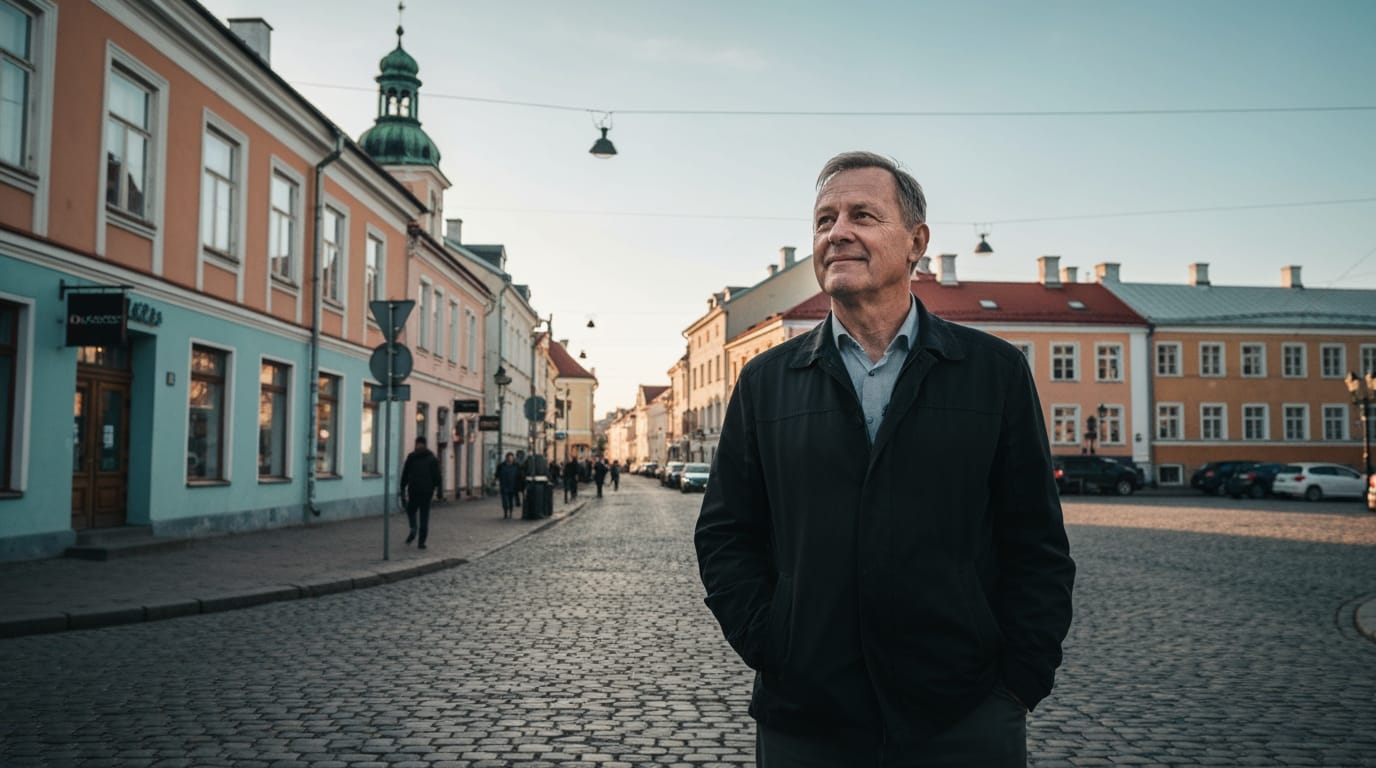
NARVA, ESTONIA – A potent wave of pro-Russian separatist narratives, echoing the ominous pretexts for conflict in eastern Ukraine, has recently washed over social media platforms, conjuring the specter of a "Narva People's Republic" in Estonia's easternmost city. However, Estonian security services and officials have swiftly dismissed these claims as a calculated disinformation campaign, designed to sow discord and exploit the region's unique demographic landscape rather than reflecting genuine local sentiment for secession.
The online stirrings, primarily disseminated through anonymous accounts on Telegram, TikTok, and Russia's VK platform, attempt to portray Narva as a distinct political entity with aspirations of autonomy or even secession. This digital offensive, characterized by memes and separatist symbols, bears an unsettling resemblance to the "People's Republics" proclaimed in Donetsk and Luhansk prior to Russia's full-scale invasion of Ukraine, raising alarm across the Baltic states and within NATO.
The Echo of Donbas: A Digital Playbook
The concept of a "Narva People's Republic" began gaining traction on social media in recent weeks, with posts often featuring calls for Narva to separate from the rest of Estonia. These digital efforts, observed by platforms like Propastop, Estonia's anti-propaganda watchdog, utilize rhetoric and symbolism eerily similar to those employed in the Donbas region in 2014. The narrative attempts to position Narva as an oppressed Russian-speaking enclave seeking liberation, a familiar trope in the Kremlin's information warfare strategy.
Estonian authorities have been unequivocal in their assessment, labeling the entire initiative as a "cheap information operation" aimed at undermining trust and social cohesion. A recent journalistic investigation managed to infiltrate a Telegram chat group promoting the "Narva People's Republic," revealing it to be a small-scale operation, likely orchestrated from outside Estonia with apparent ties to St. Petersburg. This suggests a manufactured online movement rather than an organic grassroots uprising within Narva itself. While intelligence officials have found no concrete evidence of direct Russian government involvement in these specific social media accounts, the tactic aligns with Russia's broader history of hybrid warfare and attempts to destabilize neighboring countries.
Narva's Complex Identity: A Legacy of Soviet Resettlement
Central to understanding the context of these disinformation efforts is Narva's unique demographic profile. Situated directly on Estonia's eastern border with Russia, with the Narva River serving as a dividing line, the city is predominantly Russian-speaking, with over 90% of its roughly 52,000 residents using Russian daily. A significant proportion, exceeding one-third, also holds Russian passports.
This demographic reality is a direct consequence of Soviet policies following World War II. After being almost completely destroyed during the war, Narva was rebuilt and repopulated by Russian-speaking workers from across the Soviet Union, as the original Estonian inhabitants were largely prevented from returning. By 1989, ethnic Estonians constituted less than 5% of the population. This historical legacy has created a community with strong cultural and linguistic ties to Russia, making it a perceived target for influence operations.
Despite these deep-seated connections, actual support for leaving Estonia and joining Russia among Narva's residents is minimal. Locals frequently express a pragmatic appreciation for the economic and social benefits of living in an EU member state, including higher salaries and better opportunities compared to Russia. The city's mayor, rather than harboring pro-Russian sentiments, has voiced frustration over the continuous focus on such rumors, underscoring the city's commitment to its Estonian identity.
Estonian Resolve and the Information Battlefield
Estonian authorities have reacted firmly and consistently to the "Narva People's Republic" provocations. Both the Internal Security Service and the Foreign Intelligence Service have downplayed the online activity as a "low-cost" and "simple" information attack. Prime Minister Kaja Kallas and Foreign Minister Margus Tsahkna have publicly affirmed Narva's integral status as an Estonian city and have explicitly identified the campaign as a Russian information operation. Furthermore, authorities have warned that participation in such activities could lead to criminal consequences.
The incident highlights the ongoing information war, particularly prevalent in countries bordering Russia. Russian state media, despite official bans in Estonia, continues to reach Russian-speaking audiences in Narva through various means, including VPNs and satellite dishes, providing a steady stream of Kremlin narratives. Sophisticated Russian-language news portals, designed to appear as legitimate local sources, also operate to amplify pro-Kremlin messages, particularly concerning the war in Ukraine and Estonian domestic politics. Estonia, a NATO and EU member, has long been a front line in countering such foreign influence, investing in anti-propaganda initiatives and promoting media literacy.
Beyond the Digital Facade: A City's Steadfast Future
While the online chatter about a "Narva People's Republic" grabs headlines and fuels speculative discussions about potential vulnerabilities, the reality on the ground in Narva paints a different picture. The city's residents, while navigating their unique cultural heritage, largely remain committed to their lives within Estonia and the European Union. The consensus among those living there is that the idea of separating from Estonia is "pure nonsense".
This disinformation campaign, however, serves as a stark reminder of Russia's persistent efforts to destabilize neighboring states and exploit perceived ethnic divisions. The "Narva scenario" — a hypothetical Russian intervention under the guise of protecting Russian speakers — has been a subject of concern and analysis for years, particularly since the 2014 events in Ukraine. Yet, Estonia's robust defense posture as a NATO member, combined with its vigilant counter-information strategies and the fundamental loyalty of its citizens, significantly mitigates the actual threat posed by these digital provocations. Narva, despite being a focal point in this information battle, remains steadfastly an Estonian city, determined to chart its future within the democratic framework of its nation and the broader European community.


