Ethiopia's Tigray Region Teeters on the Brink of Another War, Peace Accord Faltering
ADDIS ABABA, ETHIOPIA – Just over three years since the signing of a landmark peace agreement that promised to end a devastating conflict, Ethiopia’s Tigray region once again faces the ominous prospect of renewed war. Recent weeks have witnessed escalating clashes, accusations of truce violations, and a dangerous militarization across the northern region, triggering urgent warnings from international bodies and humanitarian organizations. The fragile peace brokered in Pretoria in November 2022 appears increasingly tenuous, with key provisions largely unfulfilled and deep-seated grievances resurfacing to threaten a return to large-scale hostilities.
The Precarious Present: A Resurgence of Violence
The tranquility intended by the 2022 Cessation of Hostilities Agreement (CoHA) has been significantly disturbed, giving way to fresh outbreaks of violence. Reports emerging in January and February 2026 detail renewed fighting involving the Ethiopian National Defense Force (ENDF), regional and ethnic armed groups, and the Tigray Security Forces (TSF) across Tigray, Amhara, and Oromia. These clashes have included drone strikes, particularly concerning to Tigrayan authorities who accuse the federal government of violating the peace deal. The United Nations Human Rights Chief, Volker Türk, expressed grave concern in early February, calling for immediate de-escalation and warning of a potentially deepening human rights and humanitarian crisis. The brief suspension of flights to Tigray in January, following skirmishes in disputed areas like Tselemti, underscored the volatile situation and the swift impact on civilian life. Civilians in Mekelle, Tigray's capital, are reportedly preparing for the worst, recalling the communication blackouts and travel restrictions that characterized the prior conflict. The widespread fear of a return to war is palpable, with federal and Tigrayan forces reportedly massing at their respective borders.
Echoes of a Devastating Past: The Unresolved Legacy of the 2020-2022 Conflict
The current instability cannot be understood without recalling the catastrophic conflict that engulfed Tigray from November 2020 to November 2022. That war, which pitted the Tigray People's Liberation Front (TPLF) against a coalition of Ethiopian federal forces, Eritrean troops, and Amhara militias, resulted in an estimated 600,000 deaths, making it one of the deadliest conflicts of the 21st century. Millions were displaced, injured, and subjected to widespread human rights violations, including conflict-related sexual violence and deliberate starvation tactics. Infrastructure was decimated, and basic services collapsed, leaving a deep scar on the region. The Pretoria Agreement, signed in November 2022, aimed to end this suffering by establishing a permanent cessation of hostilities, facilitating humanitarian access, ensuring the withdrawal of foreign forces, and restoring services. However, three years on, the implementation of these critical commitments has been woefully inadequate. International organizations and human rights groups have consistently highlighted the obstruction of accountability mechanisms for wartime atrocities, the limited return of displaced persons, and the failure to fully restore basic services like banking, fuel, and telecommunications. This "negative peace," as one assessment described it, merely silenced the heavy guns while failing to deliver justice, reconstruction, or broader recovery for Tigray.
Flashpoints of Failure: Disputed Territories and External Influence
Two major unresolved issues stand out as primary catalysts for the renewed tensions: the status of disputed territories and the volatile role of neighboring Eritrea. The Pretoria Agreement vaguely stipulated that issues related to contested areas would be resolved constitutionally, implying these areas would fall under Tigrayan administration. However, territories in Western Tigray, such as Humera, Adi Remets, and Welkait, remain occupied by Amhara forces and militias, preventing the return of hundreds of thousands of displaced Tigrayans. A recent move by Ethiopia's election commission to designate five "disputed constituencies" along the border as separate from Tigray until their claims are resolved has been sharply criticized by Tigrayan leaders as a "flagrant violation" of the constitution and the peace agreement.
Adding another layer of complexity is Eritrea's unpredictable involvement. While Eritrean forces fought alongside the Ethiopian federal government against the TPLF in the previous war, their promised withdrawal as part of the Pretoria Agreement has not been fully realized, with their presence reportedly continuing in parts of Tigray. More recently, a dramatic shift in alliances appears to be underway. Ethiopia's Prime Minister Abiy Ahmed's statements regarding Ethiopia's need for direct access to the Red Sea have heightened fears in Eritrea of a potential invasion. This has led to unconfirmed but widely discussed reports of a rapprochement between Eritrea and its former enemy, the TPLF, potentially alongside some Fano militias, to counter Ethiopian federal forces. Conversely, the Ethiopian government has accused Eritrea of funding armed groups within Tigray, simultaneously alleging a clandestine alliance between Eritrea and the TPLF. This intricate and contradictory web of accusations and shifting allegiances creates a highly combustible environment, with civilians caught in the crossfire of evolving geopolitical interests.
The Unfolding Humanitarian Catastrophe and Regional Implications
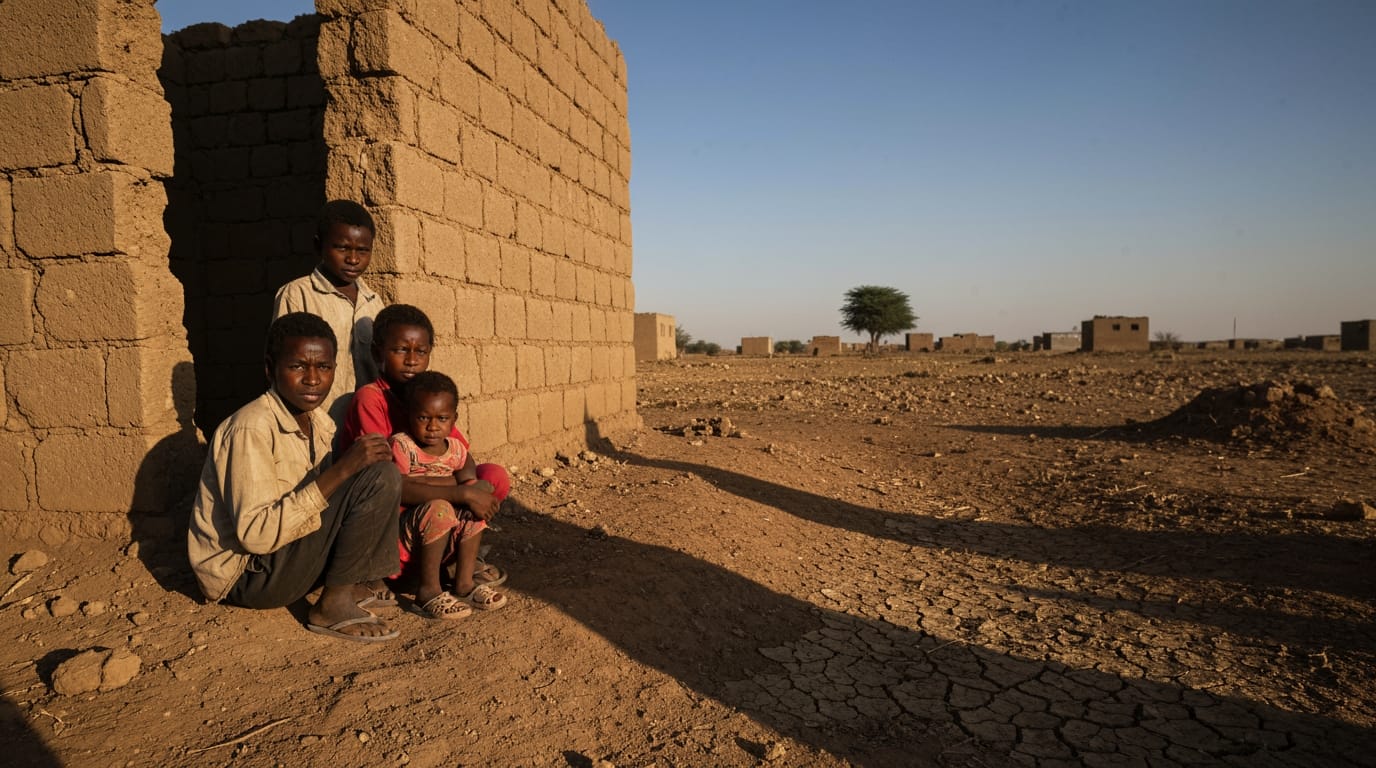
The specter of renewed conflict looms over a region already grappling with an immense humanitarian crisis. Over one million people remain internally displaced from the previous war, living in precarious conditions with inadequate shelter, food, and medical care. Humanitarian aid remains severely restricted due to ongoing conflict, bureaucratic obstacles, and what some describe as a deliberate weaponization of the peace process by the federal government through controlled aid deliveries. Starvation is a growing concern, with reports of deaths due to lack of food and alarmingly high rates of child malnutrition. The curtailment of international support, including funding cuts from USAID, has further exacerbated these critical shortfalls.
A full-scale resumption of war in Tigray would not only deepen this internal humanitarian catastrophe but also send destabilizing shockwaves across the entire Horn of Africa. The region is already volatile, with neighboring Sudan embroiled in a devastating civil war where Ethiopia and Eritrea reportedly support opposing factions. A new conflict in Tigray could easily spill over, engulfing neighboring Ethiopian regions like Amhara and Afar, and further drawing in other regional and even international actors. The Red Sea maritime corridor, a critical global trade route, would become increasingly insecure, with far-reaching economic and security consequences.
A Call for Urgent Diplomacy to Avert Catastrophe
As the region stands at a critical juncture, international and regional actors are issuing urgent pleas for de-escalation and a return to genuine dialogue. The African Union (AU) and the United Nations are calling on all parties to exercise restraint and recommit to the political process envisioned by the Pretoria Agreement. There is a consensus among observers that the failure of external actors to maintain consistent pressure for the full implementation of the peace deal has contributed to the current precarious situation. Without a robust, internationally-backed effort to address the core grievances – particularly the disputed territories, the complete withdrawal of all external forces, unfettered humanitarian access, and accountability for past atrocities – the gains made by the Pretoria Agreement risk being entirely undone. The immense human cost of the previous conflict serves as a stark reminder of the urgent need for a lasting political solution to prevent Ethiopia's Tigray region from once again descending into the horrors of war.


