EU Accelerates Western Balkans Membership Drive Amid Geopolitical Shifts
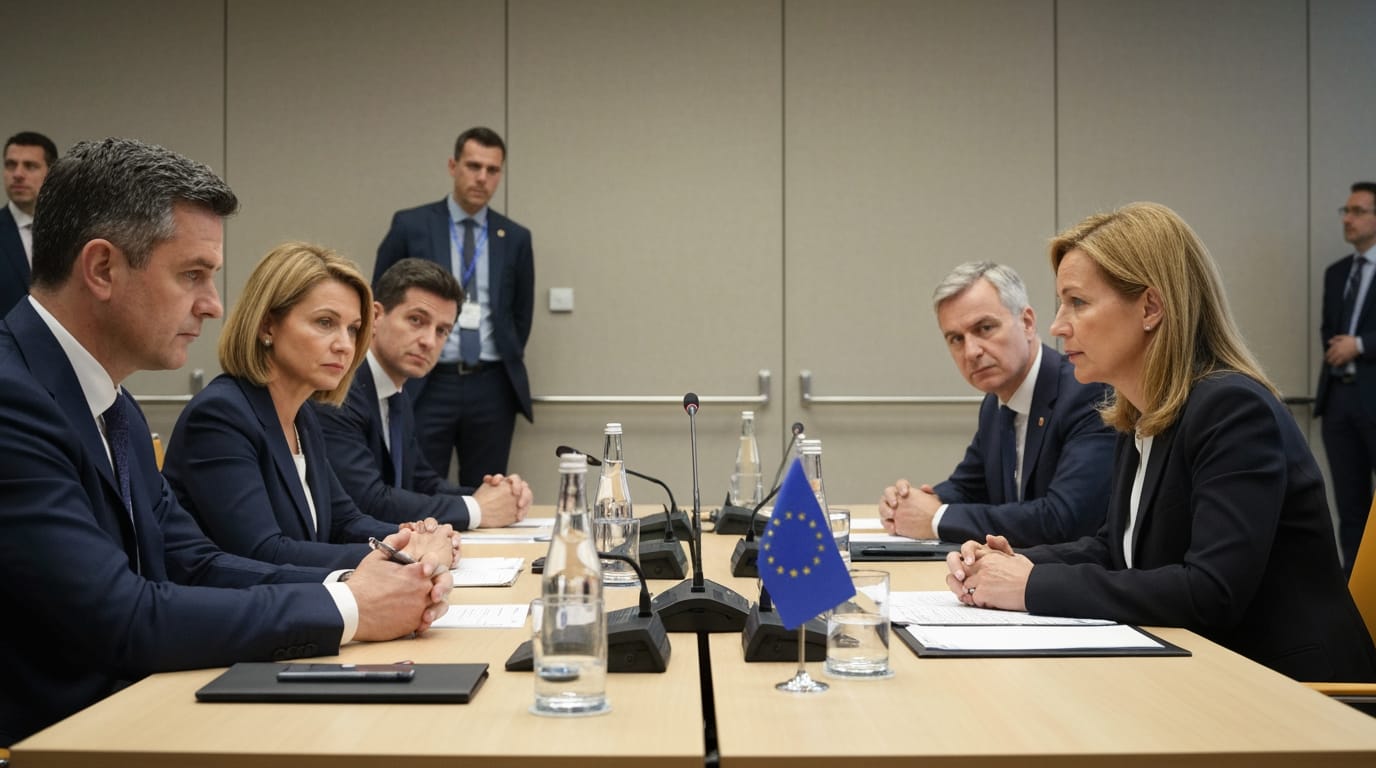
Brussels, Belgium – The European Union is intensifying efforts to fast-track the integration of Western Balkan nations, signaling a renewed commitment to enlargement driven by evolving geopolitical dynamics and a desire to reinforce regional stability. After years of what was often perceived as "enlargement fatigue" within the bloc, Russia's ongoing war in Ukraine has reshaped strategic calculations, underscoring the critical importance of anchoring the Western Balkans firmly within the European sphere. European leaders now view the accession of these six countries—Albania, Bosnia and Herzegovina, Kosovo, Montenegro, North Macedonia, and Serbia—as a crucial "geostrategic investment in peace, security, stability, and prosperity" for the entire continent.
A Geopolitical Imperative
The renewed urgency for Western Balkans membership stems largely from the geopolitical landscape reshaped by Russia's invasion of Ukraine in February 2022. This conflict has highlighted Europe's security vulnerabilities and intensified competition for influence in the Western Balkans, a region where Russia, China, and Turkey have sought to expand their presence. European Council President António Costa explicitly stated that enlargement is "not just an opportunity, it is a geostrategic necessity for Europe," emphasizing its role in building a safer, stronger, and more peaceful continent.
For years, the accession process had faced criticism for its slow pace, leading to "reform fatigue" among candidate countries and "enlargement fatigue" within some EU member states. The war in Ukraine, however, has provided a "new dynamism" to the EU's enlargement policy. The EU has since granted candidate status to Ukraine and Moldova, and approved accession negotiations for Bosnia and Herzegovina in March 2024, and for Albania and North Macedonia in July 2022. These developments signal a strategic pivot, aiming to prevent instability and counter external interference in the EU's immediate neighborhood.
Reforming the Accession Pathway: Gradual Integration and Incentives
To accelerate the process, the EU is exploring new methodologies and offering tangible benefits to candidate countries even before full membership. A key concept gaining traction is "gradual integration" or "phased integration." This approach aims to allow Western Balkan nations to progressively participate in specific EU policies, programs, and aspects of the single market as they advance their reforms.
The proposed "building blocks" of gradual integration could include earlier access to EU programs and the single market, as well as partial participation in EU meetings. Sectors identified for such early integration include transport, energy, electricity markets, the digital single market, competitiveness strategies, and critical raw materials policies. This initiative, notably supported by France and Germany, seeks to streamline the current process, making it more efficient and allowing for faster, deeper integration. Five EU member states—Austria, Italy, the Czech Republic, Slovakia, and Slovenia—have also proposed a "merit-based access—if necessary, step by step—to the European single market" to sustain the enlargement momentum and help counter the influence of non-EU countries.
The EU has also reinforced financial assistance to the region. The new Growth Plan for the Western Balkans, adopted in 2023, is a significant initiative, backed by a €6 billion Reform and Growth Facility for 2024-2027. This facility, comprising €2 billion in grants and €4 billion in concessional loans, aims to accelerate socio-economic convergence with the EU and foster regional economic cooperation. It ties access to funding with the fulfillment of reform commitments, effectively incentivizing the necessary transformations. President of the European Commission, Ursula von der Leyen, stated that this facility "could double the economy of the Western Balkans in the next 10 years."
Persistent Challenges and the Rule of Law
Despite the renewed momentum and innovative approaches, significant challenges remain for both the EU and the Western Balkan countries. The accession process remains merit-based, meaning that progress is contingent upon each country's demonstrable commitment to fundamental reforms. The "fundamentals first" approach continues to place the rule of law at the heart of the accession process, requiring early and substantial progress in judicial reform, combating corruption, and strengthening democratic institutions.
The European Court of Auditors, however, found that while EU actions have contributed to technical reforms in the judiciary, they have had "little overall impact on fundamental rule of law reforms in the region." This highlights a persistent gap between technical compliance and the deeply embedded societal changes needed. Political will and ownership of reforms by Western Balkan governments are crucial, but often acknowledged by the EU as lacking. Issues such as an independent judiciary, good governance, and combating organized crime and corruption are repeatedly flagged as areas requiring substantial improvement.
Bilateral disputes within the region, such as the normalization of Serbia-Kosovo relations and internal reconciliation in Bosnia and Herzegovina, also present significant hurdles that impact the pace of integration. Furthermore, some EU member states' internal divisions and concerns about potential "dilution of democratic standards" if countries with rule of law issues join too quickly, can slow down unanimous decision-making required for opening and closing accession chapters.
The Road Ahead
The prospect of EU membership for the Western Balkans is now considered "real" by top European officials. Montenegro and Albania are currently seen as frontrunners, with projections suggesting Montenegro could conclude accession negotiations by the end of 2026 and Albania by the end of 2027, provided they maintain their reform pace. Bosnia and Herzegovina, having recently received approval for accession negotiations, is urged to accelerate judicial reforms and appoint a chief negotiator.
The commitment from both sides will be essential. The EU must continue to adapt its internal structures to accommodate an enlarged union and avoid "enlargement fatigue" returning, while the Western Balkan nations must deliver credibly on their commitments to deep and irreversible reforms. The goal is to ensure that the everyday lives in the Western Balkans progressively align with those within the European Union, fostering prosperity, equality, and robust rule of law. With the geopolitical imperative clear, the coming years will be critical in determining whether this renewed push translates into concrete membership for the Western Balkans, solidifying Europe's strategic vision.


