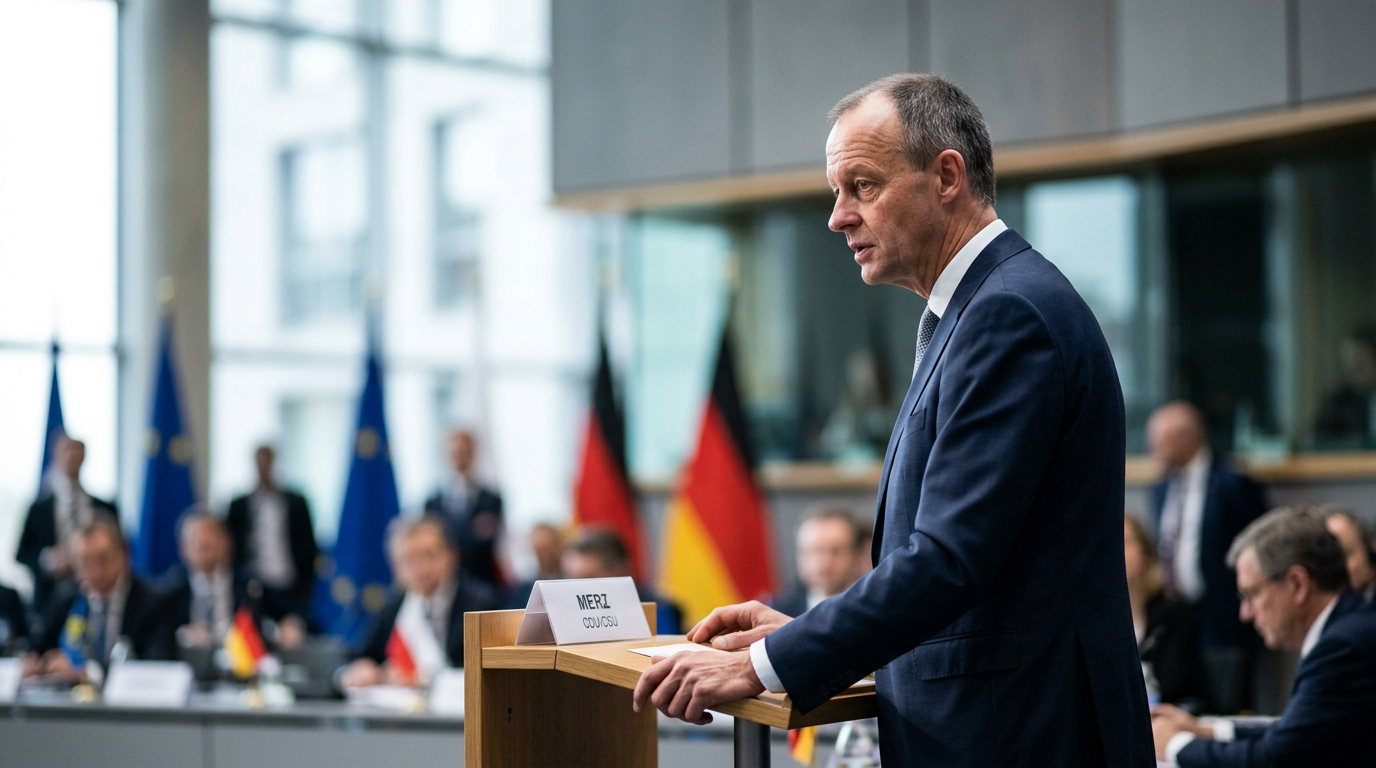
German Parliament Grapples with Historic Bid to Enshrine LGBTQ+ Protections in Constitution

BERLIN, Germany – Germany's Social Democratic Party (SPD) is spearheading a pivotal legislative effort to explicitly enshrine protections for lesbian, gay, bisexual, transgender, and queer (LGBTQ+) individuals within the nation's Basic Law, its constitution. This move, supported by its coalition partners, aims to add sexual identity and orientation as prohibited grounds for discrimination in Article 3, Paragraph 3, marking a significant step in the country's ongoing journey toward comprehensive equality. The proposal has advanced to the Bundestag for parliamentary debate, signaling a critical juncture in the quest to fortify the legal standing of LGBTQ+ citizens against prejudice, even as it navigates complex political and procedural hurdles.
The Drive for Explicit Constitutional Recognition
The initiative to amend Article 3 of the Basic Law stems from a long-standing demand by LGBTQ+ advocates and is a key commitment of the current governing coalition, comprising the SPD, the Greens, and the Free Democratic Party (FDP). The SPD's platform specifically calls for the full equality of queer families under family and parentage law and the inclusion of sexual orientation and gender identity as protected characteristics in the Basic Law. Proponents argue that despite significant advancements in LGBTQ+ rights, the absence of explicit constitutional protection leaves these rights vulnerable to future political shifts and interpretations, creating a "historical gap" that must be closed.
Currently, Article 3, Paragraph 3 of Germany's Basic Law prohibits discrimination based on sex, parentage, race, language, homeland and origin, faith, religious or political opinions, and disability. However, it notably omits sexual identity or sexual orientation from this list. This omission is particularly poignant given the systematic persecution of LGBTQ+ individuals during the Nazi era, a period that heavily influenced the drafting of the post-war constitution. Advocates assert that explicit mention would provide enduring protection, preventing backsliding and affirming the inherent dignity and equal rights of all individuals, regardless of their sexual identity or orientation. The Lesbian and Gay Association (LSVD), while acknowledging the positive impact of Federal Constitutional Court decisions, stresses that these advancements often resulted from protracted legal battles and that jurisprudential interpretations alone may not offer long-term stability without explicit constitutional recognition.
Germany's Evolving LGBTQ+ Rights Landscape
Germany has a deeply complex and often contradictory history regarding LGBTQ+ rights. The Weimar Republic in the early 20th century saw a vibrant queer culture, particularly in Berlin, with the establishment of the world's first gay rights movement and pioneering research by figures like Magnus Hirschfeld. This period of relative openness was brutally suppressed under Nazi Germany, which expanded Paragraph 175 of the German Criminal Code, criminalizing homosexual acts between men and leading to the persecution and deaths of thousands in concentration camps.
The legacy of Paragraph 175 continued in West Germany until 1994, and it was not until 2017 that convictions under this discriminatory law were officially annulled, with financial redress provided to surviving victims. Despite this dark past, Germany has made considerable strides in recent decades. Homosexual acts were decriminalized in East and West Germany in 1968 and 1969, respectively. Registered partnerships for same-sex couples were legalized in 2001, offering many, though not all, of the rights associated with marriage. A landmark moment arrived on October 1, 2017, when same-sex marriage became legal, granting full marital and adoption rights to same-sex couples. More recently, Germany implemented a nationwide ban on conversion therapy for minors in 2020, and a new Self-Determination Act, effective November 2024, allows transgender and non-binary individuals to change their legal gender through a simplified declaration process, replacing an outdated and often invasive law from 1980.
However, these legislative victories have not eradicated prejudice. Statistics reveal that anti-LGBTI hate crimes are on the rise, with 1,422 reported in 2022 alone, underscoring that societal discrimination persists despite robust legal frameworks. This disparity between legal protections and lived experiences strengthens the argument for constitutional explicit inclusion, which proponents believe would provide a stronger normative anchor against discrimination.
Political Divides and Procedural Hurdles
The path to amending the Basic Law is constitutionally demanding, requiring a two-thirds majority vote in both the Bundestag, the federal parliament, and the Bundesrat, which represents the 16 German states. This high bar reflects the foundational importance of the Basic Law and the desire for broad political consensus on constitutional changes.
While the SPD, Greens, and FDP are united in their push for the amendment, the initiative faces opposition and skepticism from other significant political forces. The Christian Democratic Union (CDU), the largest opposition party, through its Bundestag leader Thorsten Frei, has expressed reservations, arguing that existing legal protections, including Article 3 itself, the EU Charter of Fundamental Rights, and the General Equal Treatment Act, already offer sufficient safeguards. The CDU/CSU bloc has historically voted against many LGBTQ+ rights measures, though some members supported same-sex marriage in 2017, and the party has indicated intentions to revise the recently passed self-determination act if they return to power. The far-right Alternative for Germany (AfD) remains largely opposed to LGBTQ+ rights, representing another significant hurdle to achieving the necessary supermajorities.
Despite these political challenges, the initiative has made tangible progress. On September 26, 2025, the Bundesrat officially forwarded the proposal to include sexual identity in the Basic Law to the Bundestag for debate, a crucial procedural step initiated by the state of Berlin in July 2025. While the current legislative period was projected to conclude in autumn 2025 with the possibility of passing the amendment, no such amendment had been officially adopted by the end of 2025. The debate is now firmly on the parliamentary agenda, highlighting the continued relevance and urgency of the issue in German politics.
A Symbolic and Practical Quest for Equality
The debate over amending Germany's Basic Law to explicitly protect LGBTQ+ individuals is more than just a legal technicality; it is a profound discussion about national identity, historical reckoning, and the future of equality. For proponents, enshrining these protections at the constitutional level offers both symbolic and practical benefits. Symbolically, it would send an unequivocal message that Germany, scarred by its past persecution of queer people, stands firmly for their equal worth and dignity. Practically, it would provide the highest form of legal protection, making it more difficult to roll back rights in the future and ensuring that all state actions are consistent with the principle of non-discrimination for sexual orientation and gender identity.
As the legislative process unfolds in the Bundestag, Germany stands at a crossroads, with the opportunity to solidify its commitment to universal human rights and to close a chapter of historical oversight. The outcome of this debate will not only shape the legal landscape for LGBTQ+ people in Germany but also reflect the nation's evolving understanding of comprehensive equality and justice.
Related Articles

Ratko Mladić, "Butcher of Bosnia" and Convicted War Criminal, Dies at 84
THE HAGUE, Netherlands – Ratko Mladić, the former Bosnian Serb military commander known as the "Butcher of Bosnia" and convicted of genocide, war crimes, and crimes against humanity, has died at the age of 84. Serbian...

Long-Awaited 9/11 Mastermind Trial Set for 2028, Decades After Attacks
GUANTANAMO BAY, Cuba – Nearly a quarter-century after the devastating terror attacks of September 11, 2001, a military judge has finally set a trial date for Khalid Sheikh Mohammed, the alleged mastermind behind the...