Germany Spearheads 'Frugal' Alliance in High-Stakes EU Budget Battle
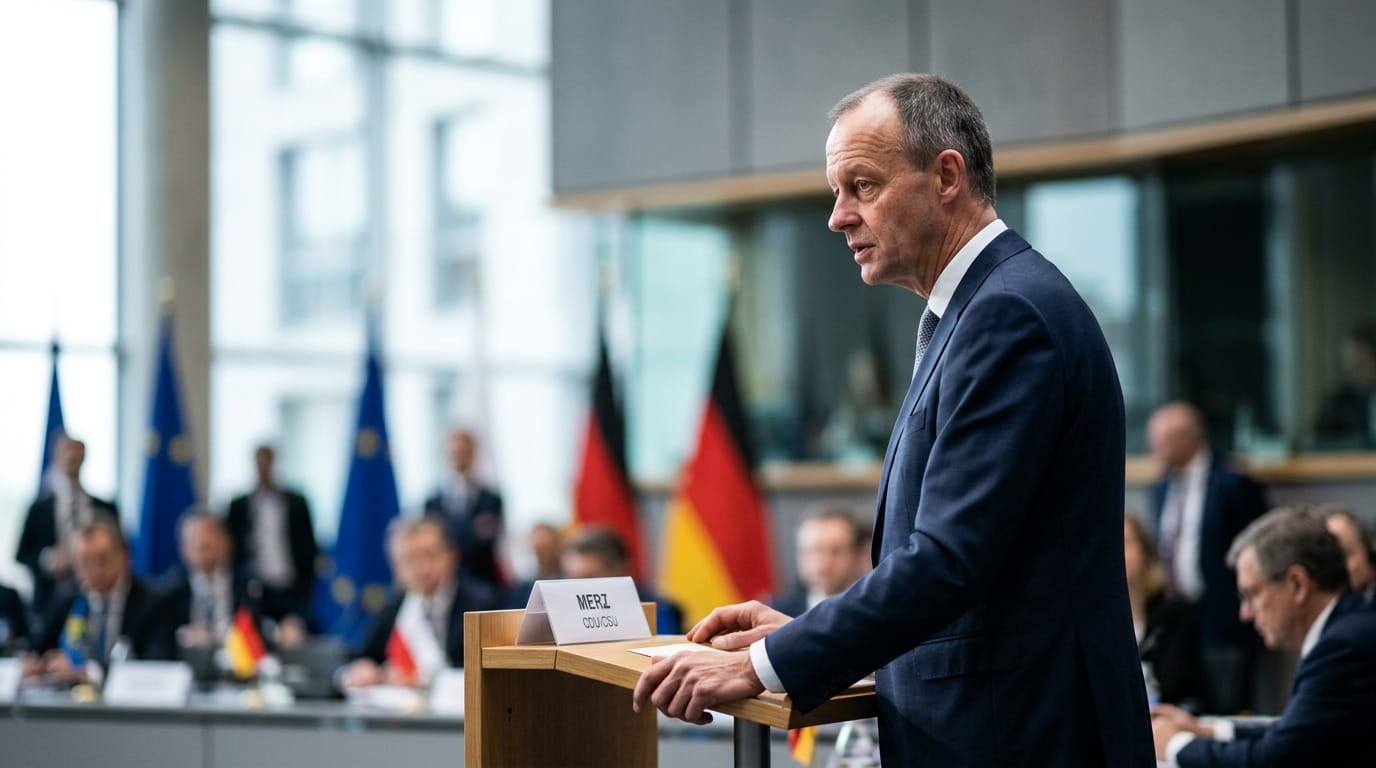
BRUSSELS — The European Union finds itself on the cusp of a deeply contentious debate over its next long-term spending plan, as German Chancellor Friedrich Merz marshals a coalition of fiscally conservative member states to demand significant cuts to the proposed €2 trillion budget. With negotiations for the 2028-2034 Multiannual Financial Framework (MFF) officially underway, Berlin's resolute stance, backed by a growing group of "frugal" nations, sets the stage for a bitter confrontation that will define the bloc's priorities and financial architecture for the coming decade.
Berlin's Call for Fiscal Prudence Ignites Budget Debate
German Chancellor Friedrich Merz has emerged as a leading voice advocating for stringent fiscal discipline within the European Union, making an unequivocal call for the next seven-year budget to be reduced by "several hundred billion euros." Merz underscored his position during a recent visit to Dublin, coinciding with Ireland's assumption of the Council of the European Union presidency, stating that "excessive increases at the European level" are untenable when member states are undertaking significant budget consolidation at home. This firm stance from Germany, the EU's largest net contributor, who warned its net payments could rise by approximately 80 percent under the Commission's current proposals, signals a tough road ahead for negotiators.
The German Chancellor's push is not an isolated effort. It crystallizes the long-standing philosophy of a bloc of "frugal" nations that have consistently argued for tighter fiscal policies and a more streamlined EU budget. Historically, this group, often dubbed the "Frugal Four," included Austria, Denmark, the Netherlands, and Sweden. These countries have advocated for budget contributions to remain stable, typically capped at a maximum of one percent of the EU's gross national income, and have often sought rebates and tight fiscal policies.
In a clear demonstration of this concerted effort, Chancellor Merz convened leaders from the Netherlands, Finland, Austria, Denmark, and Sweden in Berlin on Thursday, August 27, to forge a common front ahead of the decisive negotiations. This gathering underscores a widened alliance, with Finland now a prominent member, all united in their objective to significantly trim the European Commission's ambitious spending plans.
Competing Visions for Europe's Financial Future
The battle lines are sharply drawn between the frugal camp, championed by Germany, and the European Commission, which unveiled a proposal for a 2028-2034 Multiannual Financial Framework totaling nearly €2 trillion in July 2025, equivalent to 1.26 percent of the EU's gross national income. The European Parliament, in an even more ambitious move, sought a package worth approximately €2.2 trillion. This significant disparity highlights a fundamental disagreement on the scale and scope of future EU spending.
Chancellor Merz's argument extends beyond mere cuts; he advocates for a fundamental reform of the EU budget's structure. He sharply criticized the current allocation, noting that "more than two-thirds of European funds go to redistribution and subsidies." Instead, Merz calls for a reorientation towards increased investments in competitiveness and defense, while simultaneously pushing for a reduction in bureaucracy and rejecting new EU-level taxes on companies.
This position, however, presents an inherent contradiction. Germany, under Merz, seeks to lead in critical areas such as defense, competitiveness, and strategic autonomy. These priorities inherently demand substantial financial investment, potentially clashing with an overarching push for budget contraction. For example, while Merz champions investment, the call for "cuts across all areas" casts a shadow over crucial programs like Horizon Europe, which aims to boost European research and innovation. Conversely, other member states, particularly those heavily reliant on traditional cohesion and agricultural funds, are expected to vigorously oppose any drastic cuts that could jeopardize their economic development and social stability.
The MFF: A History of Tough Negotiations
The Multiannual Financial Framework (MFF) serves as the bedrock of the EU's long-term financial planning, establishing a seven-year framework that regulates the bloc's annual budget. This critical instrument sets maximum spending limits for broad policy areas and dictates overall annual ceilings for payments and commitments. The MFF's adoption requires unanimous consent from the Council, following approval from the European Parliament, a process historically characterized by arduous and protracted negotiations.
The concept of a multiannual budget has evolved since its inception in 1988 as "Financial Perspectives," designed to provide a stable budgetary framework. Over time, particularly with the Treaty of Lisbon, the MFF transformed into a legally binding regulation, underscoring its pivotal role in the EU's governance. Previous MFF negotiations, such as those for the 2014-2020 period, saw expenditure ceilings set at one percent of European Gross National Income, a reduction from prior frameworks. The 2021-2027 MFF, coupled with the NextGenerationEU recovery package, marked a significant response to the COVID-19 pandemic, involving substantial grants and loans. The "frugal" states have previously demonstrated their influence, notably during the 2020 budget negotiations, where they successfully pushed for a lower general EU budget and secured larger discounts for themselves. This historical precedent suggests their current demands are part of a consistent strategy.
Political Pressures and the Path to Compromise
The intensity of the current budget negotiations is heightened by domestic political considerations. Chancellor Merz faces mounting pressure at home, contending with rising unpopularity and the growing influence of the far-right, Eurosceptic Alternative for Germany (AfD) party. In this environment, accepting a larger EU budget would be a challenging political maneuver, as it could be perceived as out of step with national belt-tightening measures.
Adding another layer of complexity to the talks, European Council President António Costa is actively touring European capitals, seeking to bridge the stark divisions among member states. A key element of his strategy involves pushing for new 'own resources,' essentially EU-wide taxes, to fund the budget. These proposals, which include potential levies on corporations, discarded electronic items, and carbon emissions, are highly controversial and have so far remained deadlocked. Many leaders remain deeply skeptical of such new taxes, highlighting another major hurdle to reaching a consensus.
As Ireland, currently holding the EU Council presidency, prioritizes securing a budget deal by the end of the year, the coming months promise intense diplomacy and hard-fought compromises. The outcome will not only determine the financial capacity of the Union but also reflect the evolving balance of power among its members and its collective ambition to address future challenges. The ability to reconcile divergent national interests with the broader goals of European integration will be the ultimate test for its leaders.