EU and Mexico Ink Landmark Trade Pact, Ushering in New Era of Economic and Strategic Partnership
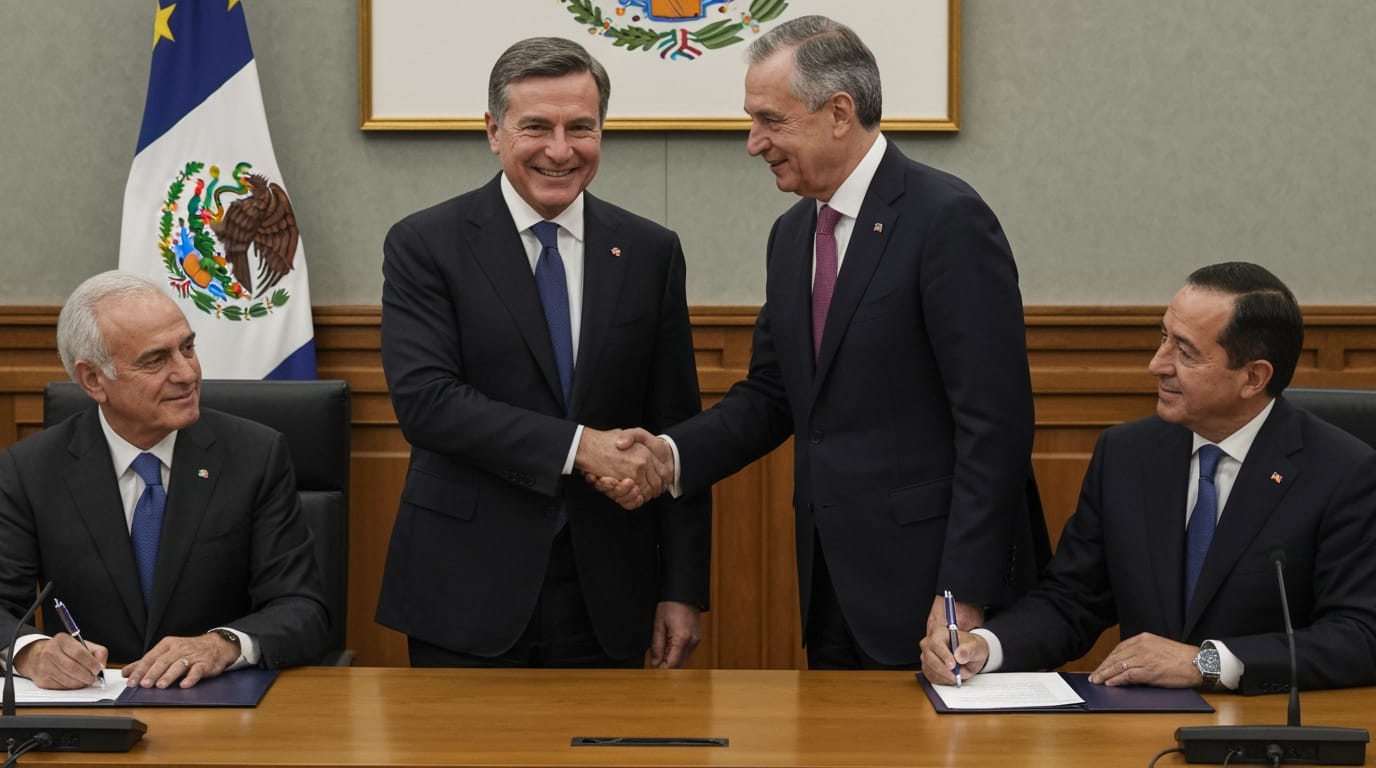
MEXICO CITY – In a move poised to reshape transatlantic commerce and geopolitical alliances, the European Union and Mexico officially signed a modernized and expanded trade agreement on May 22, 2026, marking a significant upgrade to their quarter-century-old economic ties. The signing, which took place at a summit in Mexico City, culminated years of negotiations aimed at deepening trade, investment, and cooperation across a wide array of sectors. This comprehensive pact is expected to yield substantial economic benefits for both sides, while also signaling a shared commitment to multilateralism and diversified global partnerships in an increasingly protectionist world.
The newly formalized agreements—comprising a Modernised Global Agreement (MGA) and an Interim Trade Agreement (iTA)—replace the foundational 2000 accord, which primarily focused on industrial goods. Leaders from both regions, including Mexican President Claudia Sheinbaum, European Commission President Ursula von der Leyen, and European Council President António Costa, hailed the deal as a "geopolitical statement" underscoring their mutual desire to strengthen resilience and create new opportunities for their respective citizens and businesses. The interim trade agreement is designed to take effect immediately, allowing for swifter liberalization of trade while the broader agreement awaits full ratification.
A Modernized Framework for 21st-Century Trade
The original EU-Mexico trade agreement, which came into force for goods in 2000 and services in 2001, spurred a significant increase in bilateral trade over the past two decades. However, both the EU and Mexico recognized that the previous framework no longer fully addressed the complexities and opportunities of the modern global economy. The new agreement was deemed necessary to overcome "unfulfilled potential" and integrate contemporary provisions ranging from digital trade to sustainable development.
The updated agreement dramatically expands the scope of cooperation, moving beyond industrial goods to encompass services, government procurement, digital trade, investment, and agricultural products. It aims to remove nearly all remaining customs duties on goods traded between the two partners. This includes the elimination of 95% of high Mexican tariffs on key EU agricultural exports such as pork, dairy products, cereals, fruits, and pasta, while the EU will reciprocate by cutting tariffs on Mexican products like coffee, fruit, chocolate, and agave syrup. A crucial element for European producers is the protection of 568 European Geographical Indications (GIs), safeguarding distinctive food and drink products like Champagne and Parma ham from imitations in the Mexican market.
Catalyzing Economic Growth and Investment
The economic implications of this expanded agreement are substantial. Bilateral trade in goods between the EU and Mexico has quadrupled since the original agreement took effect in 2000. In 2025, total trade in goods and services exceeded €100 billion. Specifically, EU exports of goods to Mexico reached €53 billion, with Mexico exporting €34 billion in goods to the EU. More than 45,000 EU companies, a significant majority of which are small and medium-sized enterprises (SMEs), currently export to Mexico. The EU also represents a major investor in Mexico, with investment stocks reaching €207 billion in 2024, accounting for 28% of all foreign investment in the country.
Projections indicate that the new trade pact could boost bilateral commerce by 35% over the next five years. Mexican exports to the EU are anticipated to increase by 25% to 40%, while EU imports into Mexico are expected to rise by 15% to 30%, primarily driven by capital goods and technology. Immediate impacts are foreseen in high-value agri-food products, the automotive sector, advanced manufacturing, pharmaceuticals, and chemicals. Beyond tariffs, the deal streamlines standards and procedures, which is particularly beneficial for SMEs, and includes provisions to protect intellectual property rights. A key improvement for investors is the replacement of the older investor-state dispute settlement system with a modern Investment Court System, aiming to enhance confidence and predictability.
Broadening Strategic Horizons
Beyond purely economic considerations, the modernized agreement holds significant strategic and geopolitical importance. Both the EU and Mexico have expressed intentions to diversify their trade partners and reduce reliance on single markets, particularly against a backdrop of global trade uncertainties and past tariff tensions, notably with the United States. European Council President Costa noted that the agreement serves as a "true geopolitical statement," solidifying Europe as a structural counterweight to Mexico's extensive trade dependency on the U.S.
A crucial component of this enhanced partnership is the EU's Global Gateway Investment Agenda, which is deeply integrated into the agreement. This initiative aims to mobilize over €5 billion in European-supported investments in Mexico, targeting strategic areas such as sustainable infrastructure, energy transition, health, and the digital economy. This aligns with Mexico's own "Plan Mexico," focusing on decarbonization, job creation, and resilient value chains.
The agreement also introduces strengthened commitments on sustainable development, including enforceable provisions on climate and labor rights, reflecting a shared dedication to environmental protection and social justice. It further ensures a more secure and fair supply of critical raw materials essential for green and digital transitions, a key strategic objective for the EU. Recognizing animals as sentient beings is another notable addition, underscoring a commitment to animal welfare.
The Path Ahead
While the Interim Trade Agreement will begin to take effect promptly, the full Modernised Global Agreement still requires comprehensive ratification by the European Parliament and all 27 EU member states, as well as Mexico. Despite this multi-stage process, the agreement has already been approved by all EU member states, clearing a significant hurdle.
The new pact is expected to trigger a series of intensified dialogues between the EU and Mexico across various domains, including security, migration, health, energy, and digital policy. This multi-faceted engagement underscores a commitment to a deep, stable, and dynamic partnership designed to address common challenges and foster mutual prosperity in the coming decades. The expanded agreement is therefore more than a trade deal; it is a declaration of enduring strategic partnership and a mutual investment in a more connected and sustainable global future.


