NATO Chief Welcomes Trump's Decision to Bolster Troop Presence in Poland Amidst European Unease
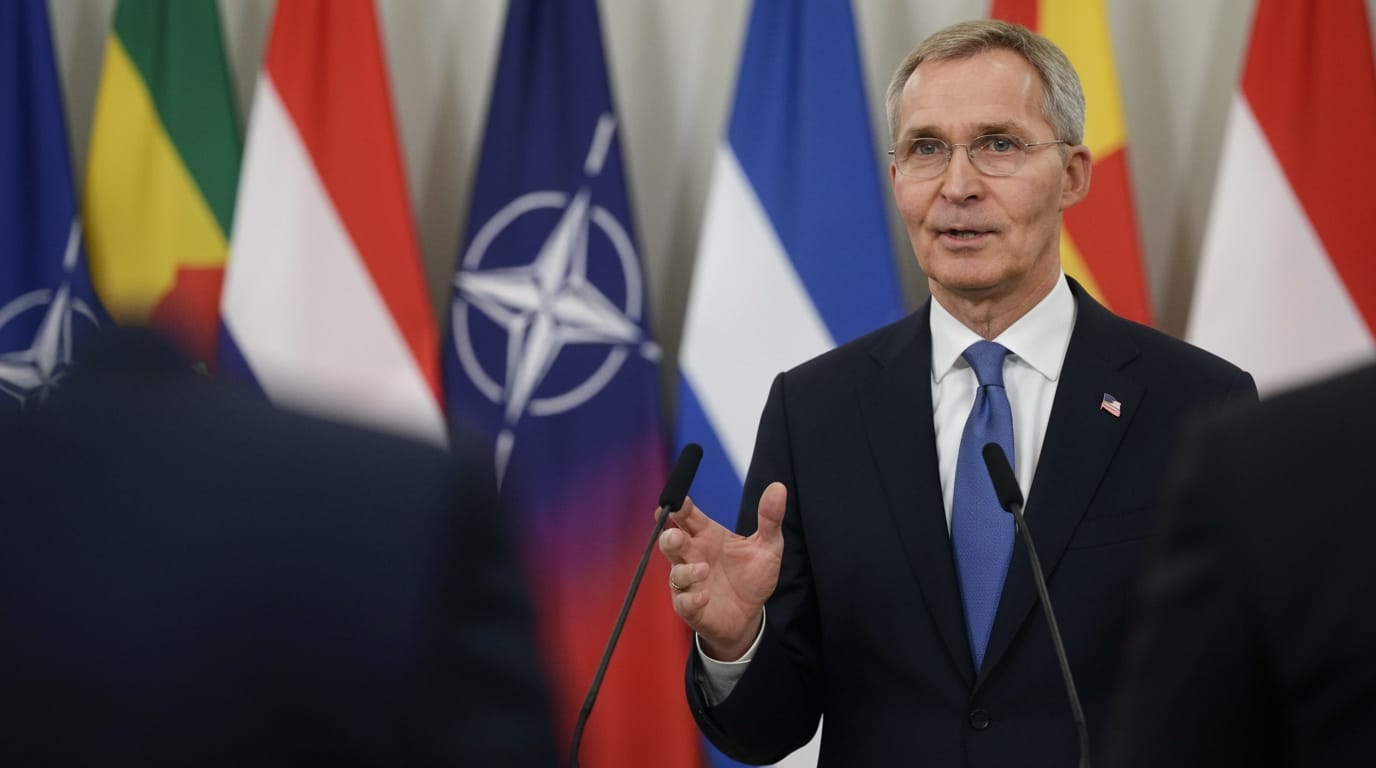
HELSINGBORG, SWEDEN — NATO chief Mark Rutte on Friday welcomed U.S. President Donald Trump's announcement to deploy an additional 5,000 American troops to Poland, a move that offers reassurance to a key Eastern European ally but also underscores persistent uncertainty regarding the future of America's military footprint in Europe. The announcement came from President Trump via his Truth Social platform on Thursday, just days after a planned deployment of 4,000 U.S. troops to Poland had been unexpectedly halted, sparking confusion and concern across the continent.
A Sudden Reversal and Allied Reassurance
President Trump's declaration to send 5,000 troops to Poland marks a notable shift following a period of considerable ambiguity surrounding American military commitments in Europe. The decision was explicitly linked by Trump to his "relationship" with Polish President Karol Nawrocki, whom he had previously endorsed in his successful election. This direct correlation between personal political ties and troop deployments adds a unique dimension to transatlantic security arrangements.
The U.S. President's announcement was made as NATO foreign ministers convened in Helsingborg, Sweden, where Secretary of State Marco Rubio was expected to address allied concerns about shifting U.S. defense policies. NATO Secretary General Mark Rutte, speaking ahead of the ministerial meeting, acknowledged the development, stating, "Of course, I welcome the announcement." However, Rutte also pointed to an ongoing trajectory towards a "stronger Europe" that is "less reliant on one ally only" for its defense, a sentiment that reflects broader European aspirations for increased strategic autonomy.
Navigating European Defense Posture
The decision to send additional forces to Poland comes amidst a complex backdrop of U.S. troop adjustments across Europe. Only recently, the Pentagon had delayed or canceled a rotation of approximately 4,000 troops to Poland, citing a reduction in the total number of U.S. Brigade Combat Teams assigned to Europe from four to three. This previous move had stirred considerable apprehension, with some European allies questioning Washington's commitment to the continent's security. Vice President JD Vance had initially characterized the delay as temporary, part of a broader re-evaluation of U.S. force posture in Europe.
President Trump's latest directive appears to reverse the Pentagon's prior course, injecting another layer of intricacy into the alliance's defense planning. It remains to be seen whether the newly announced 5,000 troops represent a genuinely fresh deployment, or if it is a political confirmation to reinstate the previously suspended 4,000-troop rotation with an added increment. The U.S. currently maintains around 10,000 personnel on rotation in Poland, participating in initiatives such as the Enhanced Forward Presence (eFP) and Operation Atlantic Resolve, aimed at deterring potential aggression and reassuring allies on NATO's eastern flank.
Poland: A Steadfast Ally on the Eastern Flank
Poland has consistently emerged as a vocal advocate for a robust U.S. military presence in Europe, particularly in the face of ongoing geopolitical tensions and Russia's assertive posture following events like the annexation of Crimea in 2014 and the full-scale invasion of Ukraine in 2022. The nation has been lauded as a "model ally" for consistently meeting and exceeding NATO's defense spending targets, committing to spend three percent of its GDP on defense starting in 2023.
For Warsaw, the continuous presence of American forces serves as a critical symbol of the U.S. commitment to collective defense and a vital deterrent. President Nawrocki, upon his election, emphasized that the Polish-American alliance is a "fundamental pillar" of security for both Poland and Europe. The latest announcement from Washington is expected to be welcomed in Warsaw as a reaffirmation of this crucial partnership, especially after the recent concerns caused by the temporary delay in troop movements.
Broader Implications for Transatlantic Security
The oscillation in U.S. troop deployment decisions underscores the evolving dynamics within the NATO alliance and Washington's approach to European security. The U.S. administration has frequently pressed European allies to increase their defense spending and take greater responsibility for their own conventional defense, with some critics suggesting a pivot towards other strategic priorities, such as the Indo-Pacific.
Recent strains have also been evident in relations with countries like Germany, particularly over disagreements concerning defense burden-sharing and their involvement in the U.S.-Israeli campaign against Iran, which led to prior announcements of U.S. troop reductions in Germany. While the additional deployment to Poland is a positive signal for that nation, the broader context reveals a fragmented approach that could continue to challenge allied coordination and long-term strategic planning. As the foreign ministers' meeting continues, European allies are seeking clarity on the U.S. military posture, aiming to ensure a cohesive and predictable strategy for the collective defense of the alliance.


