EU and South Africa Forge Stronger Ties with Green Energy and Investment Partnership
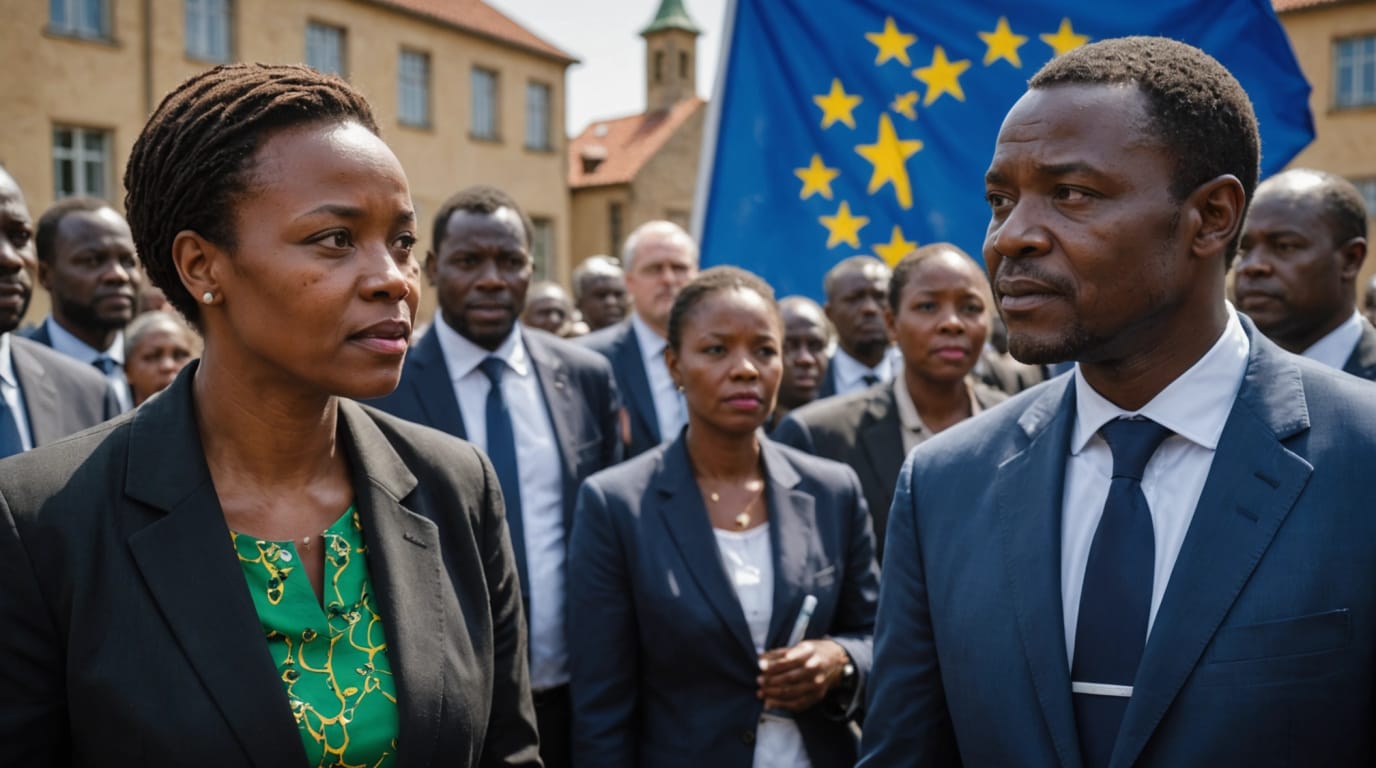
Cape Town, South Africa – The European Union and South Africa are deepening their strategic partnership, with a strong focus on green energy, trade, and investment. The eighth EU-South Africa Summit, held in Cape Town on March 13, 2025, marked a significant step in strengthening relations between the two partners, with the launch of a new "Clean Trade and Investment Partnership" and a substantial EU investment package aimed at supporting South Africa's transition to a green economy.
A New Chapter in EU-South Africa Relations
The EU and South Africa have maintained a robust relationship since South Africa's democratic transition in 1994. The EU is South Africa's largest trading partner and a leading foreign investor, accounting for approximately 47% of South Africa's total foreign direct investment stock. Building on this foundation, the recent summit underscored the commitment of both parties to address global challenges and foster mutual prosperity.
European Commission President Ursula von der Leyen emphasized the importance of the partnership, stating, "The geopolitical landscape is shifting, making strong partnerships more important than ever. I'm going to Cape Town with one goal: to strengthen our unique relationship with South Africa across the board – taking our cooperation on trade, critical raw materials and clean energy to the next level, and bringing new investment under Global Gateway."
Global Gateway Investment Package
A key outcome of the summit was the announcement of a €4.7 billion (approximately R94 billion) "Global Gateway Investment Package" from the EU to South Africa. This substantial investment is designed to boost mutually beneficial investments through grants and public and private loans from European and local financial institutions.
The investment package is anchored in three building blocks that align with the shared priorities of South Africa and the EU:
- Supporting the Just Energy Transition: A significant portion of the investment, approximately €4.4 billion, will be directed towards projects supporting a "clean and just energy transition" in South Africa, including green hydrogen projects.
- Scaling up Vaccine Production: €700 million will be allocated to scaling up vaccine production in South Africa, with the goal of the African Union producing more than 60% of the vaccines needed for the African population.
- Infrastructure Development: Investments will also support the processing of critical raw materials, renewable energy development, transport, and digital infrastructure.
Clean Trade and Investment Partnership (CTIP)
In addition to the investment package, the EU and South Africa launched negotiations towards a Clean Trade and Investment Partnership (CTIP). This agreement aims to create a framework for clean industrial collaboration on critical raw materials, net-zero technologies, and clean energy investments. The CTIP is expected to enhance competitiveness, support resilient supply chains, and contribute to a just transition in South Africa.
Von der Leyen highlighted South Africa's potential to become a global leader in clean energy production, stating that the country has everything to become a global leader: "You have clean energy in abundance, from wind to sun, but also of key raw materials for electrolyzers, including 91 per cent of the world's reserves of platinum group metals."
The CTIP will focus on investment, the transition to clean energy, skills and technology, and the development of strategic industries along the entire supply chain, including cooperation on critical raw materials. The EU aims to invest along the entire value chain, from exploration to recycling, with a focus on green hydrogen, electric vehicles, and battery production.
Trade and Economic Cooperation
The EU and South Africa already have a strong trade relationship, with approximately €50 billion worth of goods traded annually. Under the Southern African economic partnership agreement of 2016, the EU has eliminated or partially removed customs duties on 98.7% of imports from South Africa.
The EU-South Africa Free Trade Agreement aims to foster economic and trade relations between the two countries by eliminating tariffs and other trade barriers. The Agreement offers tariff elimination and reduction for goods including, but not limited to: Electric generation equipment, Mechanical equipment including pumps, appliances and other advanced machinery, Electric motors, transformers, batteries and capacitors, Mineral ore and processed products including manganese, copper, aluminium, and nickel and Photovoltaic cells.
The new CTIP is expected to further boost trade and investment ties, with a focus on clean technology and sustainable supply chains. The partnership will also serve as a forum for regulatory cooperation between the EU and South Africa in areas of mutual interest related to clean supply chains.
Just Energy Transition
A central theme of the EU-South Africa partnership is the Just Energy Transition (JET), which aims to support South Africa's shift away from fossil fuels towards clean energy in a way that addresses social issues and economic challenges. The EU, along with Germany, France, the UK, and the US, signed an International Just Energy Transition Partnership (JETP) with South Africa in 2021, committing to provide financing to support South Africa's climate commitments.
The EU launched a €280 million Just and Green Recovery Team Europe Initiative for South Africa in 2023, under the Global Gateway, to support policy reforms, a green recovery, and unlock green investments in South Africa. The European Investment Bank (EIB) and FirstRand Bank have also launched a joint initiative to boost renewable energy investments in South Africa, with a €400 million initiative to invest in solar photovoltaic, wind energy, and energy-efficiency projects.
Broader Cooperation
The EU-South Africa Strategic Partnership extends beyond trade and energy to encompass a wide range of areas, including:
- Science, Technology, and Innovation: The EU and South Africa collaborate in STI to reach sustainable development goals, through the design of challenge-led STI roadmaps.
- Social Sectors, Women, and Youth: The partnership places a great focus on youth, women, and entrepreneurship, with collaborative programs aimed at creating economic and social opportunities.
- Regional Cooperation: The EU and South Africa are committed to the advancement of peace, security, and sustainable development in their respective regions, and support the accelerated implementation of the African Union's Agenda 2063.
- Multilateralism: Both the EU and South Africa are committed to multilateralism, a consistent approach to the rules-based international order, and the centrality of the United Nations Charter.
Implications and Future Outlook
The strengthened partnership between the EU and South Africa holds significant implications for both parties. For South Africa, the EU's investment and support for the Just Energy Transition can help the country achieve its climate goals, diversify its economy, and create new jobs in the green energy sector. The CTIP can also boost South Africa's competitiveness and attract further investment in clean technology and sustainable industries.
For the EU, the partnership with South Africa provides access to critical raw materials, strengthens supply chains, and promotes its values and interests in Africa. South Africa's role as a regional leader and its membership in key international organizations such as the G20, BRICS, and the African Union make it a valuable partner for the EU in addressing global challenges.
As the world grapples with climate change, economic uncertainty, and geopolitical tensions, the EU-South Africa partnership serves as a model for international cooperation based on shared values, mutual interests, and a commitment to a sustainable future. The agreements and investments made at the recent summit are expected to pave the way for even closer collaboration in the years to come.


