EU Braces for "Dire" Consequences as Trump Imposes Sweeping Tariffs
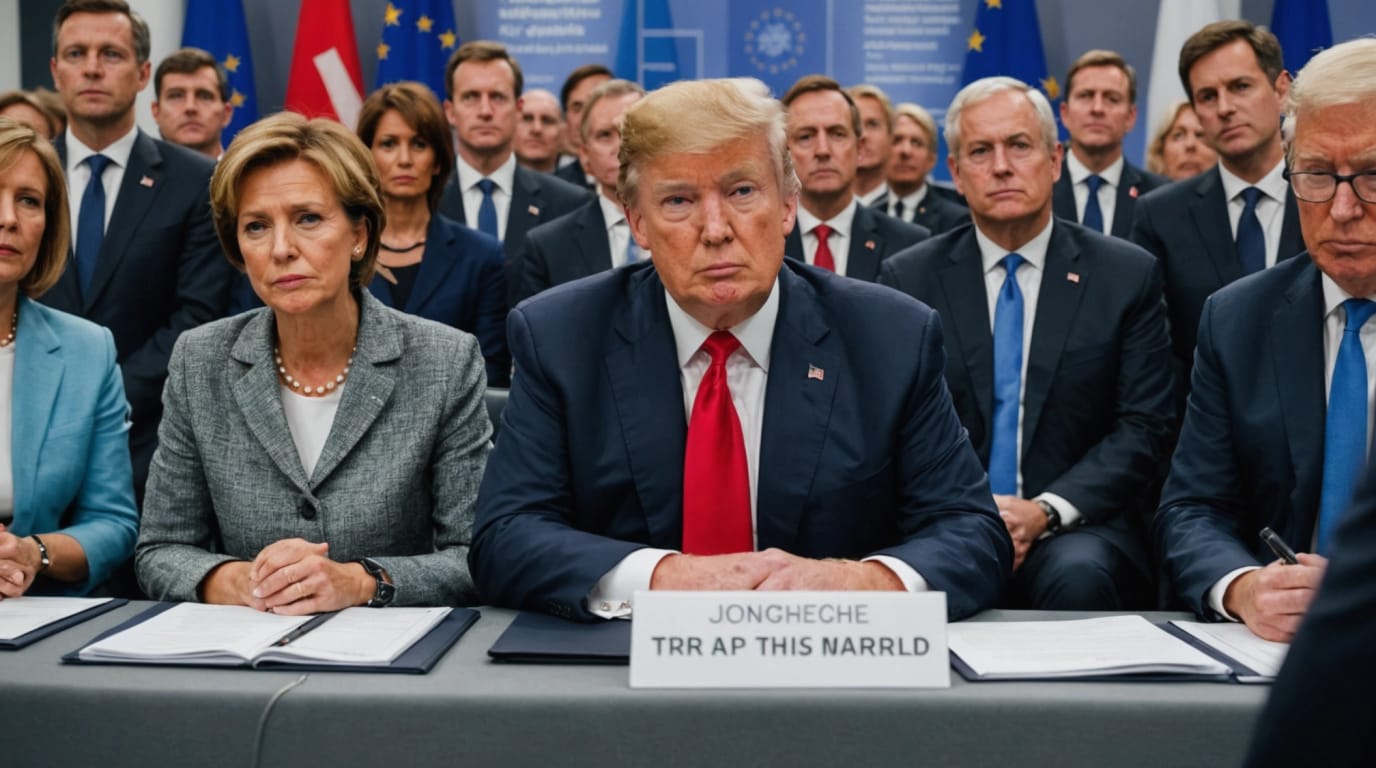
Brussels – The European Union is scrambling to respond after U.S. President Donald Trump slapped a 20% tariff on all goods imported from the bloc, a move that officials in Brussels are calling "illegal" and warning will have "dire" consequences for consumers and businesses on both sides of the Atlantic. The tariffs, announced Wednesday as part of Trump's "Liberation Day" initiative, mark a significant escalation in trade tensions between the U.S. and EU and threaten to destabilize the global economy.
EU Vows Swift Retaliation
European Commission President Ursula von der Leyen condemned the tariffs as a "major blow" and vowed to retaliate in kind to protect the EU's interests. "There seems to be no order in the disorder. No clear path through the complexity and chaos that is being created, as all U.S. trading partners will be hit," she said in a televised statement. Von der Leyen said the EU is finalizing its first package of countermeasures in response to previous tariffs on steel and aluminum and is preparing further measures to counter the newest levies.
The EU's response will be implemented in two phases. First, the suspension of existing countermeasures against the U.S. from 2018 and 2020 will lapse on April 1st. These measures target a range of U.S. products in response to the economic harm done to €8 billion of EU steel and aluminum exports. Second, in response to new U.S. tariffs affecting more than €18 billion of EU exports, the Commission is implementing a package of new countermeasures on U.S. exports, which will come into force by mid-April, following consultation with EU Member States and stakeholders. The EU has announced that the countermeasures could apply to U.S. goods exports worth up to €26 billion, matching the economic scope of the U.S. tariffs.
Economic Fallout Looms
Economists warn that the tariffs could have a significant impact on the EU economy, potentially reducing GDP growth by as much as 0.33% in the short term and 0.87% in the long term. The tariffs are expected to hit key sectors such as automotive, pharmaceuticals, and agriculture particularly hard. Germany and Italy, with their large automotive industries, are seen as especially vulnerable.
The tariffs could also lead to higher prices for consumers and businesses, fueling inflation and reducing purchasing power. The European Central Bank has already downgraded its net-export forecasts for 2025, citing the potential impact of the trade war.
Transatlantic Relationship Strained
The tariffs mark a low point in the transatlantic relationship, which has already been strained by disagreements over trade, security, and foreign policy. The U.S. and EU have the largest bilateral trade and investment relationship in the world, with over €1.6 trillion in goods and services traded in 2023. The U.S. is the EU's largest trade partner, accounting for a fifth of EU exports in 2023, and remains its largest investment destination, accounting for 55 percent of total investment into the United States.
Despite the close economic ties, there is no dedicated free trade agreement between the EU and the U.S. Negotiations for a Transatlantic Trade and Investment Partnership (TTIP) were launched in 2013 but ended without conclusion in 2016.
Global Trade War Fears
The EU is not the only target of Trump's new tariffs. The U.S. President has also imposed levies on goods from China, India, Japan, and Korea, raising fears of a global trade war.
"The world has been ripping off the United States for the last 40 years and more. And all we're doing is being fair," Trump said in a recent interview.
However, critics argue that the tariffs will ultimately harm the U.S. economy by raising costs for businesses and consumers and disrupting supply chains. They also warn that the tariffs could undermine the World Trade Organization (WTO) and the rules-based international trading system.
Industries at Risk
Several industries across the EU are bracing for impact. The automotive sector, a key driver of the European economy, is particularly exposed. A 25% tariff on motor vehicle imports from the EU could significantly reduce European car sales in the U.S. market. The German and Italian automotive industries are expected to suffer the most.
The pharmaceutical industry is also at risk, with Ireland's Southern Region and Copenhagen particularly vulnerable. Tariffs on pharmaceutical products could disrupt supply chains and raise the cost of medicines.
The agricultural sector is another potential casualty. The EU is a major exporter of agricultural products to the U.S., and tariffs could make these products less competitive.
Conclusion: Uncertainty and Turmoil
Trump's tariffs have plunged the U.S. and EU into a period of uncertainty and turmoil. The economic consequences are potentially severe, and the transatlantic relationship is under strain. While the EU has vowed to retaliate, it has also expressed a willingness to negotiate a solution. However, with Trump showing no signs of backing down, a trade war appears increasingly likely, with potentially far-reaching consequences for the global economy. The coming weeks will be critical in determining whether the U.S. and EU can find a way to de-escalate the conflict or whether they are headed for a prolonged period of trade tensions.


