EU Commission President Declares Nuclear Phase-Out a "Strategic Mistake," Signals Major Policy Shift
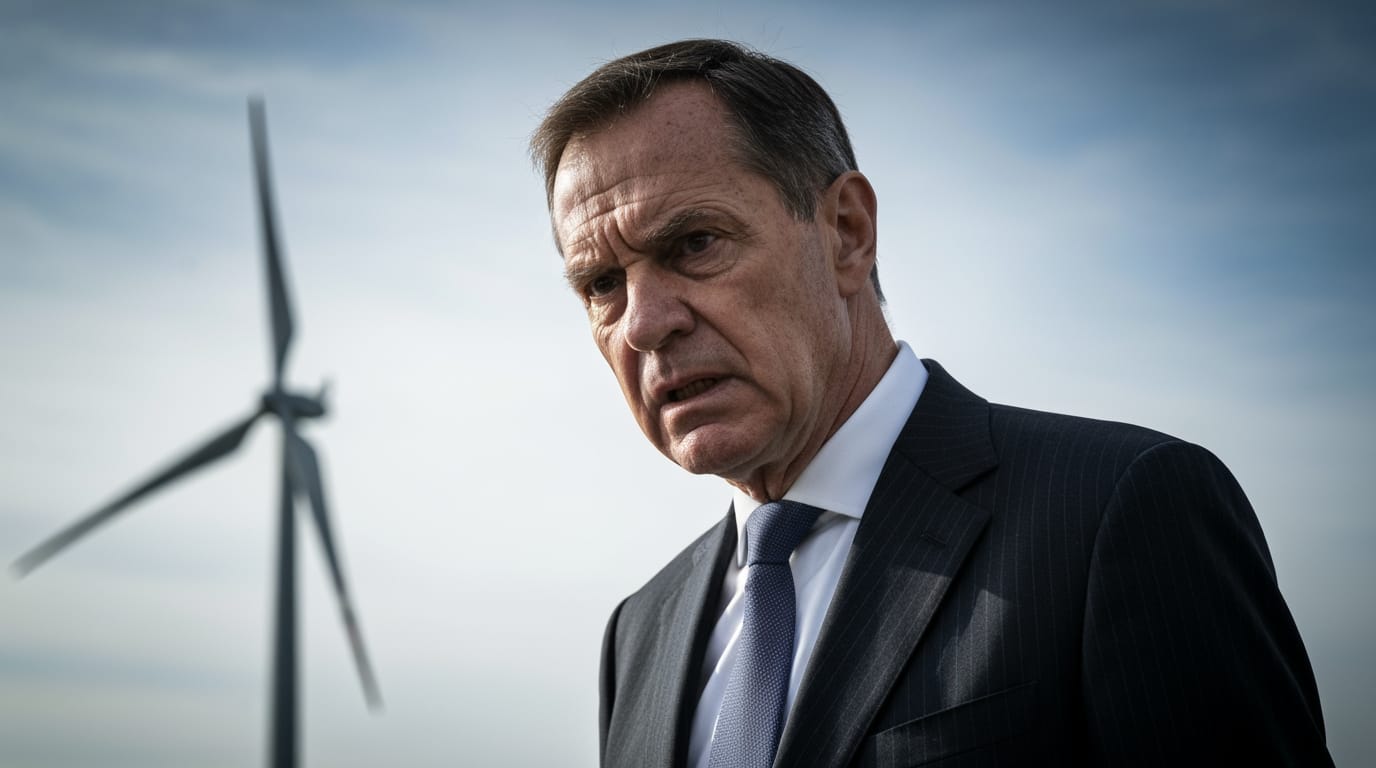
Brussels is re-evaluating its energy future as European Commission President Ursula von der Leyen recently characterized the phasing out of nuclear power as a "strategic mistake" for the continent. The declaration, made during an International Atomic Energy Agency (IAEA) nuclear summit in Paris, signals a significant pivot in the European Union's approach to energy security and climate objectives amidst ongoing geopolitical instability and the imperative for decarbonization. Von der Leyen's comments underscore a growing consensus among some European leaders that nuclear energy, once viewed with skepticism by a number of member states, must play a crucial role in securing a stable, affordable, and low-emission power supply.
A Shifting European Stance on Nuclear
European Commission President Ursula von der Leyen's assertion that Europe's reduced reliance on nuclear power was a "strategic mistake" highlights a notable shift in the continent's energy discourse. Addressing the IAEA nuclear summit in Paris, von der Leyen pointed out that nuclear energy's contribution to the EU's electricity generation has halved since 1990, falling from one-third to approximately 15% today. This historical reduction, she noted, represented a deliberate choice that, in retrospect, has proven disadvantageous for Europe's energy landscape.
In a tangible sign of this policy reorientation, von der Leyen announced new financial commitments, including a proposed €200 million guarantee, to foster investment in innovative nuclear technologies, particularly small modular reactors (SMRs). The ambitious goal is to have these advanced nuclear technologies operational in Europe by 2030, integrating them alongside traditional reactors to forge a more flexible, safe, and energy-efficient system. The timing of these statements is particularly poignant, as von der Leyen also linked Europe's past choices to its current "vulnerability" to volatile fossil fuel markets, a susceptibility painfully underscored by recent geopolitical conflicts, such as the conflict in the Middle East.
Germany's Path and Its Unintended Consequences
The most prominent example of the nuclear phase-out trend within the EU has been Germany's "Energiewende" or energy transition. Following the Fukushima disaster in 2011, Germany, under then-Chancellor Angela Merkel, made the decision to accelerate the closure of its nuclear power plants. This policy culminated in the shutdown of the country's last three reactors in April 2023, marking the end of over 60 years of nuclear power generation in Europe's largest economy.
However, the consequences of this rapid transition have drawn increasing scrutiny and criticism. Studies and analyses suggest that Germany's nuclear exit led to an increased dependence on fossil fuels, including natural gas and coal, to compensate for the lost baseload power. This shift has been linked to higher electricity prices for both households and industries, placing a burden on consumers and impacting industrial competitiveness. Furthermore, some analyses indicate that the phase-out slowed Germany's progress in reducing CO2 emissions, as fossil fuel power generation filled the gap left by zero-emission nuclear energy. The head of the International Energy Agency (IEA), Fatih Birol, has also publicly called Germany's decision to abandon nuclear power a "historic mistake," citing its dual impact on competitiveness and energy security, exacerbated by excessive reliance on a single supplier, Russia.
Nuclear's Resurgence in the EU Energy Mix
Despite past hesitancy, nuclear power is experiencing a significant resurgence in the broader European energy debate. The energy crisis, driven by escalating gas prices and the urgent need to meet ambitious climate targets, has compelled several governments to reconsider nuclear's role in their future energy strategies. This changing perspective is reflected in the contentious but ultimately successful inclusion of certain nuclear activities in the EU Taxonomy for sustainable investments.
The EU Taxonomy, designed to guide sustainable finance and achieve climate neutrality by 2050, initially faced opposition regarding nuclear and gas inclusion. However, the European Commission's decision to classify specific nuclear energy activities as "transitional" sustainable investments, under strict conditions, was upheld by the European General Court. The court acknowledged that nuclear energy generation produces near-zero greenhouse gas emissions and that, currently, there are no sufficiently scaled, technologically and economically feasible low-carbon alternatives to provide continuous and reliable energy. This ruling underscores the evolving recognition of nuclear power as a vital tool for decarbonization and energy independence within the EU, even as member states retain autonomy over their individual energy mixes. France, for instance, has consistently championed nuclear power, which generated over a fifth (21.8%) of the EU's electricity in 2022 and accounted for 70% of its own national electricity production.
The Future: SMRs and Energy Sovereignty
The future of nuclear power in Europe is increasingly tied to the development and deployment of next-generation technologies, particularly small modular reactors (SMRs). These advanced reactors, which are smaller and can be manufactured in factories, are seen as a key component of the EU's strategy to enhance energy sovereignty and achieve its ambitious climate goals. The European Commission's target for SMRs to be operational by 2030 highlights a commitment to integrating these innovative solutions into the continent's energy infrastructure.
This renewed focus on nuclear power is deeply intertwined with the pursuit of energy independence, a goal accentuated by recent geopolitical events. Leaders like French President Emmanuel Macron have explicitly linked civilian nuclear power to energy sovereignty and decarbonization, asserting that reliance on hydrocarbons can become a tool of pressure. France's proactive stance, including its strong advocacy for nuclear within the EU, demonstrates a clear vision for how this energy source can contribute to a robust and secure European energy landscape. The emphasis is not only on internal energy supply but also on developing European high-tech nuclear export capabilities, transforming advanced reactors into a valuable economic asset.
The complex interplay of energy security, climate change mitigation, and economic competitiveness is driving a profound re-evaluation of nuclear power's role in Europe. The acknowledgment by top EU officials of past "strategic mistakes" in phasing out nuclear energy signals a pivotal moment. While challenges remain, including public perception and waste management, the strategic imperative to achieve climate neutrality while ensuring stable and affordable energy has brought nuclear power firmly back to the forefront of the European agenda. The renewed commitment to innovative technologies like SMRs and a more harmonized approach across member states could redefine Europe's energy future, balancing environmental goals with the critical need for independence and reliability.


