Volkswagen Group Confronts Substantial Profit Setback Amid Porsche's Strategic Realignment
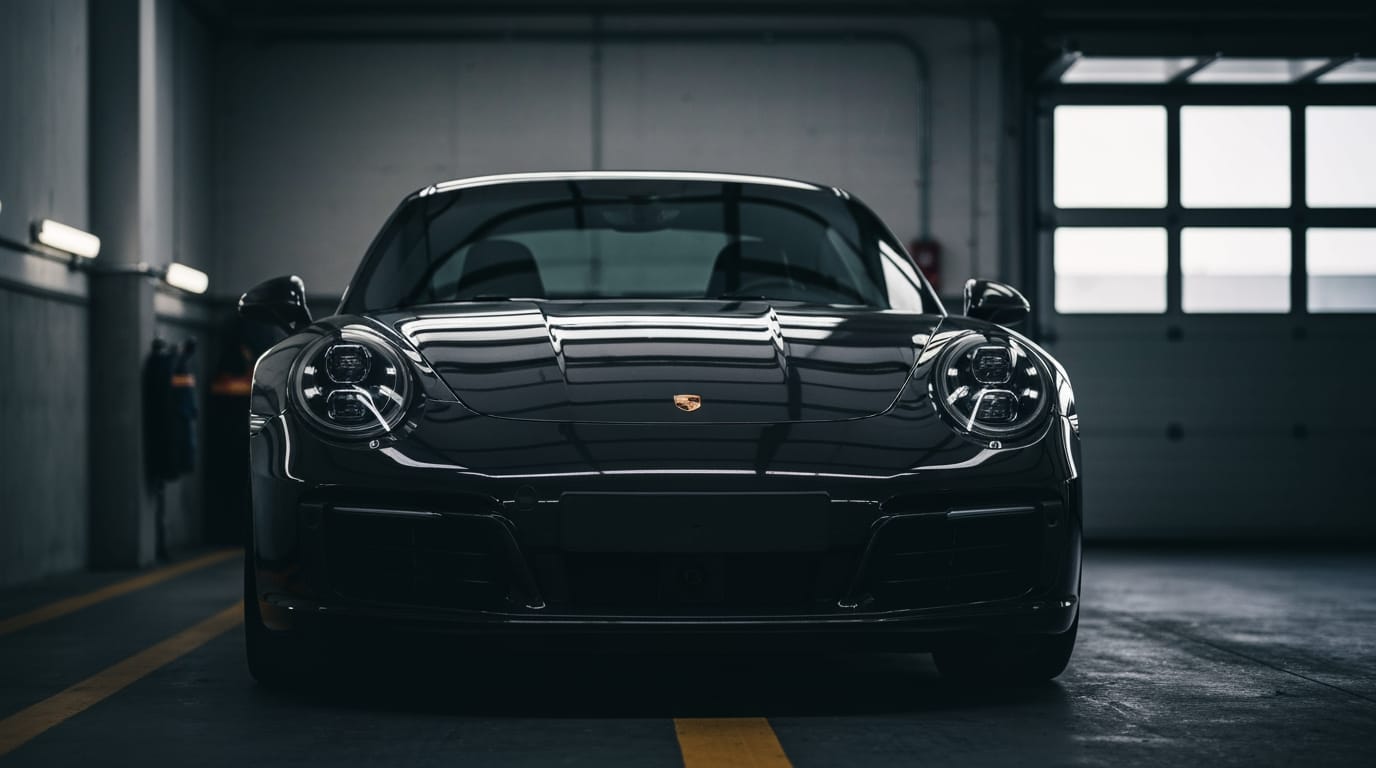
Wolfsburg, Germany – The Volkswagen Group, one of the world's largest automotive conglomerates, has recently registered a significant downturn in its financial performance, with its profits taking a substantial hit. This decline, particularly evident in the third quarter of 2025, is primarily attributable to a complex confluence of factors, central among them a costly strategic reassessment at its luxury sports car division, Porsche AG, alongside broader economic headwinds and increased trade tariffs. The developments underscore the intricate challenges facing legacy automakers navigating a transformative era marked by electrification and evolving market demands.
The Immediate Financial Fallout
The financial reports for the third quarter of 2025 revealed a stark picture for the Volkswagen Group. The company plunged into the red, recording an operating loss of €1.3 billion (approximately $1.5 billion) from July to September, a significant reversal from the €1.7 billion profit posted in the same period a year prior. For the first nine months of the year, the group's profit shrank by over 60%, falling from $9.7 billion to $3.7 billion.
This sharp decline was largely driven by an estimated €8.3 billion in charges. These charges stemmed predominantly from increased U.S. tariffs, adjustments to Porsche's product strategy, and substantial write-downs on Porsche's business and goodwill. Adjustments and write-downs related to Porsche alone accounted for €5.2 billion of this impact. Volkswagen's CFO Arno Antlitz noted that without these special effects, the operating profit margin for the first nine months would have been a more respectable 5.4%, suggesting a fundamental underlying business health despite the reported losses. The Volkswagen Group also adjusted its operating return on sales forecast for the full fiscal year 2025 to a range of 2-3%, a notable reduction from its earlier projection of 4-5%.
Porsche's Pivotal EV Strategy Shift
At the heart of Volkswagen's recent financial woes is a critical strategic pivot within its highly profitable Porsche brand. Porsche announced postponements in the launch of new all-electric models and a re-evaluation of its electrification roadmap. This included a decision to delay and cancel some electric vehicle plans, extending the life of combustion-engine versions for models like the Cayenne SUV and Panamera sedan. For instance, the previously envisioned all-electric SUV will now be offered with internal combustion engine (ICE) and plug-in hybrid powertrains, in response to sluggish demand for electric vehicles and concerns over production margins.
This shift directly resulted in an anticipated €1.8 billion impact on Porsche's operating profit in 2025 due to depreciation and provisions for the delayed EV platform. The luxury brand also recalibrated its medium-term profit targets for the Volkswagen Group, reducing the expected return on sales from an initial range of 15-17% to a more conservative 10-15%. The reversal underscores the significant challenges even premium automakers face in the rapid and costly transition to electric mobility, particularly amidst intensifying competition and fluctuating consumer preferences. Porsche's operating profit, in particular, plummeted by 99% in the first nine months of the year, from over €4 billion to a mere €40 million, despite record deliveries in the United States, attributed to its product realignment strategy, challenging market conditions in China, and one-off effects related to battery activities.
Broader Economic and Market Headwinds
While Porsche's strategic adjustments played a significant role, the Volkswagen Group's profit difficulties are also intertwined with a challenging global economic environment. Increased U.S. import tariffs contributed substantially to the financial hit, with VW anticipating these tariffs to cost the group up to $5.88 billion in 2025.
Furthermore, the general trend of lower profit margins on all-electric models compared to traditional internal combustion engine vehicles has continued to impact the group's overall profitability. Despite an increase in sales volume, with deliveries for the first half of 2025 up by 1.3%, the decline in profits highlights the pressure on margins. Intense competition, particularly from Chinese rivals, and a challenging market in China—a crucial sales territory for premium brands—have further exacerbated these pressures. Higher interest rates and waning government subsidies for EVs in some markets are also contributing to a tougher environment for luxury and premium automotive sectors.
The 2022 Porsche IPO: A Foundation for Future Growth
It is crucial to distinguish the recent profit hit from the initial strategic intent and outcome of the Porsche AG Initial Public Offering (IPO) in late 2022. The IPO was a monumental undertaking, designed to unlock significant value for the Volkswagen Group and provide substantial capital for its ambitious "NEW AUTO" strategy, focusing on electrification, software development, and new mobility solutions.
Volkswagen AG aimed to use the proceeds from the IPO to accelerate its industrial and technological transformation, including investments in converting production capacities to electric vehicles. The listing provided Porsche AG with greater entrepreneurial freedom while crystalizing its value for Volkswagen shareholders. The share capital of Porsche AG was divided into 50% preferred shares and 50% ordinary shares, with Volkswagen AG retaining a majority stake. Up to 25% of the preference shares were offered to investors, a move that could have generated up to €20 billion by selling a minority interest. A special dividend of 49% of the total gross proceeds was proposed to shareholders. This move was widely seen as a way to bolster Volkswagen's financial resilience and fund critical future investments. Porsche's valuation at the time of the IPO was projected to be in the range of €90 billion to €110 billion, an impressive figure that nearly matched Volkswagen's market capitalization despite Porsche selling a fraction of the vehicles. The IPO was fundamentally a capital-raising and value-unlocking exercise for Volkswagen, not an event that directly caused a profit reduction at the time of the transaction itself.
Outlook and Future Strategic Directions
In response to the current challenges, Volkswagen Group is actively implementing a wide-ranging cost-cutting strategy, including workforce reductions. The company is striving to adapt its capacities to new market realities and changing customer demands. While the group acknowledges the difficulties, particularly concerning the operating margin, it continues to invest in technologically competitive combustion engine vehicles, exciting electric vehicles, and advanced software solutions.
The dual role of Oliver Blume as CEO of both Volkswagen Group and Porsche AG has drawn scrutiny, with investors increasingly questioning his ability to lead both entities during such a critical period of transformation. However, the group emphasizes strengthening its financial resilience and remains committed to its long-term vision of becoming a leading provider of software-based and emission-free mobility. The current financial adjustments, while painful, are viewed within the context of a necessary realignment to navigate the complex landscape of the automotive industry's future.
Conclusion
The Volkswagen Group's recent profit setback underscores the volatility and capital intensity of the automotive industry's transition. While the 2022 Porsche IPO was designed to fortify Volkswagen's financial position and accelerate its future-oriented "NEW AUTO" strategy, the subsequent strategic adjustments at Porsche, driven by a reassessment of its EV roadmap amidst market realities, have introduced significant financial challenges. Compounded by persistent headwinds like increased trade tariffs and the inherently lower margins of early-stage EV adoption, the group faces a demanding period. Volkswagen's ability to streamline operations, optimize its brand portfolio, and successfully execute a balanced electrification strategy will be paramount in steering through these turbulent waters and securing its long-term profitability and leadership in the global automotive landscape.


