EU Court Endorses Contentious Catalan Amnesty, Bolstering Spanish Government and Reconciliation Efforts
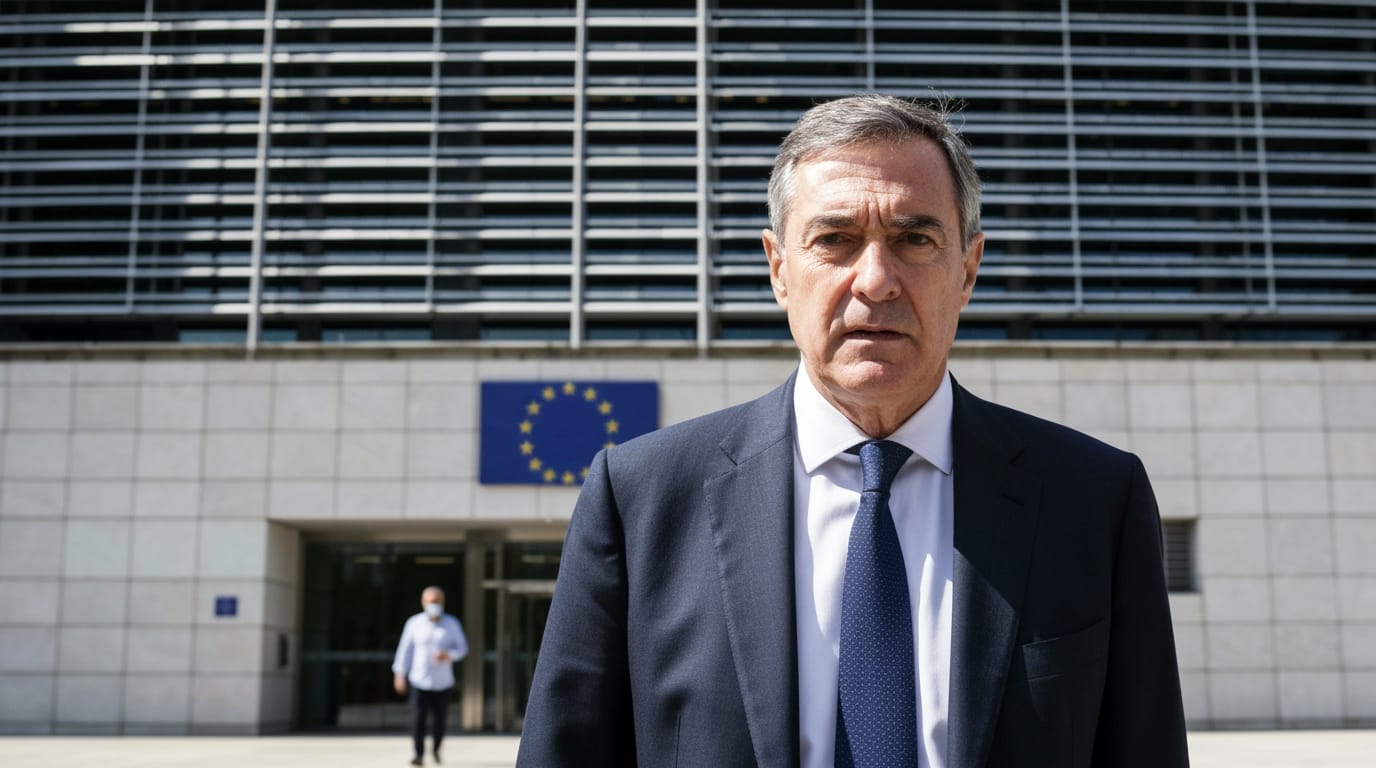
BARCELONA, Spain – In a pivotal decision, the European Union's top court ruled Thursday that Spain's controversial 2024 amnesty law for Catalan separatists does not violate EU rules, delivering a significant endorsement to Prime Minister Pedro Sanchez's government and its pursuit of political reconciliation. The ruling by the Court of Justice of the European Union (CJEU) largely affirmed the legality of the measure, which pardons hundreds involved in Catalonia's independence push, including the 2017 referendum, while clarifying the boundaries of member states' legislative powers within the bloc. The judgment marks a crucial development in Spain's efforts to navigate deep-seated political tensions with the Catalonia region.
The Landmark Judicial Green Light
The Luxembourg-based Court of Justice of the European Union issued its pronouncement on Thursday, July 16, 2026, unequivocally stating that EU law does not preclude the Spanish amnesty law. This decision confirmed that the adoption and application of such amnesty legislation primarily fall within the competence of individual member states. The court's rationale centered on the law's stated purpose: to "reduce institutional and political tensions and facilitate a process of reconciliation." However, the CJEU did introduce a specific limitation, stipulating that the amnesty law cannot oblige Spanish courts to lift accounting responsibilities or preliminary proceedings within a two-month period if those courts are awaiting a decision from the CJEU itself. This nuance ensures that the supremacy of EU law and judicial oversight in certain cases remains intact. The ruling provides a substantial boost to the Spanish government and its Catalan political allies, solidifying a legislative cornerstone that has been fiercely contested since its inception.
Roots of Reconciliation: The Amnesty's Genesis
The amnesty law, officially known as Organic Law 1/2024, of June 10, for institutional, political, and social normalization in Catalonia, was approved by the Spanish lower house in 2024 and subsequently entered into force that June. Its passage was the result of a delicate political negotiation: it served as a key condition for the ruling Socialist Party and Prime Minister Pedro Sanchez to secure the backing of Catalan separatist groups, enabling Sanchez to form a government following Spain's inconclusive 2023 general election and thereby remain in power. The legislation is designed to pardon numerous individuals who faced legal proceedings or convictions for their involvement in the Catalan independence movement, including those connected to the unauthorized 2017 independence referendum and its aftermath. Proponents of the law have framed it as an essential step toward de-escalating political conflict and fostering dialogue between Madrid and Barcelona, aiming to usher in a period of "coexistence and reconciliation."
Legal Battlegrounds: EU and Spanish Courts Scrutinize Amnesty
The amnesty law has been the subject of intense legal and political debate, both within Spain and at the European level. Spanish courts, including the Supreme Court and the Court of Auditors, had raised questions to the CJEU concerning the law's compatibility with EU directives, particularly regarding potential impacts on the bloc's financial interests through alleged embezzlement and its stance on terrorism-related offenses. These challenges focused on whether the amnesty might undermine the EU's anti-terrorism framework or exempt individuals from financial liabilities that could ultimately affect the EU budget.
In its ruling, the CJEU addressed these concerns directly. The court concluded that the amnesty legislation neither damaged the European Union's financial interests nor weakened its counter-terrorism rules. Specifically, regarding the financial questions raised by Spain's Court of Auditors, the CJEU clarified that any adverse effect on a national budget alone would not automatically equate to harm to the EU budget. This aspect of the judgment is crucial, as it validates the scope of national legislative autonomy in defining financial liabilities within domestic contexts. Prior to the CJEU's decision, Spain's Constitutional Court had already upheld the amnesty law's constitutionality in June 2025, although it reinterpreted its application to extend beyond only pro-independence actions, reflecting a pragmatic approach to normalization. The European Commission, which had previously expressed reservations about the law and presented arguments against it, had suggested it amounted to a "self-amnesty" contrary to the rule of law. The CJEU's decision effectively represents a rejection of these broader objections, affirming the prerogative of member states in enacting such measures.
Political Aftershocks and Future Trajectories
The CJEU's ruling carries significant political weight and is expected to reshape the dynamics of Spanish and Catalan politics. The decision has been met with calls from Catalan leaders for immediate implementation by Spanish courts, arguing that no further legal obstacles remain. This ruling is particularly impactful for Carles Puigdemont, the former Catalan president who has been living in self-imposed exile in Belgium since the 2017 independence bid. While the CJEU's decision significantly clears a European legal hurdle, it does not immediately pave the way for Puigdemont's return to Spain. Spanish courts, including the Supreme Court, still retain the responsibility to interpret and apply the amnesty law to individual cases. An arrest warrant remains in effect against Puigdemont, and outstanding proceedings, including embezzlement charges, must still be resolved by Spanish judicial bodies.
The judgment is expected to influence Spain's political balance and the future of Catalan politics, underscoring the complexities of compromise in a deeply divided democracy. While supporters view the amnesty as a necessary tool for reconciliation and stability, critics within Spain's conservative opposition have consistently denounced it as a politically motivated bargain that undermines the rule of law. The ruling solidifies the legal framework for the amnesty, but the practicalities of its application and its ultimate success in fostering lasting reconciliation will depend on ongoing political will and judicial interpretation at the national level.
In conclusion, the Court of Justice of the European Union's endorsement of Spain's Catalan amnesty law marks a decisive moment in a protracted political and legal saga. By upholding the bulk of the controversial legislation, the CJEU has affirmed the principle of national sovereignty in addressing internal political conflicts through measures like amnesties, provided they do not conflict with core EU legal principles. While the decision offers a significant legal victory to the Spanish government and a path forward for affected Catalan separatists, the intricate task of applying the amnesty and achieving enduring reconciliation will now largely rest with Spain's domestic judiciary and its political actors, ensuring the debate over Catalonia's future remains a central theme in Spanish public life.


