EU Escalates Standoff with Hungary Over Media Freedoms, Threatens Court Action
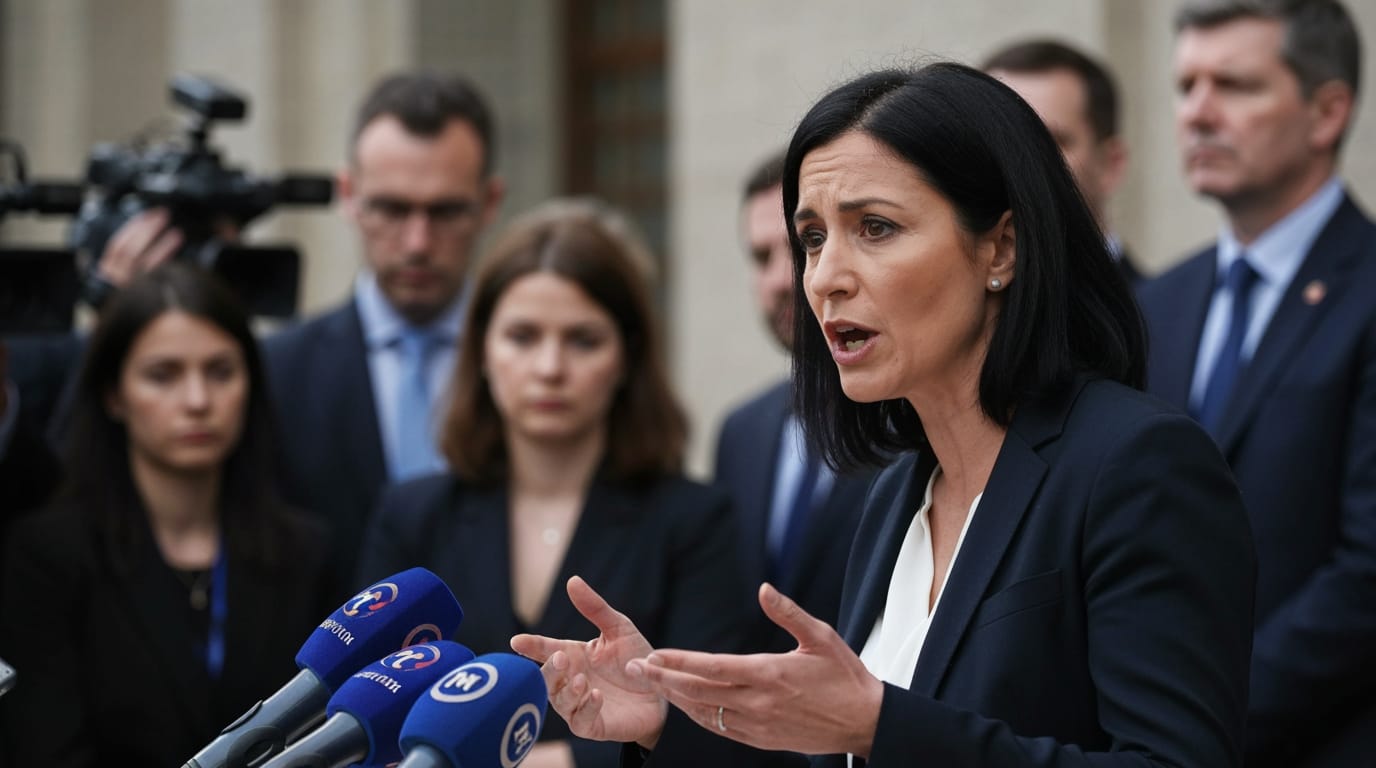
BRUSSELS – The European Union has launched a formal infringement procedure against Hungary, accusing Budapest of undermining media freedom and pluralism and failing to adhere to crucial EU regulations designed to safeguard journalistic independence. The move marks a significant escalation in the long-standing dispute between Brussels and Prime Minister Viktor Orbán's government, potentially leading to a pivotal legal battle at the European Court of Justice (ECJ) and the imposition of financial penalties. This latest action underscores the EU's resolve to uphold democratic values within its borders, particularly concerning the foundational principle of a free and independent press.
Deepening Concerns Over Media Control
The European Commission initiated the procedure by sending a letter of formal notice to Hungary, citing non-compliance with several provisions of the European Media Freedom Act (EMFA) and certain requirements of the Audiovisual Media Services Directive (AVMSD). These legal instruments are central to protecting media freedom, independence, and pluralism across the EU's internal market. According to the Commission, Hungarian authorities are actively interfering with the work of journalists and media outlets, notably by restricting their economic activities and editorial freedom.
The allegations extend to a perceived lack of adequate protection for journalistic sources and confidential communications under Hungarian law, alongside insufficient judicial remedies for violations of these rights. Further breaches highlighted by the Commission include Hungary's failure to meet requirements regarding public service media, the transparency of media ownership, the assessment of media market concentrations, and the equitable allocation of state advertising. Concerns have also been raised about Hungary's national media regulators and their adherence to AVMSD standards. These specific points of contention highlight a systematic pattern that critics argue has allowed the Hungarian government to exert significant influence over the media landscape since 2010.
A History of Disagreement and Democratic Backsliding
This latest infringement procedure is not an isolated incident but rather the newest chapter in a series of confrontations between the EU and Hungary over the erosion of democratic standards and the rule of law. For years, international organizations and civil society groups, including Reporters Without Borders and Human Rights Watch, have voiced alarm over the shrinking space for independent journalism and declining media plurality in Hungary. They contend that the ruling Fidesz-KDNP government has strategically dismantled media freedom and pluralism through various means, including control over media regulatory bodies, direct political influence over public service broadcasters, and financially favoring pro-government outlets.
Previous actions by the EU include the European Parliament triggering Article 7 proceedings against Hungary in 2018 due to concerns about the lack of media pluralism and other fundamental rights violations. This "nuclear option" mechanism, designed to address states putting democracy and fundamental rights at risk, has yet to lead to the suspension of Hungary's voting rights, but it underscores the gravity of the EU's concerns. The EU has also engaged in other infringement procedures and legal actions related to judicial independence, academic freedom, and LGBT+ rights, often culminating in rulings from the ECJ. The consistent pattern of challenges reflects a broader effort by the European Commission to ensure that member states uphold the shared values enshrined in EU treaties.
The Infringement Procedure: Steps and Stakes
The infringement procedure initiated by the Commission follows a well-defined legal pathway. The current step, a letter of formal notice, requires Hungary to respond to the critical issues raised within two months. Should Hungary's response prove unsatisfactory, the Commission may then issue a "reasoned opinion," which serves as a formal request for compliance with EU law. If Budapest still fails to address the concerns adequately, the Commission can refer the case to the European Court of Justice.
At the ECJ, judges would determine whether Hungary has indeed violated its obligations under EU law. A ruling against Hungary could lead to mandatory remedies and, if non-compliance persists, financial penalties. This legal mechanism is the Commission's primary tool for ensuring the uniform application of EU law and for addressing failures by member states to adhere to their treaty obligations. The stakes are high, as a negative ruling could further isolate Hungary within the bloc and carry significant financial implications, especially as the country has previously faced hefty fines for other breaches of EU law.
Hungary's Defense and Broader Implications
Hungarian officials have consistently rejected claims of undermining media freedom, often accusing Brussels of political motivations. Zoltán Kovács, the Prime Minister's spokesman, has previously lashed out at the European Commission, dismissing such actions as politically driven. Hungary has maintained that its media laws and regulatory bodies are independent and operate within national legal frameworks. This position highlights a fundamental disagreement over the interpretation and application of EU law versus national sovereignty, particularly in areas where EU competence has historically been less explicit, such as media regulation.
However, the recent adoption of the European Media Freedom Act provides the Commission with stronger legal grounds to intervene. The EMFA specifically aims to protect media independence from political interference, ensure transparency of ownership, and regulate state advertising practices – all areas where Hungary is accused of falling short. This concerted effort by the EU reflects a growing recognition that media freedom is not merely an internal affair of member states but a core pillar of the Union's democratic integrity. The outcome of this infringement procedure could set an important precedent for how the EU addresses similar challenges to media freedom and the rule of law in other member states in the future.
Conclusion
The European Commission's decision to launch an infringement procedure against Hungary over media freedom infringements marks a critical juncture in the ongoing rule-of-law debate within the European Union. By leveraging the new European Media Freedom Act and the Audiovisual Media Services Directive, the EU is signaling its unwavering commitment to protecting independent journalism and media pluralism. The process, which could culminate in a ruling by the European Court of Justice and potential financial penalties, underscores the EU's determination to ensure that all member states uphold fundamental democratic values. As Hungary prepares its response, the eyes of the continent will be on Budapest and Brussels, watching a pivotal battle over the future of free expression in Europe.


