EU Escalates Trade Pressure on Chinese Imports Amidst High-Stakes Talks
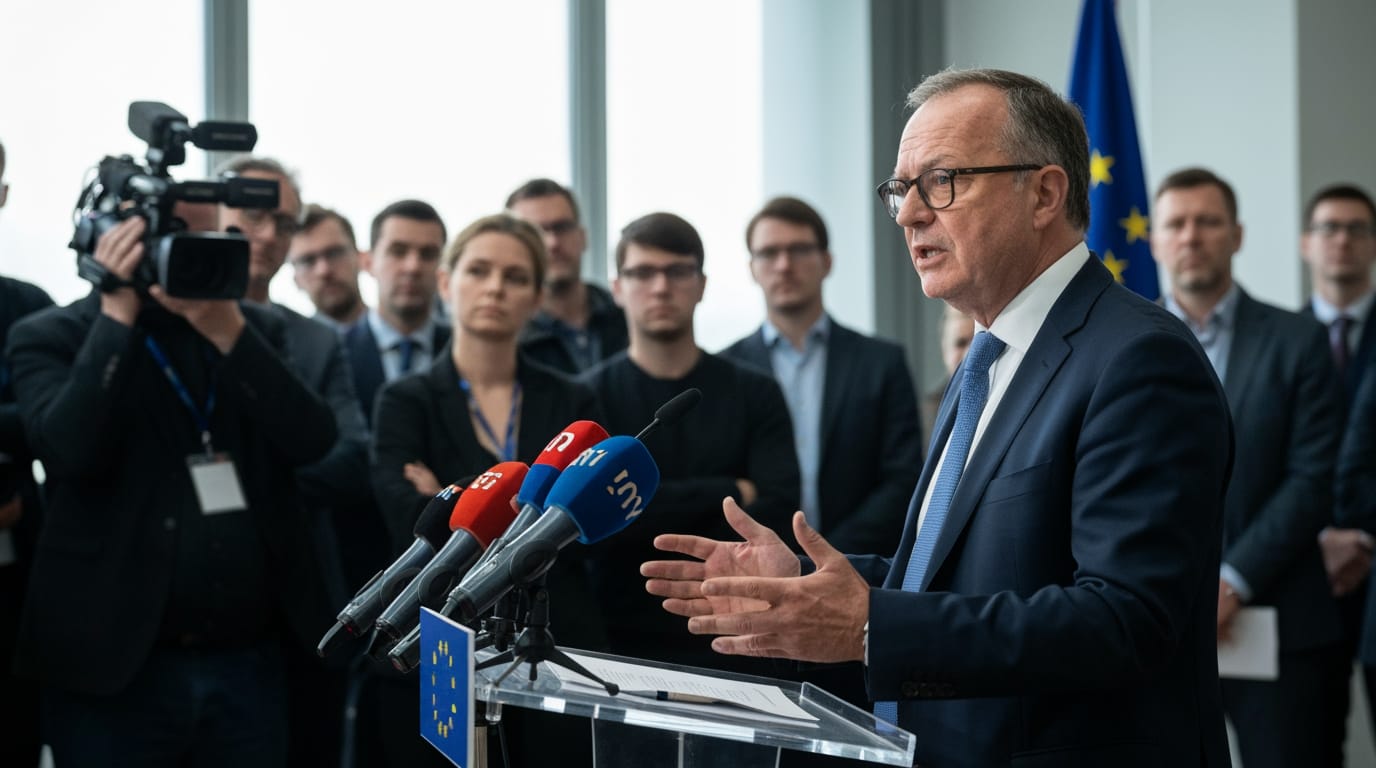
Brussels, Belgium – July 2, 2026 – The European Union has implemented a raft of new trade measures targeting Chinese imports, signaling a decisive shift in its approach to what it describes as an unsustainable and imbalanced economic relationship. As of July 1, the bloc introduced heightened tariffs on steel, a novel customs fee on low-value e-commerce goods, and reinforced its stance on electric vehicle (EV) imports, even as high-level talks commenced this week between EU Trade Commissioner Maroš Šefčovič and Chinese Commerce Minister Wang Wentao. These developments unfold against a backdrop of a surging trade deficit and mounting concerns over industrial overcapacity, pushing the world's two largest trading blocs to the precipice of a broader commercial conflict.
The EU's assertive actions come as the bloc grapples with a staggering trade imbalance that saw its deficit with China balloon to €360.6 billion in 2025, expanding by 15% from 2024 and an additional 10% in the first four months of 2026. This translates to an alarming €1 billion deficit per day, with all 27 member states now recording bilateral trade deficits with Beijing. European leaders have increasingly warned of a "China Shock 2.0," fearing significant threats to domestic industries and employment, a sentiment amplified by recent economic distress signals from key European manufacturers.
Europe's Industrial Frontline: EVs, Steel, and E-commerce Under Scrutiny
The most visible fronts in this escalating trade dispute are the electric vehicle, steel, and e-commerce sectors, where the EU has enacted specific, immediate measures. Existing EU tariffs on Chinese EVs, which can reach up to 35.3% for some manufacturers, were initially imposed in October 2024 following an anti-subsidy investigation launched in 2023. Despite these tariffs, Chinese EV brands recorded more than 10% of total auto sales in the bloc for the first time in May 2026, demonstrating their persistent market penetration. In a bid to counter the effects of perceived state subsidies, the European Commission, in January 2026, introduced guidance for Chinese EV exporters to propose "price undertaking offers," effectively committing to minimum import prices as an alternative to direct tariffs.
The ripple effects are already being felt across Europe's manufacturing heartlands. German media recently reported that Volkswagen is contemplating cutting up to 100,000 jobs, representing about 15% of its global workforce, as it adjusts to intense competition from Chinese EV manufacturers. Other major players, such as BMW and Mercedes-Benz, have also announced workforce reductions or halted employee bonuses, underscoring the deep structural challenges confronting European automakers.
Beyond the automotive sector, the EU has also significantly tightened steel import safeguards. The duty-free quota for imported steel has been reduced by approximately 47% from 2024 levels to 18.3 million tonnes annually. Imports exceeding this new threshold will face substantially higher tariffs, up to 50%, double the previous rate of 25%. Furthermore, new traceability requirements mandate that importers document the country where steel was melted and poured, effective October 1, 2026, aiming to protect the bloc's steel industry from global overcapacity largely attributed to China.
In a move impacting everyday consumers and online retailers, the EU has introduced a new flat €3 customs fee on all low-value imports (under €150) originating from outside the bloc, effective July 1, 2026. This measure specifically targets Chinese e-commerce giants like Temu, Shein, and AliExpress, which have utilized a "de minimis" exemption to flood the European market with inexpensive goods, often bypassing traditional customs duties and safety inspections. The fee is applied per item, not per shipment, and is intended to level the playing field for European retailers while safeguarding consumers from potentially unsafe products. In 2025 alone, over 5.9 billion low-value items entered the EU, with more than 90% originating from China.
The Rationale: Unfair Competition and Strategic Autonomy
The European Union frames these actions not as protectionism, but as a "structural correction" necessary for its "open strategic autonomy". EU Trade Commissioner Maroš Šefčovič articulated the bloc's position, stating that the current trend of increasing Chinese exports to the EU coupled with a shrinking European market share in China is "not sustainable" and that "the status quo is not an option".
Brussels' concerns extend beyond direct subsidies to broader issues of industrial overcapacity in China across critical sectors, including solar panels, rare earths, chemicals, and industrial robots. The EU is also considering additional legislative tools to protect its strategic interests, such as overhauling the Cyber Security Act to potentially restrict Chinese firms from critical infrastructure and drafting an Industrial Accelerator Act to prioritize EU-made goods in public procurement. Furthermore, plans are underway to encourage European companies in sensitive industries to diversify their supply chains by sourcing components from at least three different suppliers.
China's Counter-Narrative and Strategic Adjustments
Beijing has vociferously rejected accusations of industrial overcapacity and unfair trade practices, framing the EU's measures as protectionist. Chinese state media outlets have issued stark warnings, indicating that China is "not afraid to go that way" should economic relations continue to deteriorate.
However, amidst the strong rhetoric, both sides have engaged in diplomatic efforts. On June 29, 2026, the EU and China held their first ministerial-level Trade and Investment Consultations (TIC) in Brussels, agreeing to a three-month period of talks aimed at averting a full-blown trade war. The discussions, involving Commissioner Šefčovič and Minister Wang, resulted in a commitment to establish a joint trade monitoring mechanism and to seek "tangible results" by October. The consultation agenda covers critical areas such as rebalancing trade and investment, export controls (including rare earths), intellectual property rights, and World Trade Organization reforms.
Concurrently, China is implementing its own defensive strategies. A significant development on July 2, 2026, is the enactment of China's 2026 Outbound Direct Investment Regulation. This new legal framework grants Beijing explicit authority to investigate foreign jurisdictions that impose "unreasonable barriers" on Chinese investors and to implement "necessary and defensive measures" in response. This regulation is widely seen as China's legal counter-tool to the increasingly restrictive measures adopted by Western nations against Chinese businesses.
Furthermore, Chinese companies are strategically adapting to the shifting trade landscape by increasing their presence within Europe. Major Chinese automakers, including BYD, Chery, Leapmotor, Dongfeng, and SAIC, are actively seeking to establish or expand manufacturing facilities across Europe. BYD, for instance, already operates a plant in Hungary and is reportedly searching for a second European site. This localization strategy aims to mitigate the impact of EU import tariffs and align with potential "Made in Europe" policies. China's broader economic strategy also involves diversifying its industrial supply chains and reducing dependence on the European market to enhance its resilience against potential economic shocks.
The Path Ahead: Dialogue Under Duress
The current dynamic between the EU and China is a delicate balance of engagement and deterrence. While both sides express a desire to avoid a damaging trade war, the EU's firm stance reflects a growing resolve to address what it perceives as fundamental market distortions caused by Chinese state subsidies and industrial policies. The upcoming months of intensive talks, culminating in a ministerial meeting in Beijing in October, represent a critical window for de-escalation.
However, the path to resolution is fraught with complexity. The EU is committed to achieving "tangible results" and is unlikely to accept superficial concessions, given the deep concerns for European industries and jobs. China, on the other hand, is increasingly prepared to use its own legal and economic tools to protect its interests and has signaled a willingness to retaliate. The broader geopolitical context, including Beijing's challenging relationship with the United States, further influences China's pragmatic engagement with Europe.
The outcome of these trade talks will have profound implications not only for the economies of Europe and China but also for the stability of global trade and supply chains. The challenge for both blocs lies in navigating their deep economic interdependence while confronting fundamentally divergent views on fair competition and market access, striving to prevent a "new China shock" from becoming a lasting trade rupture.


