Iran Transforms Supreme Leader's Funeral Into Definitive Show of National Power
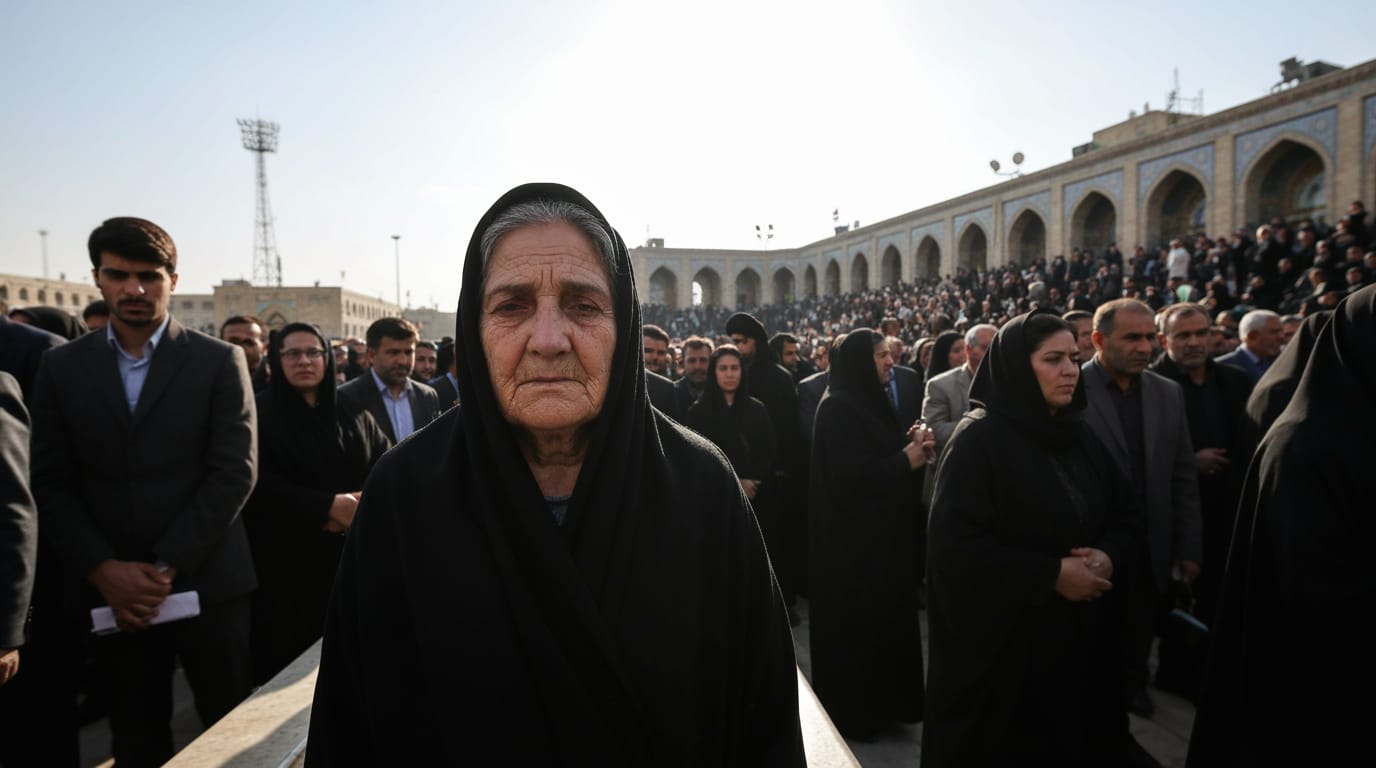
TEHRAN – In an unprecedented display of national mobilization and geopolitical messaging, Iran is orchestrating the multi-day funeral ceremonies for its late Supreme Leader, Ayatollah Ali Khamenei, into a profound demonstration of strength and unity. The elaborate rites, spanning multiple cities across Iran and extending into Iraq, are projected to draw tens of millions of mourners, far surpassing previous historical gatherings and underscoring the Islamic Republic's resolve amidst a turbulent regional and international landscape. This meticulously planned event, following Khamenei's death in a U.S.-Israeli airstrike on February 28, is serving as a powerful platform for the Iranian leadership to affirm continuity, rally public support, and issue stern warnings to its adversaries.
An Unprecedented Display of Mourning and Might
The funeral procession for Ayatollah Ali Khamenei is set to become one of the largest public gatherings in modern history, with Iranian authorities estimating an attendance of up to 35 million people, encompassing between 30 and 35 percent of Iran's population. This figure dramatically exceeds the estimated 10 million mourners who attended the 1989 funeral of Ayatollah Ruhollah Khomeini, the founder of the Islamic Republic, and the more than 20 million anticipated for Khamenei's ceremonies by some officials. The six-day program commenced on July 4 in Tehran, with subsequent ceremonies planned for the holy city of Qom, before the cortege proceeds to the Iraqi holy cities of Karbala and Najaf, eventually concluding with burial in Mashhad on July 9.
The sheer scale of the events necessitates an immense logistical and security operation, described by officials as one of the most extensive in recent years. Preparations include comprehensive road closures, traffic restrictions, and public transport arrangements to manage the influx of millions of vehicles and mourners. Concerns over potential crowd crushes, following deadly incidents at the funerals of Ayatollah Khomeini and General Qassem Soleimani, have led to extraordinary precautions, including the consideration of using helicopters to transport the coffin safely. Tehran alone is projected to host between 6 and 17 million mourners, with Mashhad expecting up to 8 million, signaling a deeply organized effort to facilitate this national outpouring.
Orchestrating Unity and Defiance
Beyond public grief, the funeral is being meticulously crafted to project an image of national cohesion and strength. Iranian Parliament Speaker Mohammad Bagher Ghalibaf explicitly called for a massive turnout, stating the gathering should deliver a message to the world demanding "vengeance for his blood." This sentiment, resonating through official statements, frames Khamenei's death as a martyrdom and underscores a commitment to the "path of resistance." President Masoud Pezeshkian echoed this, describing Khamenei's passing not as an end, but as "the beginning of a new chapter of national unity, resilience, and progress," urging all Iranians to participate and present a united front to the world.
The multiple locations chosen for the ceremonies hold profound symbolic significance, intertwining the religious, political, and ideological foundations of the Islamic Republic. The procession through Tehran, the seat of governmental power, signifies state continuity, while stops in Qom, a center of Shia learning, and Mashhad, Khamenei's birthplace and home to the revered Imam Reza Shrine, emphasize his religious authority and deep connection to Shia Islam. These ceremonial stops are intended to reinforce the legitimacy of the leadership and the enduring principles of the Islamic Revolution.
Geopolitical Currents and International Observers
The funeral also serves as a critical stage for Iran's international diplomacy and a clear signal to adversaries. Leaders from an estimated 30 countries and religious scholars from 90 nations are expected to attend, with high-profile figures such as senior Chinese lawmaker He Wei and Pakistani Prime Minister Shehbaz Sharif confirming their presence. Notably, European countries were not extended invitations, highlighting a strategic choice in showcasing alliances.
Amidst the mourning, Iranian military commanders have issued strong warnings to the United States and Israel, cautioning against any "miscalculation" and promising "harsh retaliation" for any aggression. These statements follow Khamenei's death in a U.S.-Israeli airstrike, a backdrop that imbues the funeral with an undeniable geopolitical tension. The timing also precedes upcoming indirect talks between the U.S. and Iran, which are expected to resume after the funeral processions, adding another layer of significance to the demonstrations of power.
Mobilization and a Controlled Narrative
Reports from various sources indicate an extensive state-led mobilization effort to ensure a robust turnout. Iranian authorities and state-linked institutions have reportedly pressured workers, businesses, and charities to participate, with warnings of penalties for non-compliance. This includes directives for businesses to close during the ceremonies, free transportation, and the provision of massive quantities of food, such as 50 million loaves of bread. Such measures underscore the concerted effort to not only draw large crowds but also to ensure an orderly and unified demonstration of support.
The state's control extends to the media narrative. A confidential directive from Iran's Supreme National Security Council urged media outlets to avoid spotlighting political disputes during the funeral. Instead, the directive mandated focusing on preserving national cohesion, highlighting the leader's "personal, intellectual, cultural, political, historical and national dimensions," and providing the "most magnificent possible coverage" of the ceremonies. With hundreds of foreign journalists present, the Iranian state aims to present a carefully curated image of unwavering national allegiance and a powerful, unified front to the global audience.
A Legacy Forged in Mass Mobilization
As the funeral ceremonies for Ayatollah Ali Khamenei reach their culmination, Iran is employing every facet of state power to solidify his legacy and project an image of enduring strength. The unprecedented scale of public participation, the deliberate crafting of political messages, the strategic international engagements, and the meticulous management of public and media narratives all converge to form a formidable show of national power. In the wake of its leader's death and against a backdrop of geopolitical tensions, Iran is leveraging this period of mourning not just to bid farewell, but to assert its continuity, resilience, and unwavering ideological resolve on both domestic and international stages.


