EU Gears Up for Retaliation as Trump Tariffs Loom
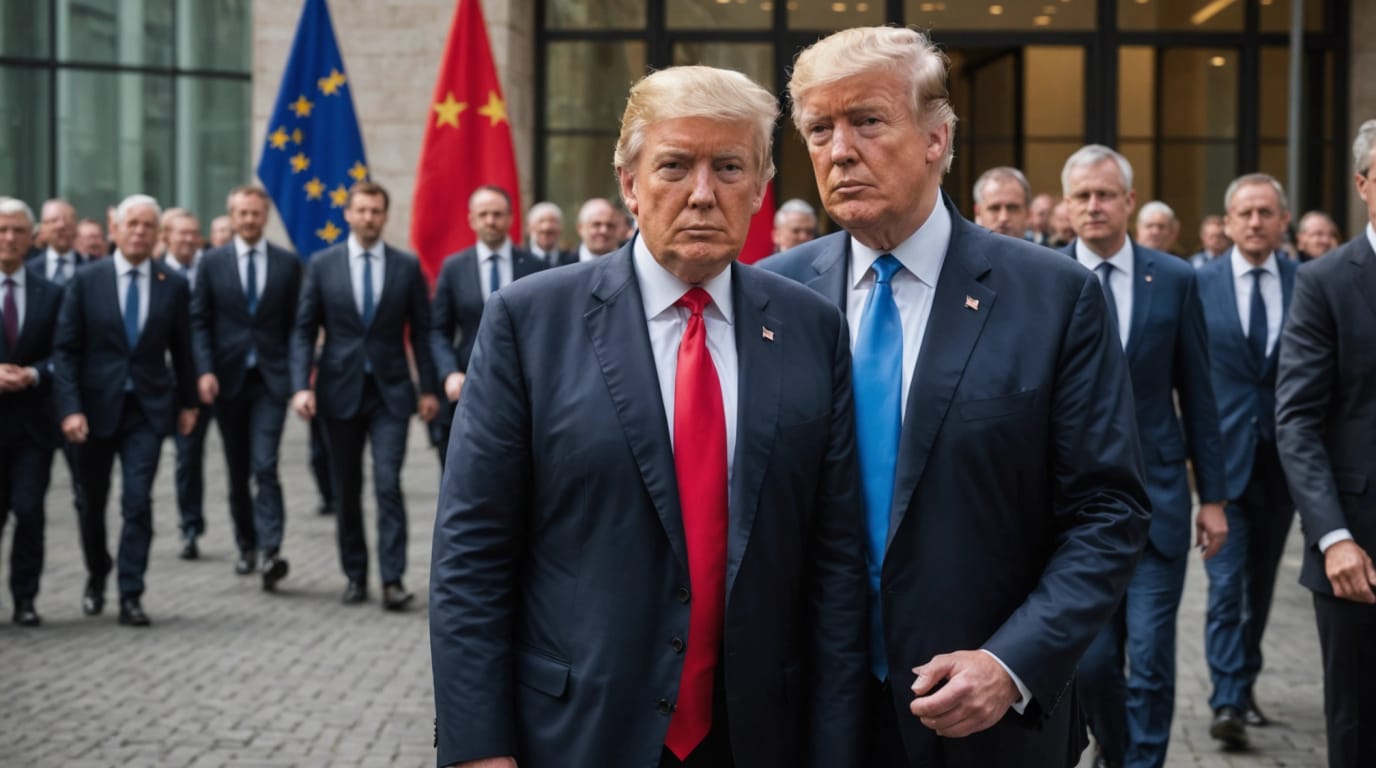
Brussels is bracing for a significant escalation in transatlantic trade tensions as the European Union prepares a robust response to newly imposed tariffs by the United States. With President Donald Trump's administration enacting a 25% tariff on steel and aluminum imports, the EU is poised to implement countermeasures targeting a wide range of American goods, signaling a firm stance against what it deems unjustified protectionist measures.
Rebalancing the Scales: EU's Countermeasures Take Shape
The EU's strategy involves a two-pronged approach. First, tariffs that were initially imposed in 2018 and 2020, but then suspended, will be reinstated on April 1, 2025. These tariffs will affect a variety of U.S. products, from boats and bourbon to Harley Davidson motorcycles, with rates ranging from 10% to 50%. Second, the European Commission intends to introduce additional countermeasures by mid-April, targeting an estimated €18 billion in U.S. exports. This comprehensive response aims to ensure that the total value of EU measures corresponds to the increased value of trade impacted by the new U.S. tariffs, potentially reaching up to €26 billion.
Maroš Šefčovič, the EU trade chief, emphasized the need for a flexible approach to calibrate the EU's response. The EU aims to find a "mutually agreeable solution" with the U.S. and delayed the imposition of its first set of tariffs to allow more time for negotiation. However, the EU is consolidating its two-staged response into a single measure to take effect on April 13, 2025, covering up to €26 billion in U.S. exports.
Echoes of the Past: Revisiting the 2018 Trade Dispute
This isn't the first time the EU has faced off against U.S. tariffs. In June 2018, the Trump administration imposed tariffs on European steel and aluminum exports, targeting €6.4 billion of EU goods. The EU responded with "rebalancing measures" that included tariffs on politically sensitive goods. While the EU and U.S. eventually agreed to de-escalate trade tensions, these measures were only suspended until March 31, 2025.
Ursula von der Leyen, President of the European Commission, has been vocal in her criticism of the U.S. tariffs, stating that they are "bad for business, worse for consumers" and would trigger a firm and proportionate European response. She also warned that the tariffs would disrupt supply chains, create economic uncertainty, and put jobs at risk.
The Anti-Coercion Instrument: A New Weapon in the EU's Arsenal
The EU now has a new tool at its disposal: the Anti-Coercion Instrument (ACI), adopted in November 2023. This instrument allows the EU to enact tariffs, restrictions on exports and imports, measures affecting trade in services, access to public procurement, foreign direct investment, and intellectual property rights. The ACI could be used to target the U.S. generally or specific persons or corporations close to the U.S. government.
The ACI offers the EU more creative and targeted responses to tariffs, potentially evening the playing field by targeting services where the U.S. has a trade surplus with the EU.
Economic Implications: A Transatlantic Tug-of-War
The imposition of tariffs is expected to have significant economic consequences for both the EU and the U.S. The Kiel Institute for the World Economy estimates that the tariffs would cause the European Union economy to contract by 0.4% and the United States economy to contract by 0.17%. Other estimates suggest that a 25% U.S. tariff on Europe could reduce the EU's GDP by 0.33% in the short term, with long-term impacts potentially soaring to 0.87%.
The EU's automotive industry is particularly vulnerable, with exports to the U.S. representing 15% of European automotive output. A 25% tariff on motor vehicle imports from the EU could lead to a sharp contraction in EU automotive exports to the U.S., with Germany and Italy being the most exposed.
WTO and the Specter of Trade Wars
The EU initially challenged the 2018 tariffs at the World Trade Organization (WTO), arguing that they violated international trade agreements. However, the WTO's ability to resolve trade disputes has been weakened in recent years, particularly with the U.S. blocking appointments of new members to the WTO's appellate body.
Some experts warn that the U.S. tariffs could violate WTO rules and spark further retaliation from the EU, potentially escalating into a broader trade conflict. The EU could also tighten market access for U.S. big tech companies, which account for much of the EU's services trade deficit with the United States.
A Call for Independence: Lagarde's Vision for Europe
Amidst the escalating trade tensions, European Central Bank President Christine Lagarde has called for Europe to take its destiny into its own hands and embark on a "march to independence." She argued that the tariffs present a unique opportunity for Europe to strengthen its own industries and reduce its reliance on the U.S. in areas such as finance, information technology, defense, and energy.
Lagarde acknowledged that a trade war is likely to hurt the economy in the immediate future, potentially taking as much as 0.5 percent off gross domestic product if Europe retaliates against the U.S. measures. However, she stressed the importance of showing that Europe is not willing to "lie down" in the face of U.S. pressure.
Conclusion: Navigating a Thorny Path
As the EU prepares to implement its countermeasures, the future of transatlantic trade relations remains uncertain. While both sides have expressed a willingness to negotiate, the path forward is fraught with challenges. The EU's response to the U.S. tariffs will not only shape its economic relationship with the U.S. but also influence its broader trade strategy and its role in the global economy. The coming weeks will be critical in determining whether the EU and U.S. can find a way to de-escalate trade tensions and forge a more cooperative path forward.


